NYF5efh1IGNy2YdE15zso7V8KrL2

roma

Creator

Thu, Mar 26, 2026, 07:49 AM

Khan Yunis, Palestinian Territory

31.37700, 34.31800

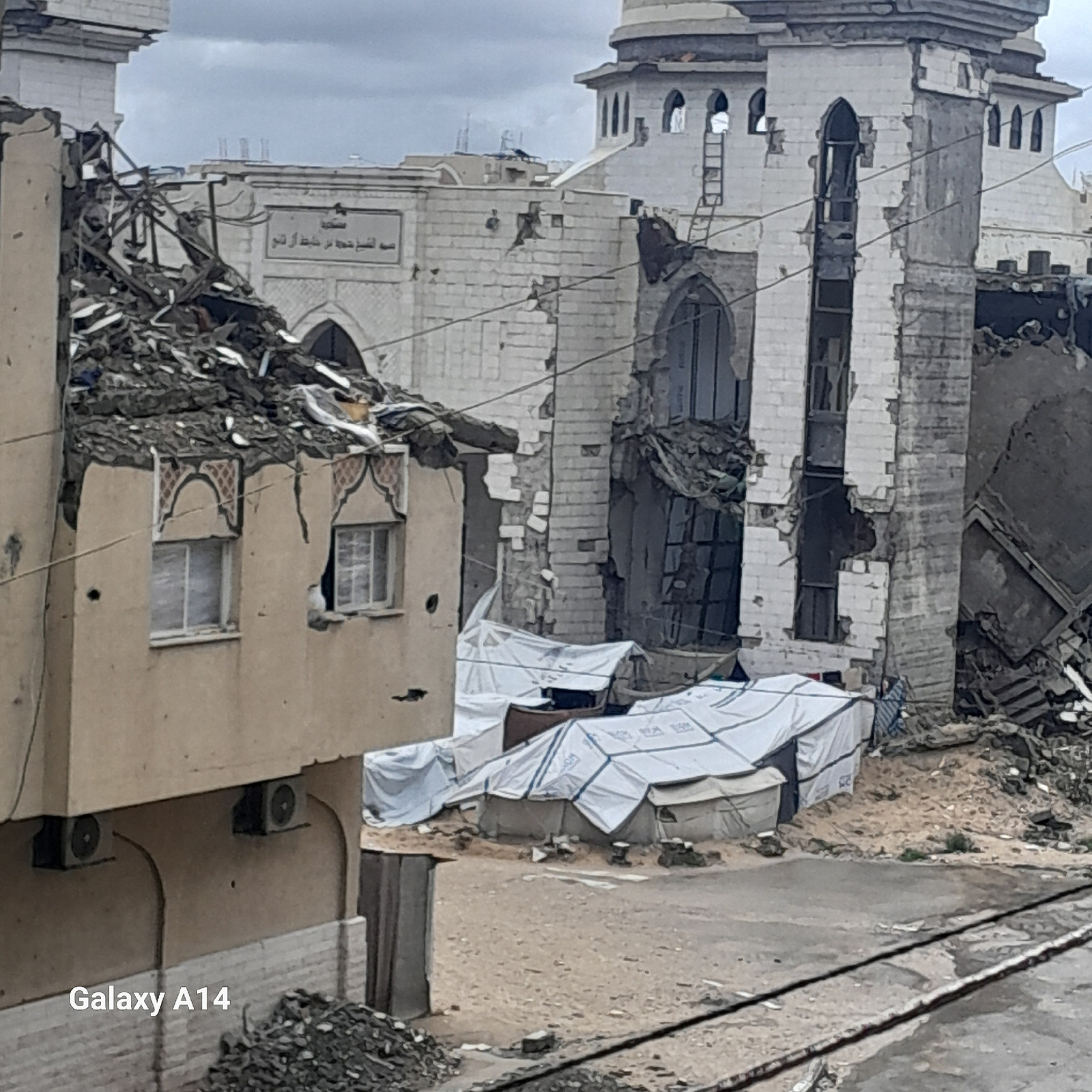
The image, originally oriented sideways, depicts a scene of extensive urban destruction under an overcast sky. Two primary buildings are visible, both appearing heavily damaged, with debris scattered…read more

Devastation
Loss
Despair
Sorrow
Fear

Technical

ID

2fc06867-1927-4e50-9

Usage Rights

This media is free for non-commercial use with proper attribution.

Commercial use, AI/ML training, and derivative works are prohibited without explicit consent from the creator.

Licensed under CC BY-NC 4.0 with additional AI/ML restrictions. Full terms →

The image, originally oriented sideways, depicts a scene of extensive urban destruction under an overcast sky. Two primary buildings are visible, both appearing heavily damaged, with debris scattered across the scene. In the background, a large, light-colored building stands, possibly constructed from stone or stucco. This structure exhibits traditional architectural elements, including arched windows and what appears to be part of a rounded tower or minaret-like structure on its left side. However, significant portions of its facade are missing or severely damaged, revealing exposed interiors, broken wall sections, and peeling paint or render. A large arched opening on the right side of this building appears to have collapsed entirely. Ladders or scaffolding elements are visible within or against the damaged walls. On a rectangular panel near the top of this background building, some Arabic script is faintly visible, though difficult to decipher completely due to the distance and damage, but it appears to start with "مدرسة" (Madrasa, meaning school). In the foreground, a smaller, tan or beige-colored two-story building is positioned closer to the viewer. This building has also suffered severe damage, particularly its upper floor and roof, which have largely collapsed. A substantial pile of rubble, consisting of twisted rebar, shattered concrete, and other building materials, spills from the top of this structure onto the remaining lower floor and the ground below. The surviving walls of the foreground building display cracks, and two rectangular windows with white frames and curtains are visible. Decorative patterns are etched into the wall around these windows. Two small, dark, box-like units, possibly external air conditioning components, are mounted on the lower wall. Between the two damaged buildings, on the ground level, several large, white, rectangular bundles or bales are stacked. These appear to be wrapped in tarpaulin or similar material, with some having blue markings, suggesting they could be packaged goods, aid supplies, or construction materials. The ground around the buildings is an uneven mix of dirt, dust, and scattered rubble. Overhead, multiple thin, dark lines, likely electrical or utility wires, traverse the scene horizontally. A watermark in the bottom right corner of the image identifies the camera as "Galaxy A14". The overall impression is one of devastation, possibly from a conflict or a natural disaster. The lighting suggests it is daytime, under a uniformly grey, cloudy sky.