Stake attention in this memory
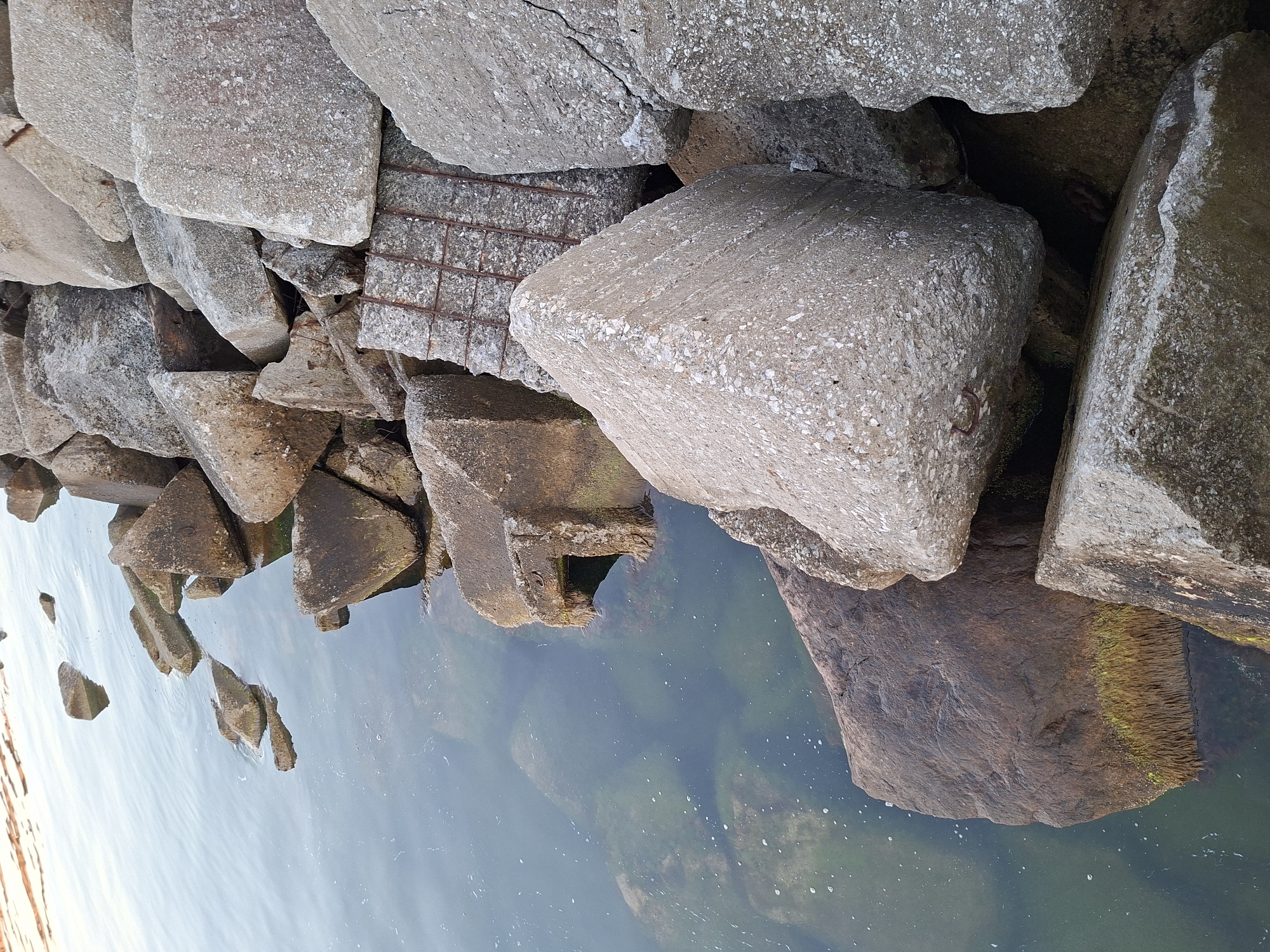
The image depicts a static waterfront scene, captured from an elevated perspective, showcasing a body of water occupying the left side and a man-made breakwater composed of various rocks and concrete blocks on the right. The water is notably clear, revealing submerged rocks and areas of green filamentous algae on the seabed. The surface displays minor ripples and a few scattered white specks, consistent with small bubbles or debris, reflecting an overhead light source. The breakwater is formed by a dense, haphazard arrangement of large, irregularly shaped blocks. These include weathered gray concrete blocks, several of which exhibit exposed internal steel rebar grids, indicating reinforced concrete. One distinct block in the mid-right shows a prominent square grid of rusted rebar. Other concrete blocks display coarse aggregate textures and, in some instances, rusty metal loops or fragments embedded within them. Interspersed with the concrete are darker brown, natural-looking stones. Along the waterline, particularly on a large, dark brown rock in the lower-left corner, there is a distinct growth of dense, yellow-green algae or seaweed. The blocks are stacked to create crevices and shadows. No individuals, animals, or active human interactions are present in the scene. The environment is characterized by utilitarian coastal construction and natural water elements. The location is identified as the waterfront of the **Kalamaja district in Tallinn, Estonia**, specifically consistent with the historical and industrial coastal structures found near areas such as the **Patarei Sea Fortress** or **Lennusadam Seaplane Harbour**, which feature similar types of concrete fortifications and breakwaters.
No transactions found