Stake attention in this memory
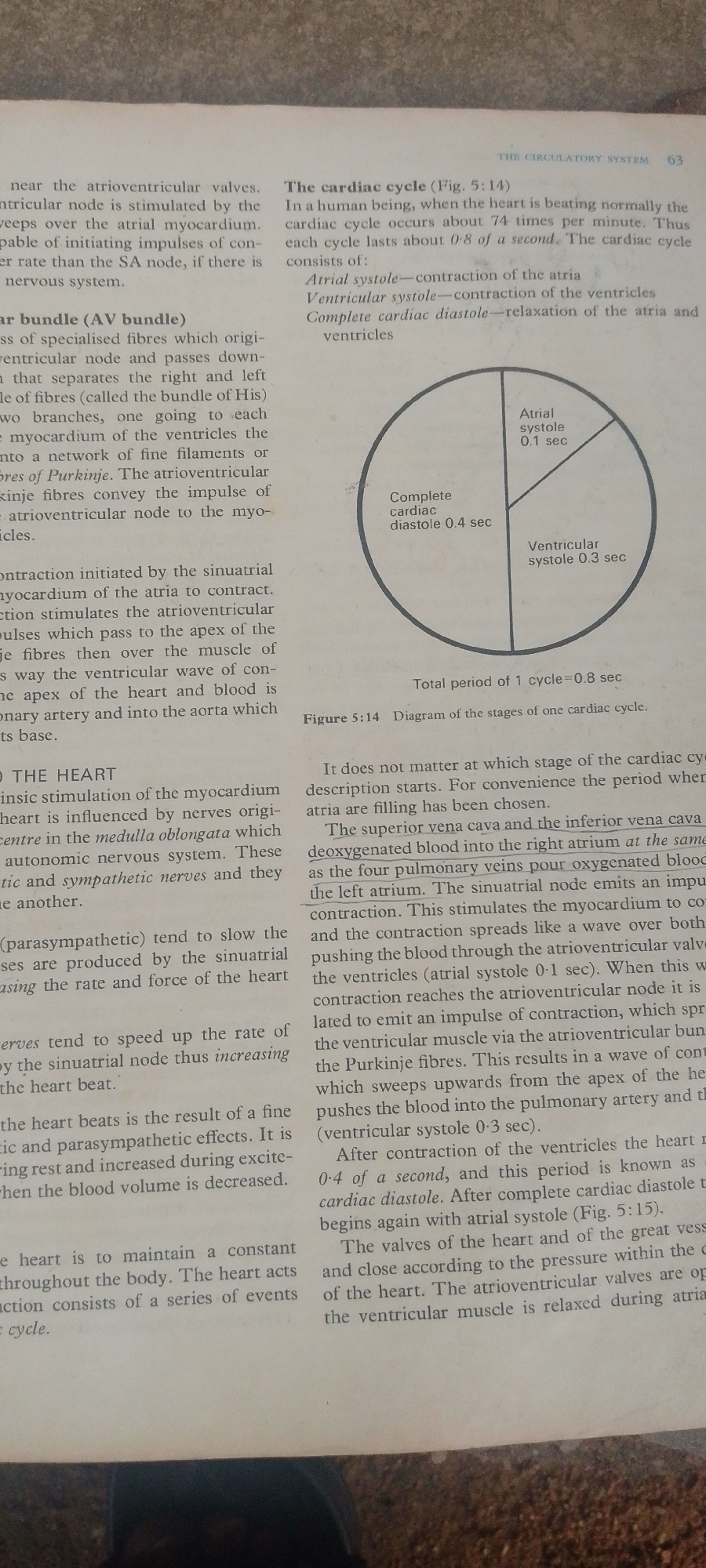
The image is a scanned page from a biology textbook discussing the human circulatory system, specifically focusing on the cardiac cycle. There are no people or discernible scenes from Nigeria present. The primary content consists of text explaining physiological processes and a diagram illustrating the stages of a cardiac cycle. The text on the left side of the page discusses the atrioventricular valves, AV bundle, and the intrinsic stimulation of the myocardium by the heart itself, as well as the influence of the autonomic nervous system (sympathetic and parasympathetic nerves) on heart rate. It describes how the heart maintains a constant action through a series of events that constitute a cardiac cycle. The right side of the page is dedicated to "The cardiac cycle." It explains that in a human, a normal heartbeat occurs about 74 times per minute, with each cycle lasting approximately 0.8 seconds. The cycle is broken down into three phases: atrial systole (contraction of the atria), ventricular systole (contraction of the ventricles), and complete cardiac diastole (relaxation of both atria and ventricles). A pie chart diagram, labeled "Figure 5:14 Diagram of the stages of one cardiac cycle," visually represents these phases. It shows atrial systole lasting 0.1 seconds, ventricular systole lasting 0.3 seconds, and complete cardiac diastole lasting 0.4 seconds, totaling 0.8 seconds for one cycle. The text further elaborates on the flow of blood through the heart during these stages, mentioning the superior and inferior vena cava, pulmonary veins, atria, ventricles, atrioventricular valves, and the aorta. It also notes that the valves open and close based on pressure within the heart chambers. The overall context is educational, providing scientific information about the mechanics of the heart. There are no indications of time of day, weather, emotions, or specific locations beyond what is implied by a textbook about human physiology.
Loading AttnAds…
No transactions found