
Stake attention in this memory
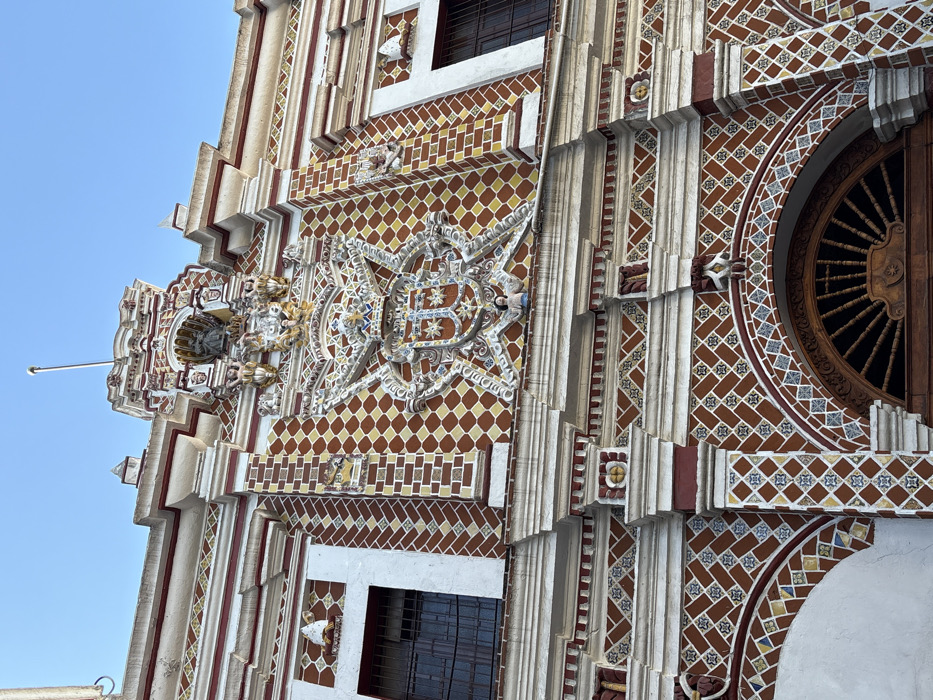
The image displays an upward-angled view of the highly ornate, Baroque-style upper facade of the Casa del Alfeñique, located in the Historic Center of Puebla, Mexico. The building's exterior is characterized by a rich interplay of white stucco, reddish-brown brick, and extensive, colorful Talavera tile work. The central portion of the facade is dominated by a large, elaborate white stucco bas-relief coat of arms, featuring a double-headed eagle holding a crowned shield emblazoned with a cross and stars. Above this coat of arms, set within an intricately sculpted alcove, is a dark-toned sculpture of a religious figure. Smaller white stucco decorative figures, resembling cherubs or angels, flank the alcove and are integrated into the surrounding ornamentation. A thin flagpole extends vertically from the apex of the central facade. The wall surfaces surrounding the central decorative element are covered in Talavera tiles arranged in a diamond pattern, alternating between reddish-brown and pale yellow. Horizontal bands and vertical pilasters exhibit more intricate geometric and floral Talavera patterns, incorporating shades of blue, white, and yellow. Two rectangular windows, featuring dark frames and horizontal protective bars, are visible on either side of the central decorative section. A segment of an ornate, arched wooden doorway with carved fanlight-style detailing is partially visible at the bottom center of the frame. The scene is illuminated by natural light under a clear blue sky, casting subtle shadows that enhance the three-dimensional relief of the architectural details. No human figures are present or actively engaged in the scene.
Symbol
00885
Volume
8,256
Creator
+$0.01
Revenue
+$0.00
TVL
$1.33
Loading AttnAds…