
Sign in
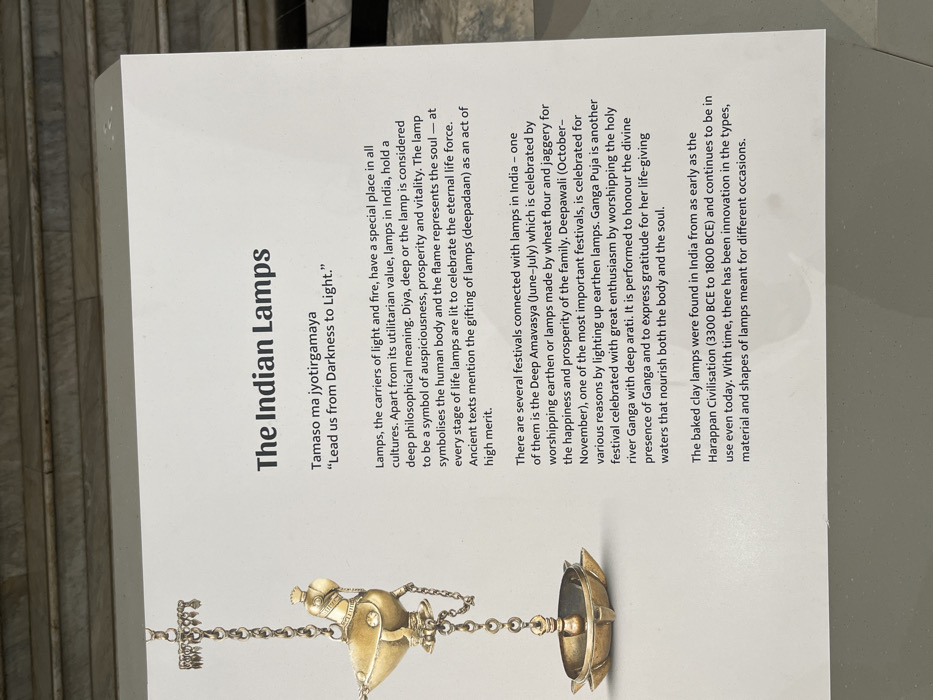
This image captures an indoor museum or exhibition display in Mumbai, India, featuring an informational panel and an antique Indian lamp. The display board, oriented vertically, has a white background with black text.

The main title reads "The Indian Lamps," accompanied by the Sanskrit phrase "Tamaso ma jyotirgamaya" and its translation, "'Lead us from Darkness to Light.'" The text explains that lamps in Indian culture symbolize auspiciousness, prosperity, and vitality, with the lamp representing the human body and the flame the soul. It notes that gifting lamps (deepadaan) is considered an act of high merit.

The panel details several festivals connected with lamps: Deep Amavasya (June-July), where earthen or wheat flour/jaggery lamps are worshipped for family prosperity; Deepawali (October-November), celebrated by lighting earthen lamps; and Ganga Puja, involving deep arati to the holy river Ganga to express gratitude for its life-giving waters. The text also mentions the historical significance of lamps, with baked clay lamps found from the Harappan Civilization (3300 BCE to 1800 BCE), indicating their continuous use and evolving designs.

Below the text, a beautifully crafted metallic lamp, likely made of brass or bronze, is prominently displayed. It features an ornate design with chains, a decorative central element, and a deep, multi-lobed bowl at the bottom designed to hold oil and a wick. The lamp appears to be suspended, showcasing its intricate details. There are no people visible in the image, and the setting suggests a curated educational environment.
FM-OhtiC3

Dec 10, 2024

Mumbai, India

Stake attention in this memory

This image captures an indoor museum or exhibition display in Mumbai, India, featuring an informational panel and an antique Indian lamp. The display board, oriented vertically, has a white background with black text. The main title reads "The Indian Lamps," accompanied by the Sanskrit phrase "Tamaso ma jyotirgamaya" and its translation, "'Lead us from Darkness to Light.'" The text explains that lamps in Indian culture symbolize auspiciousness, prosperity, and vitality, with the lamp representing the human body and the flame the soul. It notes that gifting lamps (deepadaan) is considered an act of high merit. The panel details several festivals connected with lamps: Deep Amavasya (June-July), where earthen or wheat flour/jaggery lamps are worshipped for family prosperity; Deepawali (October-November), celebrated by lighting earthen lamps; and Ganga Puja, involving deep arati to the holy river Ganga to express gratitude for its life-giving waters. The text also mentions the historical significance of lamps, with baked clay lamps found from the Harappan Civilization (3300 BCE to 1800 BCE), indicating their continuous use and evolving designs. Below the text, a beautifully crafted metallic lamp, likely made of brass or bronze, is prominently displayed. It features an ornate design with chains, a decorative central element, and a deep, multi-lobed bowl at the bottom designed to hold oil and a wick. The lamp appears to be suspended, showcasing its intricate details. There are no people visible in the image, and the setting suggests a curated educational environment.

transactions
revenues
stakers
Earliest
Latest
Highest stake

No transactions found

More from this user

More from Mumbai

FM-OhtiC3

Dec 10, 2024

Mumbai, India

Licensed under Creative Commons Attribution 4.0 International License. You are free to share and adapt this content with proper attribution.