
Stake attention in this memory
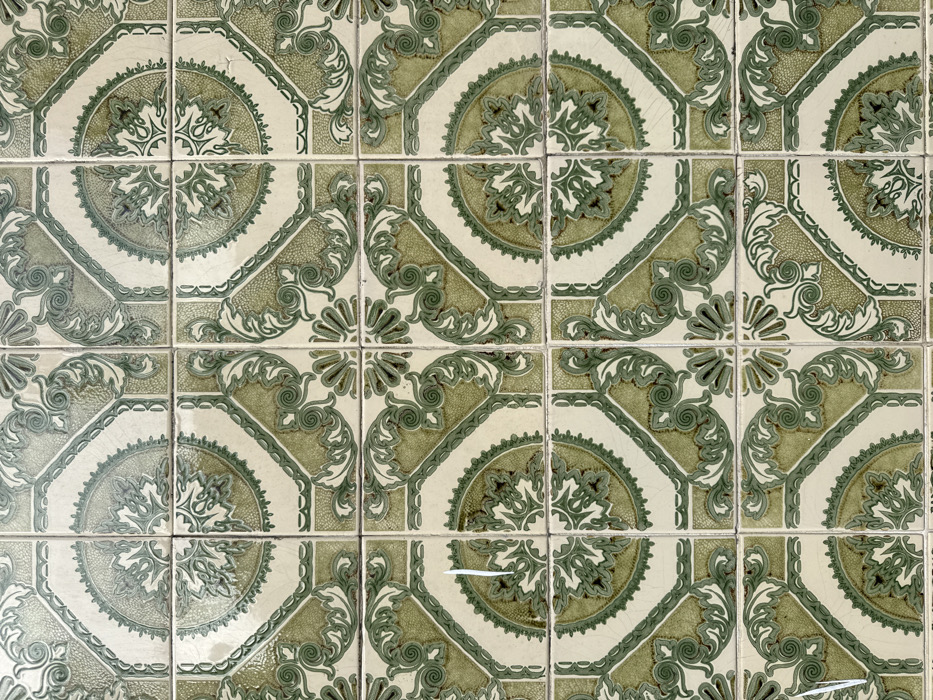
This is a close-up, vertical photographic record of a wall surface composed of traditional Portuguese azulejo tiles, located in Vila Nova de Gaia, Portugal. The surface features an arrangement of numerous square, glazed ceramic tiles that collectively form a repeating, intricate pattern. The color palette consists primarily of an off-white or cream base, complemented by two shades of green: a darker, saturated sage green used for outlines and detailed elements, and a lighter, muted olive green filling in background areas within the decorative motifs. The pattern is symmetrical, repeating every two tiles horizontally and vertically to create a larger composite design unit. Individual tiles contribute to a cohesive scheme featuring ornate foliate scrollwork, semi-circular motifs enclosing complex stylized leaf patterns, and smaller floral or shell-like elements positioned at the junctions where four tiles meet. The tiles exhibit a glossy, glazed finish. Forensic examination reveals evidence of aging and wear: minor chips are visible along edges, fine craze lines are present within the glaze, and general surface deterioration is consistent with an aged exterior installation. Notably, a distinct vertical crack traverses the surface of a tile located in the second row from the bottom, third column from the left. No individuals, actions, or other extraneous objects are present or depicted within the frame, which is entirely filled by the tiled architectural surface.
Loading AttnAds…
No transactions found