
Sign in
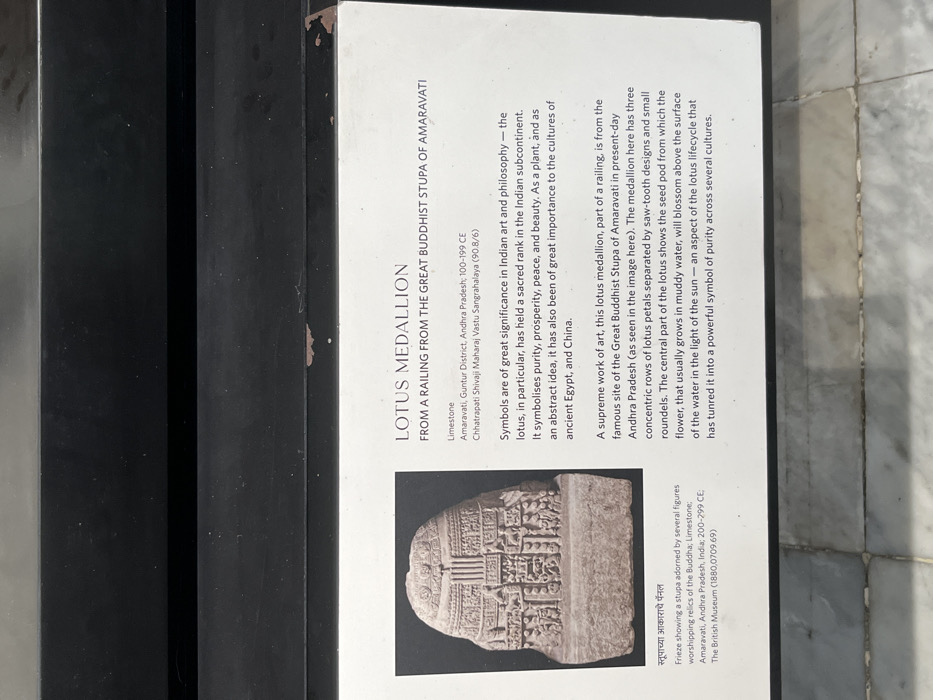
The image displays a museum exhibit panel, rotated 90 degrees clockwise, set against a dark, possibly black, display structure. The white panel features detailed information and images of ancient Indian artifacts.

The main subject of the panel is a "LOTUS MEDALLION FROM A RAILING FROM THE GREAT BUDDHIST STUPA OF AMARAVATI." This medallion, crafted from limestone, dates to 100-199 CE and originates from Amaravati, Guntur District, Andhra Pradesh. It is part of the collection at the Chhatrapati Shivaji Maharaj Vastu Sangrahalaya, located in Mumbai, India. The text highlights the profound significance of the lotus in Indian art and philosophy, where it symbolizes purity, prosperity, peace, and beauty, and notes its importance in ancient Egyptian and Chinese cultures. The medallion itself is described as a supreme work of art, featuring three concentric rows of lotus petals separated by saw-tooth designs and small roundels. Its central part depicts a seed pod, representing the flower's lifecycle of rising from muddy water to blossom in sunlight, a powerful symbol of purity.

An inset image at the bottom left of the panel shows a "Frieze showing a stupa adorned by several figures worshipping relics of the Buddha." This limestone frieze, from Amaravati, Andhra Pradesh, is dated 200-299 CE and is part of The British Museum collection.

The visible text on the panel provides detailed descriptions, provenance, and symbolic interpretations for both the lotus medallion and the frieze. The scene suggests a visitor's perspective within a museum setting.
FM-OhtiC3

Dec 10, 2024

Mumbai, India

Stake attention in this memory

The image displays a museum exhibit panel, rotated 90 degrees clockwise, set against a dark, possibly black, display structure. The white panel features detailed information and images of ancient Indian artifacts. The main subject of the panel is a "LOTUS MEDALLION FROM A RAILING FROM THE GREAT BUDDHIST STUPA OF AMARAVATI." This medallion, crafted from limestone, dates to 100-199 CE and originates from Amaravati, Guntur District, Andhra Pradesh. It is part of the collection at the Chhatrapati Shivaji Maharaj Vastu Sangrahalaya, located in Mumbai, India. The text highlights the profound significance of the lotus in Indian art and philosophy, where it symbolizes purity, prosperity, peace, and beauty, and notes its importance in ancient Egyptian and Chinese cultures. The medallion itself is described as a supreme work of art, featuring three concentric rows of lotus petals separated by saw-tooth designs and small roundels. Its central part depicts a seed pod, representing the flower's lifecycle of rising from muddy water to blossom in sunlight, a powerful symbol of purity. An inset image at the bottom left of the panel shows a "Frieze showing a stupa adorned by several figures worshipping relics of the Buddha." This limestone frieze, from Amaravati, Andhra Pradesh, is dated 200-299 CE and is part of The British Museum collection. The visible text on the panel provides detailed descriptions, provenance, and symbolic interpretations for both the lotus medallion and the frieze. The scene suggests a visitor's perspective within a museum setting.

transactions
revenues
stakers
Earliest
Latest
Highest stake

No transactions found

More from this user

More from Mumbai

FM-OhtiC3

Dec 10, 2024

Mumbai, India

Licensed under Creative Commons Attribution 4.0 International License. You are free to share and adapt this content with proper attribution.