Stake attention in this memory
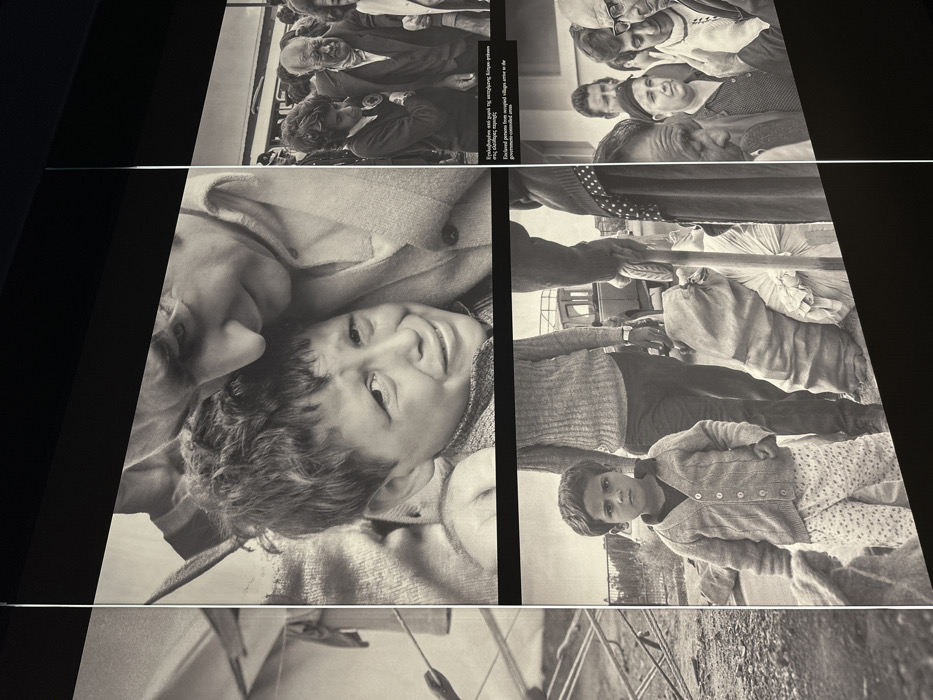
This media file captures a multi-panel display of black and white photographs, seen from an oblique angle, creating a tilted perspective. The display features several distinct images, likely part of an exhibition or historical presentation, with visible text providing context. The overall scene conveys human experiences, possibly related to community, displacement, or daily life. The top panel shows a group of adults gathered together. Prominently featured are an older man with a beard and glasses, and another individual with curly hair. Their expressions appear contemplative or attentive, suggesting they are observing something off-frame or waiting. The middle-left panel is a close-up portrait of two individuals. In the foreground, a young child with short, dark, curly hair smiles broadly at the viewer, an expression of joy or exuberance. Partially visible next to the child is the face of another person, possibly an adult or older child, looking away. The middle-right panel depicts a small group of people standing, with a young child in the foreground. This child, with dark hair, wears a patterned shirt and a light-colored cardigan, looking directly ahead with a serious or somber expression. Behind them, other adults are visible, some carrying bundled items, suggesting travel or migration. A structure resembling part of a boat or building is in the background. The bottom panel is partially visible, showing hands holding what appear to be tools or implements, set against an ambiguous background, possibly indicating work or activity. A vertical strip of text is visible on the top panel, written in both Greek and English. The English text reads: "Undermined people have abandoned their land and settlements, using the governed controlled areas." This text implies a narrative of displacement or resettlement. The black and white aesthetic lends a documentary or historical quality to the images. The contrasting emotions—joy from the smiling child and seriousness from the other—add depth to the portrayal of human experience. The location context of Nea Filadelfia, Greece, suggests these photographs might relate to local history, refugee experiences, or social changes in the region.
Loading AttnAds…
No transactions found