
Stake attention in this memory
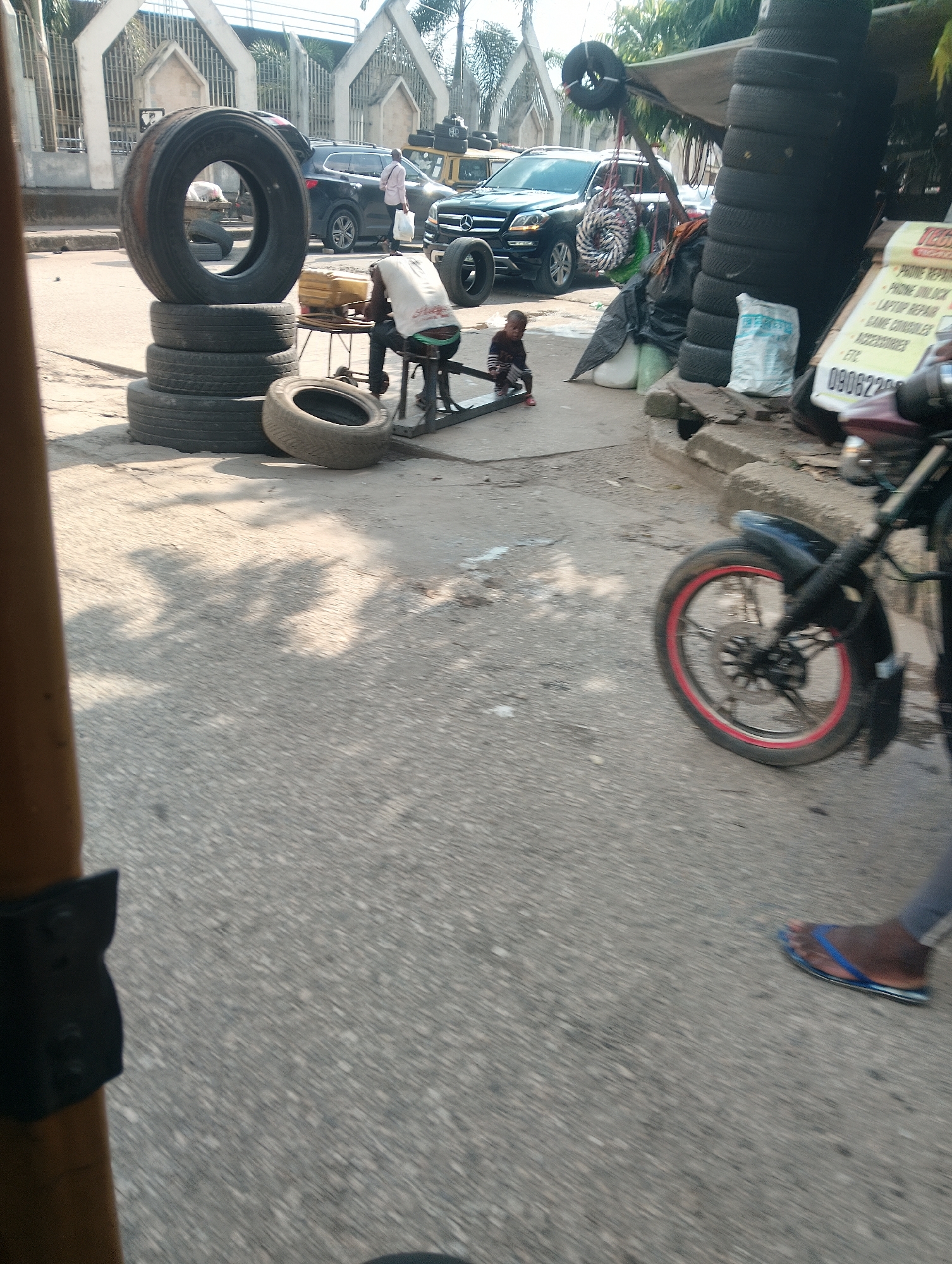
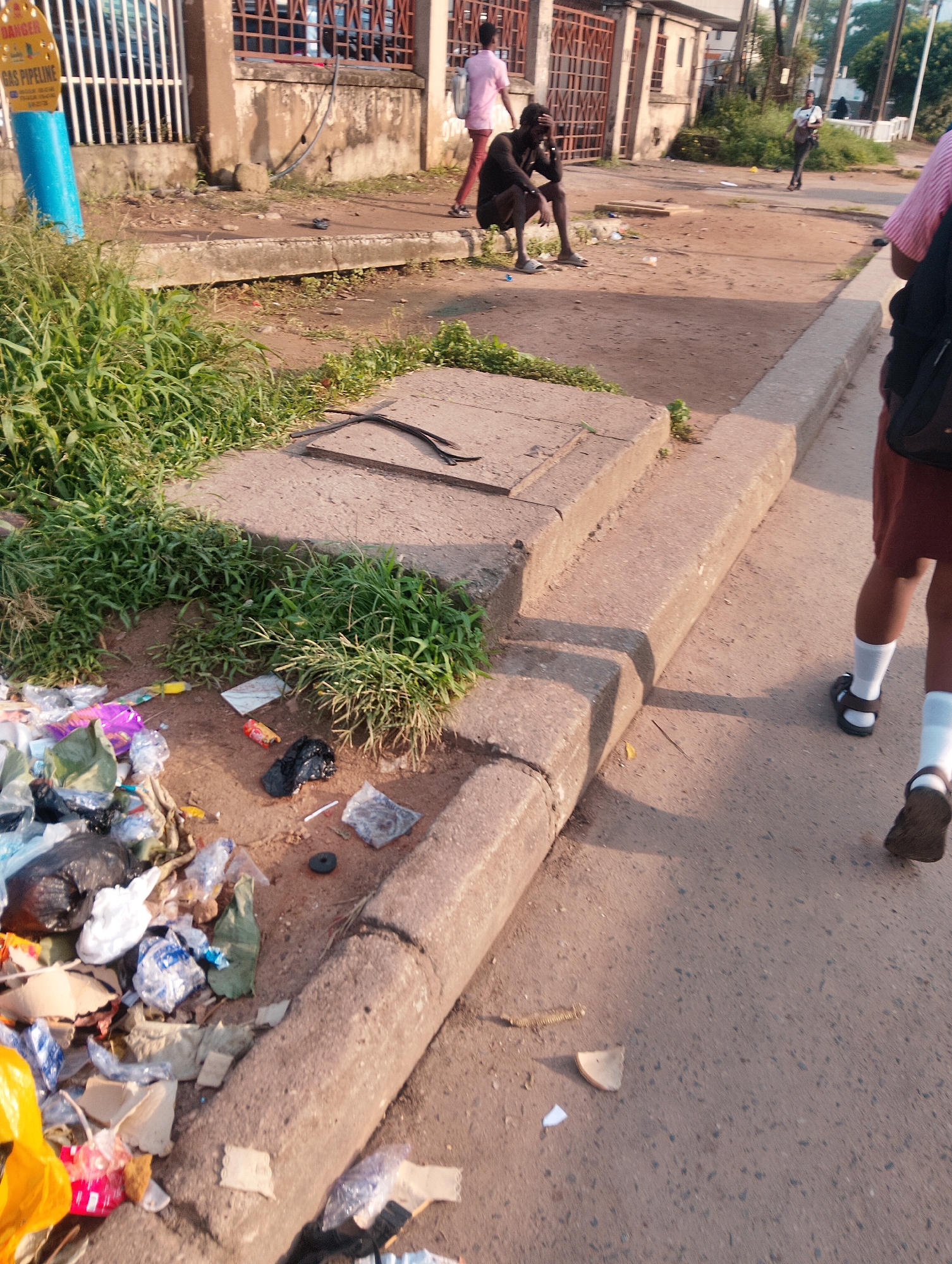
In Ikeja, Nigeria, a street scene unfolds with a clear division between neglect and everyday life. In the foreground, a substantial pile of refuse, predominantly plastic bags, bottles, and crumpled paper, lies scattered on the unpaved ground adjacent to a concrete curb. The trash is an amalgamation of various colors and textures, indicating recent discarding. Directly behind this debris, a concrete structure, possibly a manhole cover or utility access point, is partially visible, surrounded by sparse, overgrown green vegetation. Further back, a dirt path is present, with a dark, flexible object, perhaps a hose or cable, resting on its surface. The middle ground reveals two individuals. One is a man seated on the edge of the concrete structure, dressed in dark clothing, with his arm resting on his knee and his head bowed, appearing contemplative or fatigued. He wears simple sandals. Further in the background, another man is seen walking away from the camera, dressed in a white t-shirt and dark pants. A young person, likely a student, walks towards the foreground, their lower legs visible, clad in a maroon skirt, white socks, and dark sandals. Their presence suggests a school context, a stark contrast to the surrounding environmental condition. The background features a building with barred windows and a faded, textured wall, suggesting a commercial or residential structure. A yellow pole with black lettering, possibly a warning sign, is positioned to the left. Beyond this, more vegetation and structures are visible, hinting at the urban environment of Ikeja. The overall lighting suggests it is daytime, with shadows cast by the curb and buildings, indicating the sun's position. The scene captures a snapshot of urban life where elements of daily activity, public infrastructure, and environmental neglect coexist.
No transactions found