
Stake attention in this memory
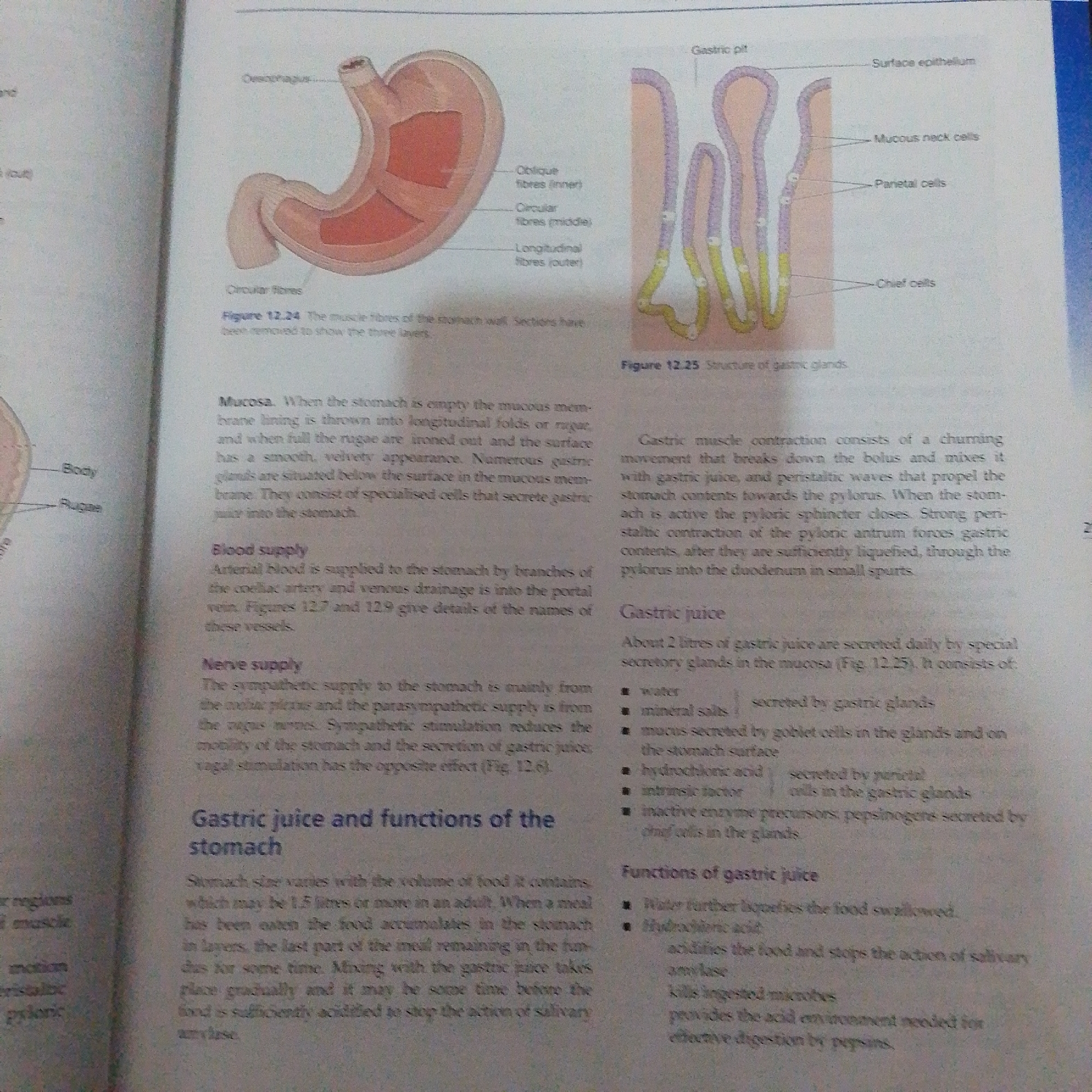
The image provided is a diagram illustrating the structure and function of the stomach and gastric glands, not a scene from Jalingo, Nigeria. Therefore, I cannot provide a description of a location in Jalingo based on this image. The image contains two main diagrams: 1. **Diagram of the Stomach:** This shows a cross-section of the stomach, highlighting its layers: the mucosa, submucosa, muscularis, and serosa (though not all are explicitly labeled). Features like the esophagus, rugae (folds in the stomach lining), and body of the stomach are indicated. Muscle fibers, including oblique, circular, and longitudinal layers, are also depicted. 2. **Diagram of Gastric Glands:** This is a magnified view of the stomach lining, showing gastric pits that lead to gastric glands. The diagram labels different cell types within these glands: surface epithelium, mucous neck cells, parietal cells, and chief cells. The text accompanying the diagrams explains the structure of the stomach's mucosal lining, its blood and nerve supply, and the composition and functions of gastric juice. It details how gastric muscle contractions churn food with gastric juice and how peristaltic waves move the contents towards the pylorus. It also lists the components of gastric juice, such as water, mineral salts, mucus, hydrochloric acid, intrinsic factor, and pepsinogen, and describes their roles in digestion.
No transactions found