
Stake attention in this memory
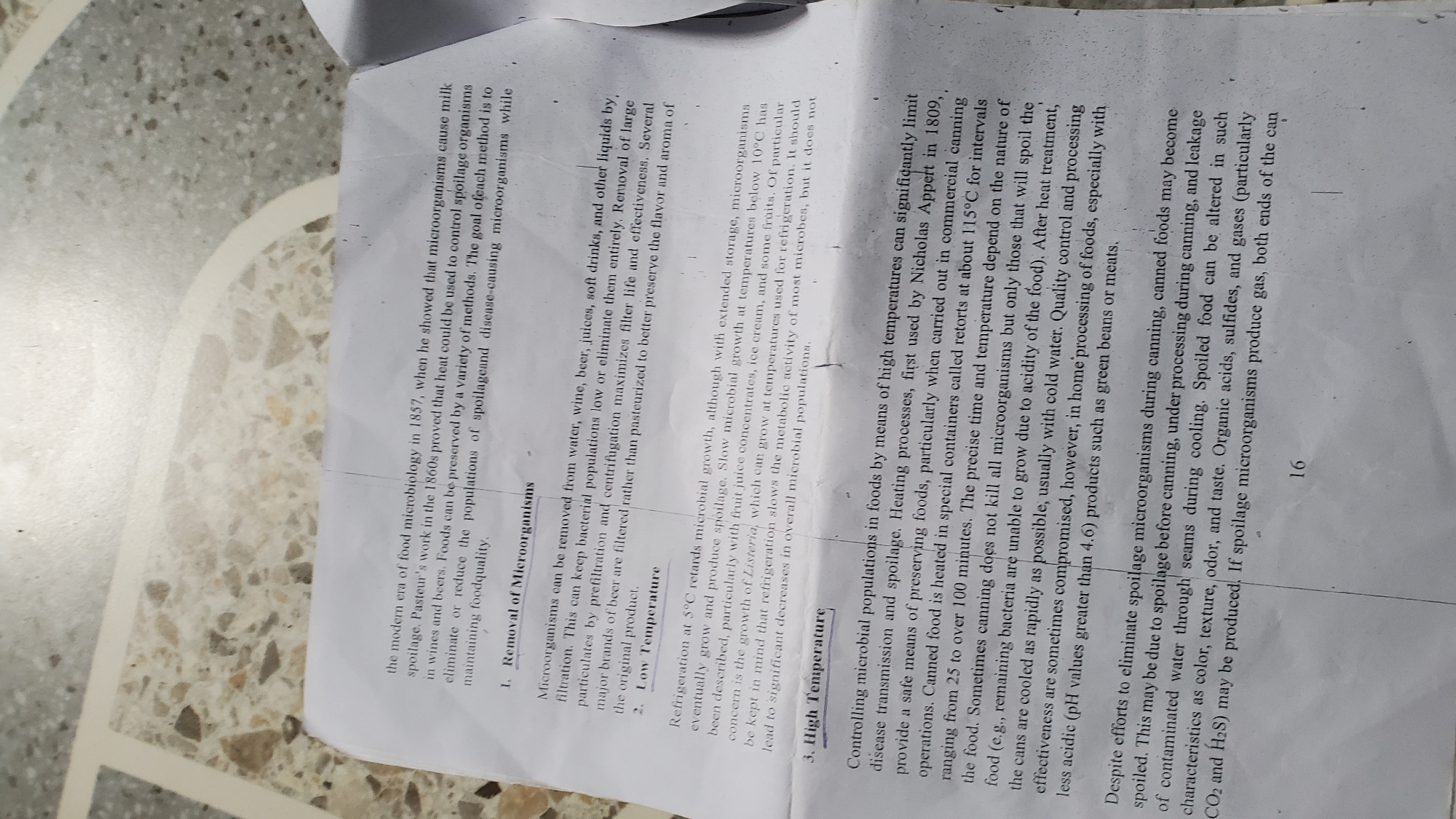
The image shows a close-up of a printed document, likely a textbook page, with some of its content obscured by a speckled, light-colored surface. The document is focused on food microbiology and preservation methods. The visible text discusses the history of food microbiology, starting with its founder in 1857 and the work of Pasteur in the 1860s. It then details various methods for controlling spoilage organisms, including: - **Removal of Microorganisms:** Primarily through filtration, explaining its effectiveness for liquids like water, wine, beer, juices, and soft drinks. - **Low Temperature:** Refrigeration at 5°C is discussed as a method to retard microbial growth, although extended storage can still lead to spoilage. The text highlights concerns about Listeria growth even at refrigeration temperatures. - **High Temperature:** This section covers heat treatment methods, specifically commercial canning which uses retorts heated to about 115°C. It explains that canning might not kill all microorganisms but those that spoil the food, and mentions the importance of cooling the cans. It also notes that home processing can be less effective, particularly for less acidic foods. The text concludes by explaining how canned foods can still become spoiled due to issues like spoilage before canning, under-processing, or leakage, leading to changes in color, texture, odor, and taste, and the production of gases. A page number "16" is visible in the bottom right corner. The overall impression is of an educational text explaining scientific concepts related to food safety and preservation. There are no people, objects, or scene elements beyond the document itself. The context of Jalingo, Nigeria is not visually discernible from the image.
Loading AttnAds…
No transactions found