
Stake attention in this memory
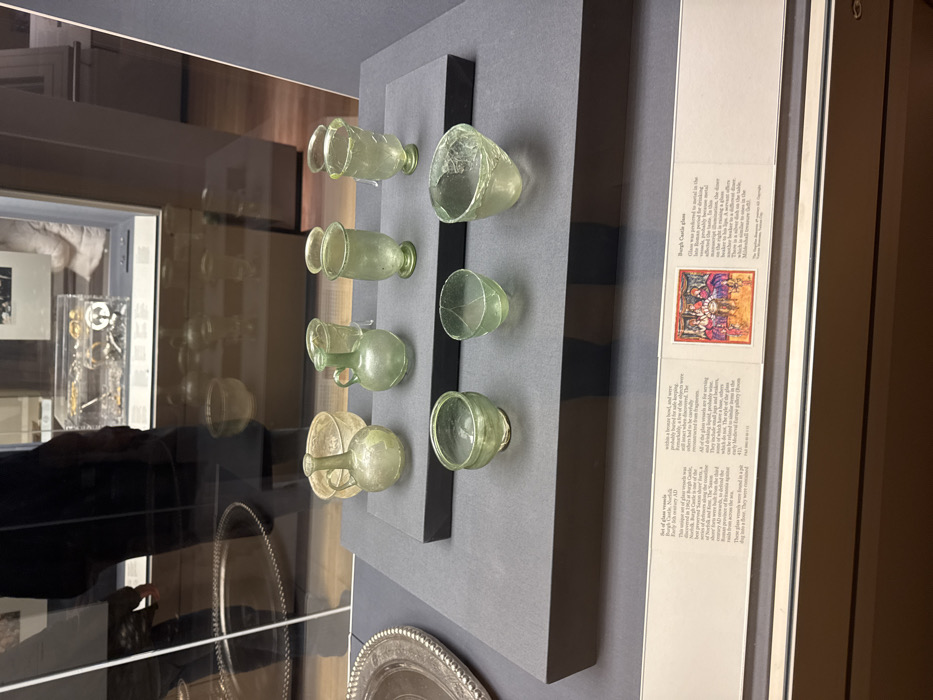
The image displays a museum exhibit featuring several ancient light green, translucent glass vessels. The objects are arranged on two grey, stepped display platforms within a glass case. On the left side of the platforms, there are four vessels: two tall, slender vases/bottles, and two smaller pitchers or jugs, one with a handle. On the right side, there are four cup-like or bowl-like vessels, some with visible cracks. The glass case reflects its surroundings, showing a partial reflection of a person in a dark top, and other museum displays including a framed picture, a clear box with gold-colored artifacts, and a large silver platter. Two information cards are visible on the right side of the display, placed vertically. The bottom card is titled "Set of glass vessels" and describes them as part of a hoard, found in the 19th century near Falkirk, Scotland, and mostly reconstructed from fragments. It notes they are serving and drinking vessels, including cups, bowls, goblets, and jars, some decorated with glass trails, similar to vessels found in France, Germany, and Italy. These items date to the "6th-7th century AD." The top card, titled "Rough Castle glass," states that glass was preferred to metal due to its affordability and non-corrosive nature. It mentions that the items found at Rough Castle represent those used in a wealthy home, ranging from simple to decorative. This card also refers to a similar silver bowl and bronze ewer display and confirms the glass was produced in the "Frankish Empire" (modern-day France, Germany, Belgium, Luxembourg) during the "6th-7th century AD." A small illustrative image depicting medieval-style figures is also on this card.
Loading AttnAds…
No transactions found