
Sign in
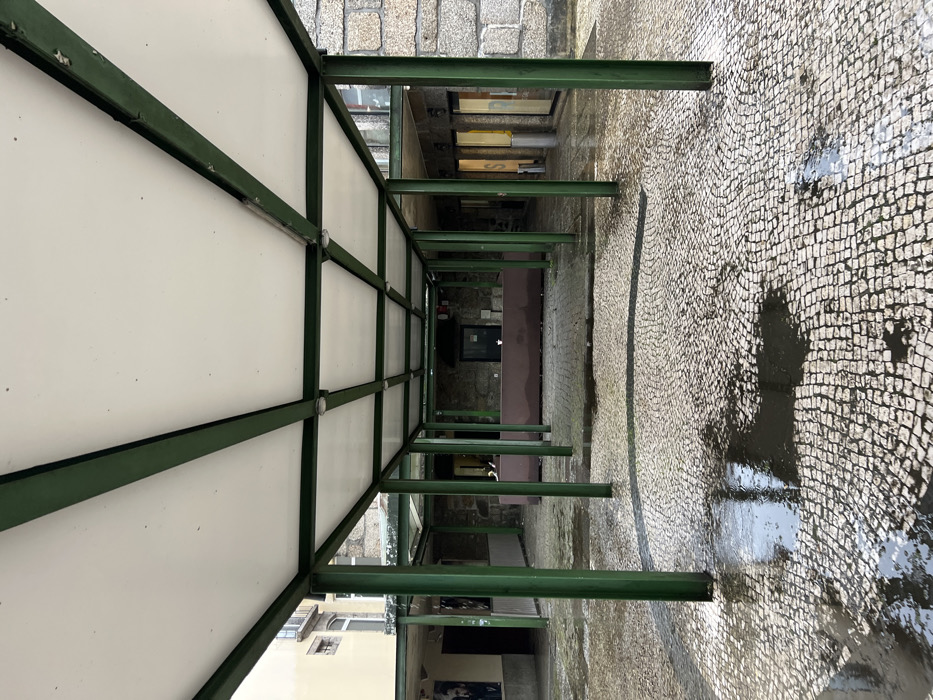
The image displays an urban courtyard or plaza, specifically identified as the Pátio do Instituto de Design de Guimarães, located in Guimarães, Portugal. The foreground and midground are dominated by a rectangular, open-sided canopy structure. This structure consists of dark green square-profile metal beams arranged in a grid pattern, supporting white, opaque ceiling panels that incorporate circular light fixtures. A series of vertical dark green metal pillars support the canopy, receding into the background.

The ground surface is paved with traditional Portuguese cobblestones (`calçada portuguesa`), composed of small, light-colored, irregularly shaped stones arranged in a patterned manner, possibly arcing. Numerous puddles and wet patches are visible across the cobblestone surface, reflecting the sky and surrounding structures, indicating recent rainfall. Shadows from the canopy's support pillars are cast upon the wet ground.

To the left of the scene, behind the canopy structure, a building with light-colored stucco walls and traditional windows is visible. A large black and white poster depicting a human face is affixed to a wall beneath an extension of the canopy on this side. To the right, a building constructed with rough-hewn grey stone blocks features multiple recessed doorways or windows, some containing vertical yellow-orange panels or blinds. A metal waste receptacle stands near one of these openings.

In the central background, a low, dark brown barrier or wall extends horizontally. Behind this barrier, a stone-faced building with a dark door is partially visible. No identifiable individuals or specific activities are present within the scene. The lighting suggests daylight conditions, possibly overcast, contributing to the diffused shadows and reflections on the wet surfaces.
tigass0

Jan 26, 2026, 1:53 PM

Guimarães, Portugal

Stake attention in this memory

Geometric
Urban
Cold
Symmetry
Melancholy

The image displays an urban courtyard or plaza, specifically identified as the Pátio do Instituto de Design de Guimarães, located in Guimarães, Portugal. The foreground and midground are dominated by a rectangular, open-sided canopy structure. This structure consists of dark green square-profile metal beams arranged in a grid pattern, supporting white, opaque ceiling panels that incorporate circular light fixtures. A series of vertical dark green metal pillars support the canopy, receding into the background. The ground surface is paved with traditional Portuguese cobblestones (`calçada portuguesa`), composed of small, light-colored, irregularly shaped stones arranged in a patterned manner, possibly arcing. Numerous puddles and wet patches are visible across the cobblestone surface, reflecting the sky and surrounding structures, indicating recent rainfall. Shadows from the canopy's support pillars are cast upon the wet ground. To the left of the scene, behind the canopy structure, a building with light-colored stucco walls and traditional windows is visible. A large black and white poster depicting a human face is affixed to a wall beneath an extension of the canopy on this side. To the right, a building constructed with rough-hewn grey stone blocks features multiple recessed doorways or windows, some containing vertical yellow-orange panels or blinds. A metal waste receptacle stands near one of these openings. In the central background, a low, dark brown barrier or wall extends horizontally. Behind this barrier, a stone-faced building with a dark door is partially visible. No identifiable individuals or specific activities are present within the scene. The lighting suggests daylight conditions, possibly overcast, contributing to the diffused shadows and reflections on the wet surfaces.

Loading AttnAds…

transactions
revenues
stakers
Earliest
Latest
Highest stake

No transactions found

More from this user

More from Guimarães

tigass0

Jan 26, 2026, 1:53 PM

Guimarães, Portugal

Licensed under Creative Commons Attribution 4.0 International License. You are free to share and adapt this content with proper attribution.