
Stake attention in this memory
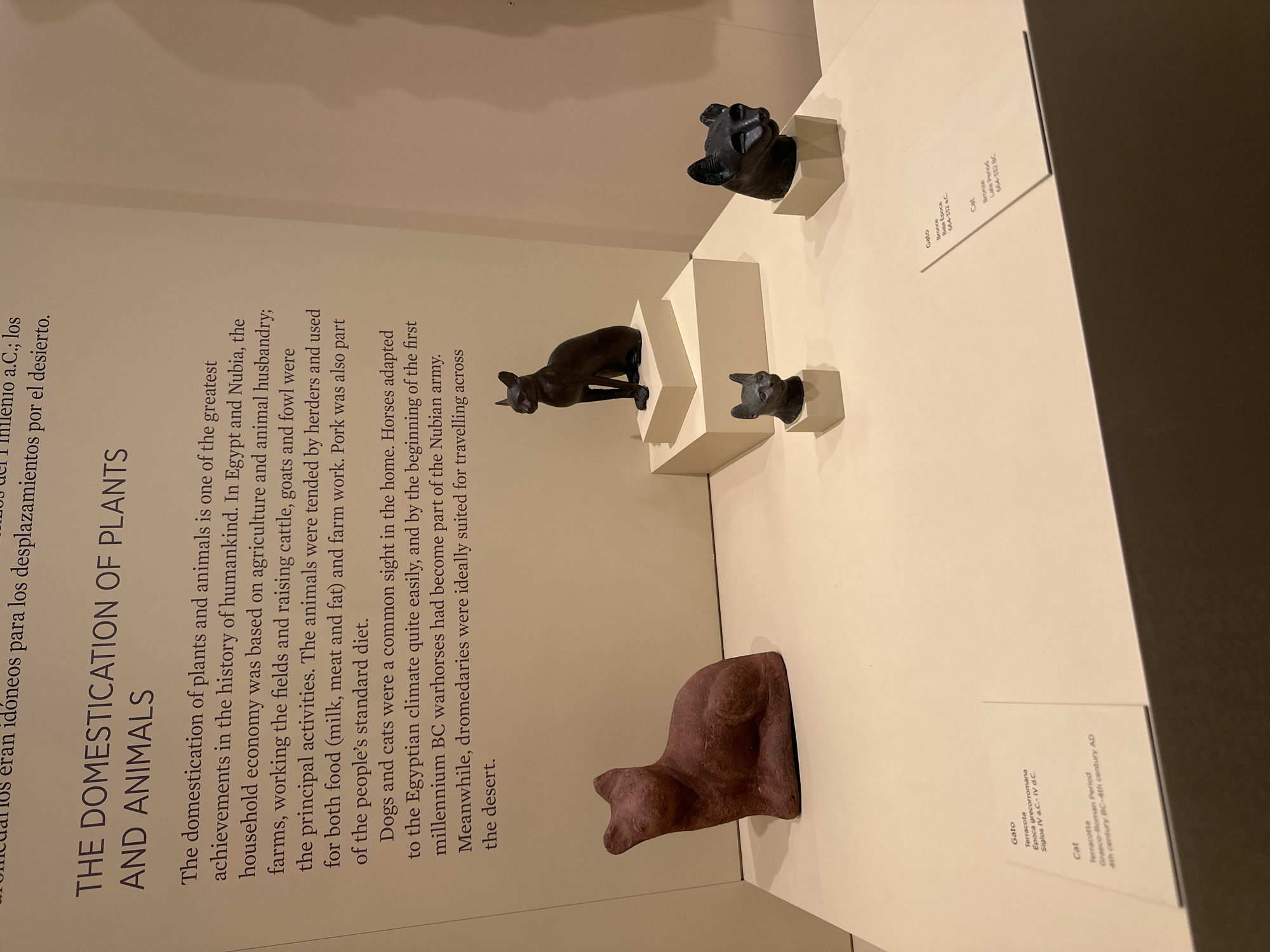
This media file depicts a museum display of ancient Egyptian and Greco-Roman artifacts related to animal domestication. The scene is indoors, likely in a museum setting, with a neutral-colored wall as the backdrop. The display features several sculpted animal figures, primarily cats, made from different materials including bronze and terracotta. These are placed on white pedestals of varying heights. The prominent text on the wall explains the historical significance of plant and animal domestication, highlighting its role in the development of civilizations like ancient Egypt and Nubia. It details how agriculture, animal husbandry, and the use of animals for food and labor contributed to their economies. The text also mentions the adoption of horses and the use of dromedaries for desert travel. Several labels are visible, identifying specific artifacts. One label for a "Gato" (Cat) in bronze from the Late Period (664-332 BC) is present, as is another for a "Cat" in terracotta from the Graeco-Roman Period (4th century BC-4th century AD), also labeled as "Gato" in Spanish. The overall mood is informative and educational, conveying historical and cultural information about ancient societies' relationship with animals. The lighting appears to be ambient museum lighting, and there are no clear indicators of the time of day or weather conditions. The location context provided (Madrid, Spain) suggests this is likely an exhibit within a Spanish museum.
Loading AttnAds…
No transactions found