
Stake attention in this memory
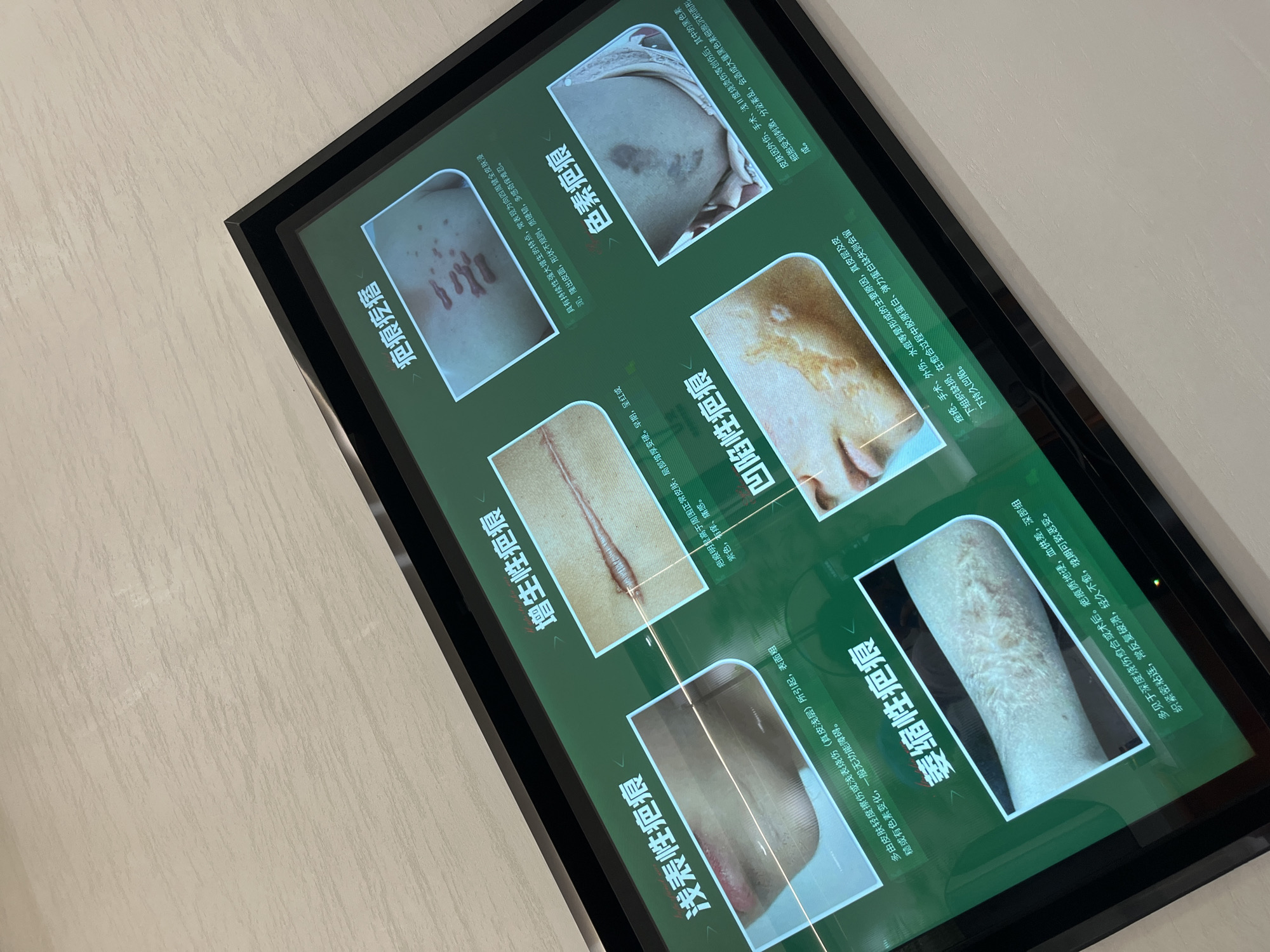
The image displays a digital information screen, likely part of an exhibit or educational display, showcasing various types of scars. The screen has a black bezel and is set against a light-colored, textured wall or surface. The content on the screen is organized into six distinct sections, each dedicated to a different type of scar, featuring an illustrative image and a descriptive text in Simplified Chinese. The background for these sections is a uniform green. The scar types presented are: 1. **浅表性疤痕 (Superficial scar):** Described as resulting from minor abrasions or superficial burns, often appearing rough or with pigment changes, typically without functional impairment. The accompanying image shows a reddish, slightly raised mark. 2. **增生性疤痕 (Hypertrophic scar):** Characterized by being notably higher than the surrounding skin, thickened, reddish or purplish in early stages, and associated with itching and pain. The image depicts a prominent, raised scar. 3. **疤痕疙瘩 (Keloid scar):** Identified by continuous vigorous growth, spreading into healthy skin, irregular shape, tough texture, and often severe itching. The image shows multiple irregular, raised skin lesions. 4. **萎缩性疤痕 (Atrophic scar):** Frequently occurring after deep burns or surgery, these scars are described as hard, poorly vascularized, deeply adherent, prone to recurrent ulceration, and potentially malignant in chronic cases. The image shows pale, thin, and wrinkled skin. 5. **凹陷性疤痕 (Depressed scar):** Attributed to factors like acne, surgery, trauma, or chickenpox, resulting from a lack of collagen and elastin during healing. The image shows a noticeable indentation in the skin. 6. **色素疤痕 (Pigmented scar):** Formed due to trauma, surgery, or superficial second-degree burns that stimulate melanocytes, leading to disordered melanin secretion and accumulation. The image displays a dark, discolored area on the skin. The display is well-lit and the text is clear, indicating its purpose is to educate viewers on different scar classifications. The context suggests an indoor setting in Liangjiang, China, possibly a medical facility, museum, or public health exhibition.
Symbol
15197
Volume
3,412
Creator
+$0.02
Revenue
+$0.00
TVL
$0.21
Loading AttnAds…