Sign in
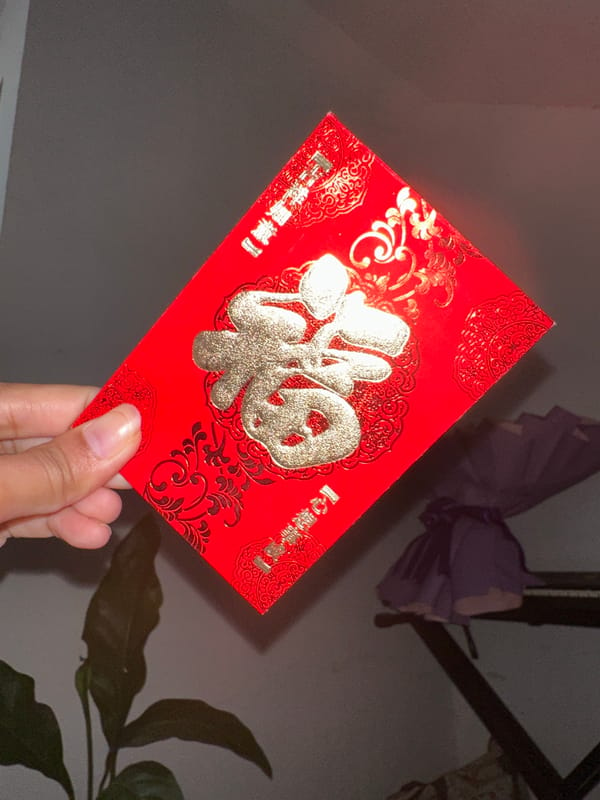
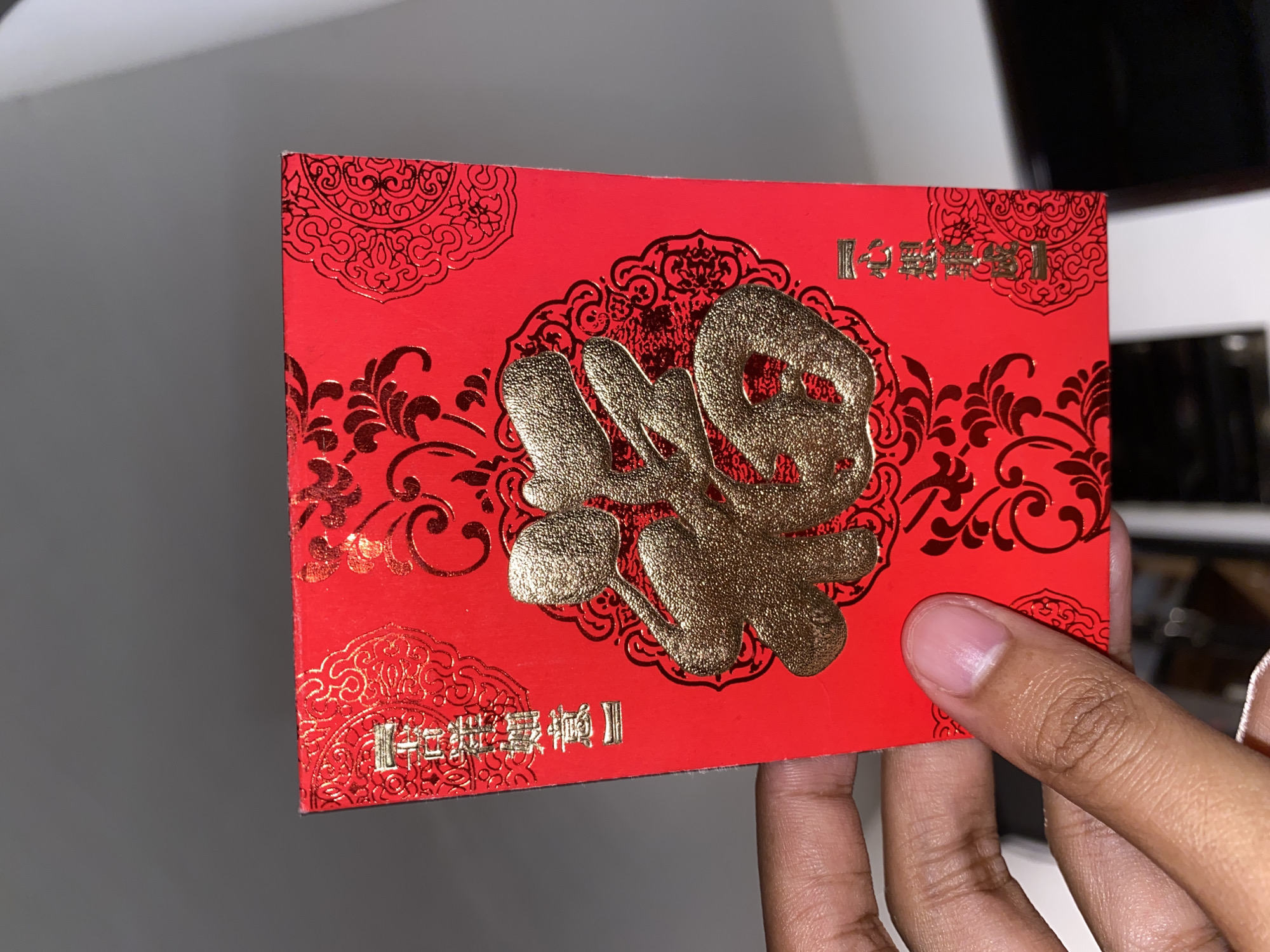
The image features a close-up of a red envelope, commonly known as a hongbao or ang pao, held by a person's hand. The hand has a dark/brown skin tone, with fingers partially visible at the bottom right.

The red envelope is adorned with intricate dark red or black ornamental patterns, resembling swirling floral or traditional motifs, across its surface. The central and most prominent feature is a large, golden, textured Chinese character "福" (fú), which translates to "fortune" or "good luck."

In the upper right corner of the envelope, smaller dark red/black Chinese characters spell out "恭喜发财" (gōngxǐfācái), a common greeting meaning "wishing you prosperity," particularly exchanged during Chinese New Year. In the bottom left corner, another set of smaller dark red/black characters reads "心想事成" (xīnxiǎngshìchéng), conveying the wish "may all your wishes come true" or "may your heart's desires be fulfilled."

The background is blurred, showing varying shades of gray and hints of white, suggesting an indoor setting with artificial lighting. The act of holding the red envelope implies a cultural practice of gift-giving, typically involving money, during festive events such as Chinese New Year, weddings, or birthdays, a common tradition in communities like Davao City, Philippines, with Chinese cultural influences. The time of day is not discernible, and no specific emotions are conveyed by the visible parts of the hand.
ChipLen

Jun 2, 2026, 2:02 PM

Davao City, Philippines

Stake attention in this memory

joyful
festive
hopeful
traditional
auspicious

The image features a close-up of a red envelope, commonly known as a hongbao or ang pao, held by a person's hand. The hand has a dark/brown skin tone, with fingers partially visible at the bottom right. The red envelope is adorned with intricate dark red or black ornamental patterns, resembling swirling floral or traditional motifs, across its surface. The central and most prominent feature is a large, golden, textured Chinese character "福" (fú), which translates to "fortune" or "good luck." In the upper right corner of the envelope, smaller dark red/black Chinese characters spell out "恭喜发财" (gōngxǐfācái), a common greeting meaning "wishing you prosperity," particularly exchanged during Chinese New Year. In the bottom left corner, another set of smaller dark red/black characters reads "心想事成" (xīnxiǎngshìchéng), conveying the wish "may all your wishes come true" or "may your heart's desires be fulfilled." The background is blurred, showing varying shades of gray and hints of white, suggesting an indoor setting with artificial lighting. The act of holding the red envelope implies a cultural practice of gift-giving, typically involving money, during festive events such as Chinese New Year, weddings, or birthdays, a common tradition in communities like Davao City, Philippines, with Chinese cultural influences. The time of day is not discernible, and no specific emotions are conveyed by the visible parts of the hand.

Loading AttnAds…

transactions
revenues
stakers
Earliest
Latest
Highest stake

No transactions found

More from this user

More from Davao City

ChipLen

Jun 2, 2026, 2:02 PM

Davao City, Philippines

Licensed under Creative Commons Attribution 4.0 International License. You are free to share and adapt this content with proper attribution.