Sign in
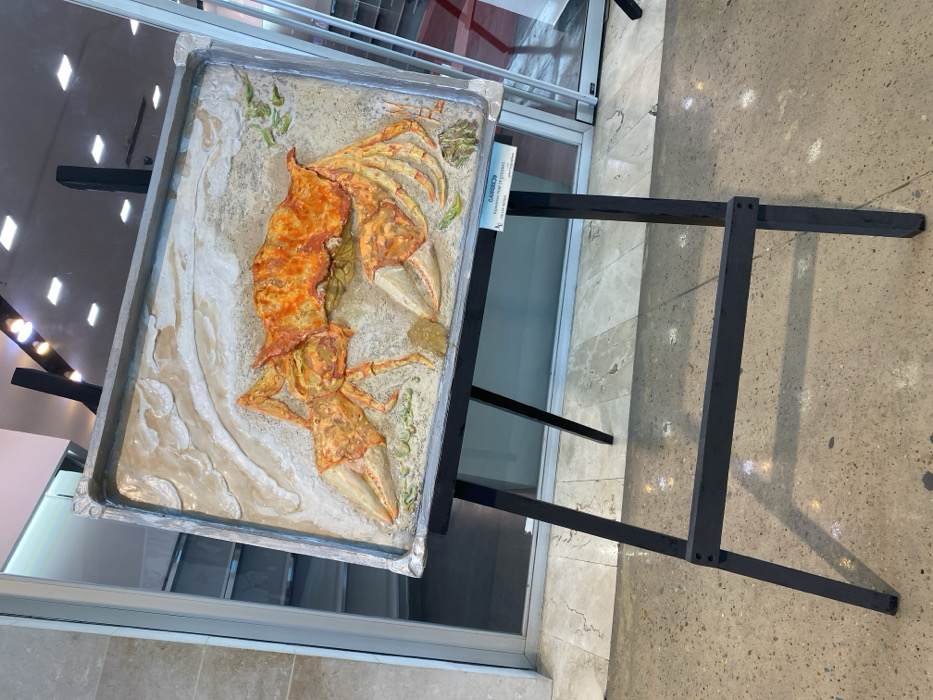
The original image displays a large, rectangular relief artwork presented vertically on a black easel. The artwork is predominantly brown, orange, and tan, depicting a detailed representation of a crab, possibly a fossil or a stylized sculpture, against a textured background.

The crab, which fills much of the frame, is rendered in vibrant orange and lighter tan tones, suggesting a cooked or fossilized appearance. Its prominent features include a large, detailed claw on the upper right, multiple segmented legs, and a textured carapace. The background of the artwork is a light, sandy color with wavy, relief patterns on the left side, resembling water or sand ripples. Scattered green, plant-like elements, possibly seaweed or algae, are visible on the right and around the crab. The overall impression is that of a marine creature resting on a seabed.

The artwork rests on a sturdy, black metal easel. The easel has two main vertical supports and several horizontal crossbars, one of which holds the bottom edge of the artwork. The easel's legs extend towards the bottom right of the frame, indicating its stand.

To the immediate right of the artwork, attached to the easel, is a small, light-colored sign or plaque with text. The most clearly visible text reads "CANCROF" at the top. Below this, smaller text is partially visible, stating "ESTE ES UN..." and "HACE 100 MILLONES DE...", suggesting a description of the crab, possibly indicating it is a fossil and its age (100 million years).

The setting appears to be an indoor public space, such as a gallery, museum, or shopping mall. The floor, visible on the right and bottom of the image, is made of light-colored, possibly terrazzo or tiled material, with reflections of overhead lights creating bright spots. The background on the left and top consists of reflective surfaces, likely glass walls or windows, showing blurred reflections of interior architecture and bright artificial lights. The lighting is bright and even, consistent with an indoor environment. The entire image is oriented vertically, with the easel and artwork appearing upright from this perspective.
Jeremy

Jan 29, 2026

Pampatar, Venezuela

Stake attention in this memory

crab art
easel
sculpture
seafood
display

The original image displays a large, rectangular relief artwork presented vertically on a black easel. The artwork is predominantly brown, orange, and tan, depicting a detailed representation of a crab, possibly a fossil or a stylized sculpture, against a textured background. The crab, which fills much of the frame, is rendered in vibrant orange and lighter tan tones, suggesting a cooked or fossilized appearance. Its prominent features include a large, detailed claw on the upper right, multiple segmented legs, and a textured carapace. The background of the artwork is a light, sandy color with wavy, relief patterns on the left side, resembling water or sand ripples. Scattered green, plant-like elements, possibly seaweed or algae, are visible on the right and around the crab. The overall impression is that of a marine creature resting on a seabed. The artwork rests on a sturdy, black metal easel. The easel has two main vertical supports and several horizontal crossbars, one of which holds the bottom edge of the artwork. The easel's legs extend towards the bottom right of the frame, indicating its stand. To the immediate right of the artwork, attached to the easel, is a small, light-colored sign or plaque with text. The most clearly visible text reads "CANCROF" at the top. Below this, smaller text is partially visible, stating "ESTE ES UN..." and "HACE 100 MILLONES DE...", suggesting a description of the crab, possibly indicating it is a fossil and its age (100 million years). The setting appears to be an indoor public space, such as a gallery, museum, or shopping mall. The floor, visible on the right and bottom of the image, is made of light-colored, possibly terrazzo or tiled material, with reflections of overhead lights creating bright spots. The background on the left and top consists of reflective surfaces, likely glass walls or windows, showing blurred reflections of interior architecture and bright artificial lights. The lighting is bright and even, consistent with an indoor environment. The entire image is oriented vertically, with the easel and artwork appearing upright from this perspective.

transactions
revenues
stakers
Earliest
Latest
Highest stake

No transactions found

More from this user

More from Pampatar

Jeremy

Jan 29, 2026

Pampatar, Venezuela

Licensed under Creative Commons Attribution 4.0 International License. You are free to share and adapt this content with proper attribution.