
Sign in
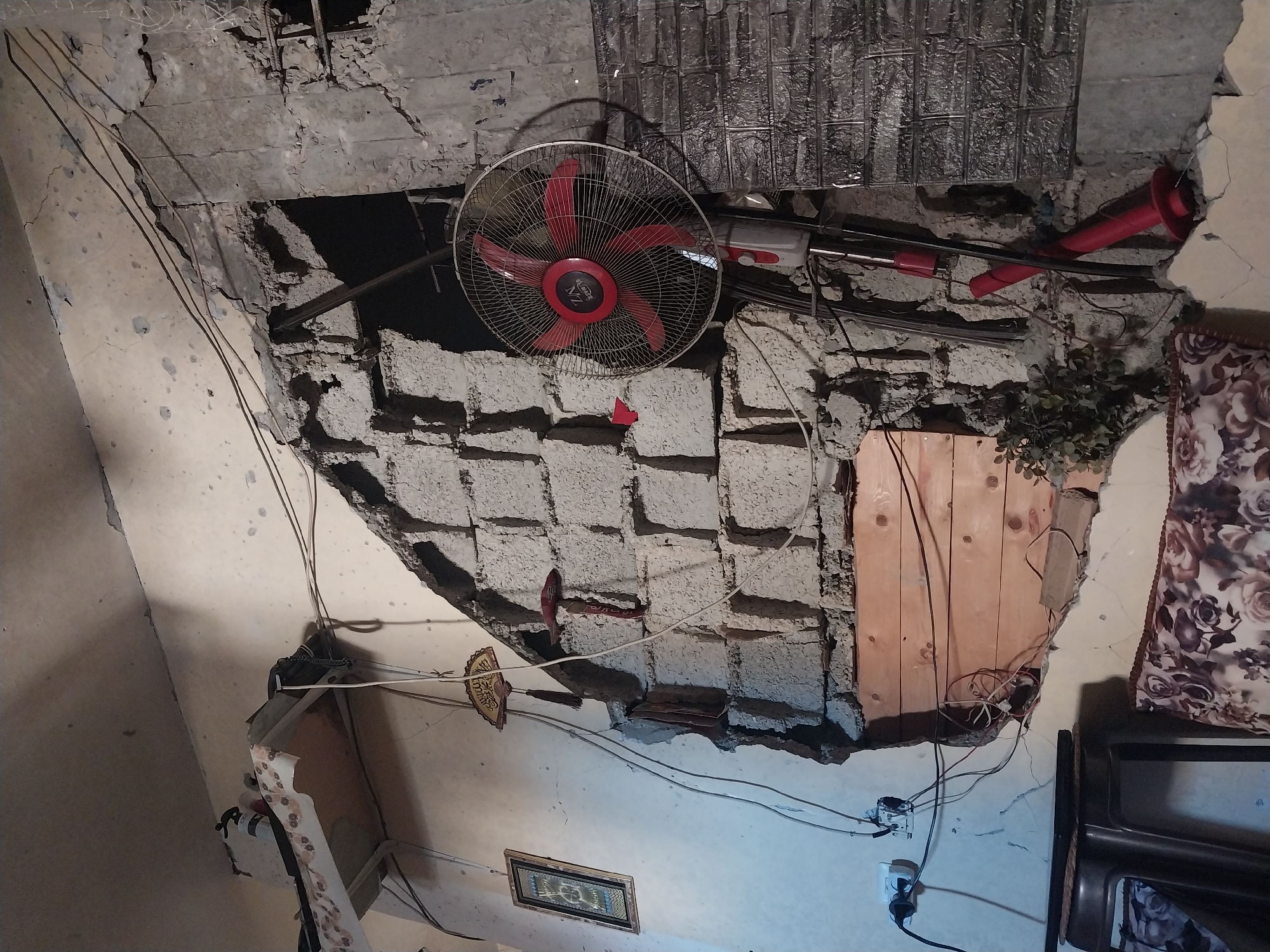
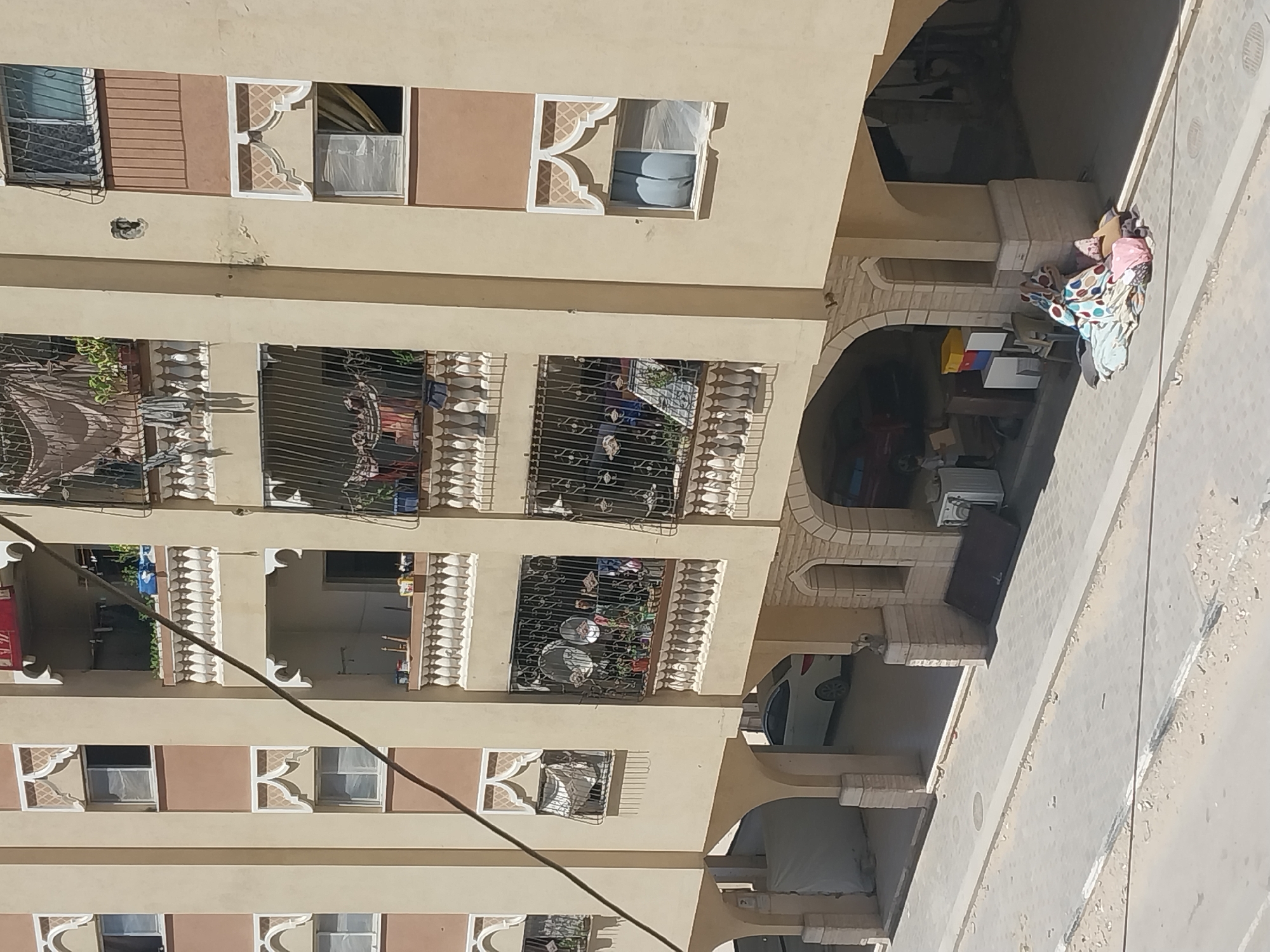
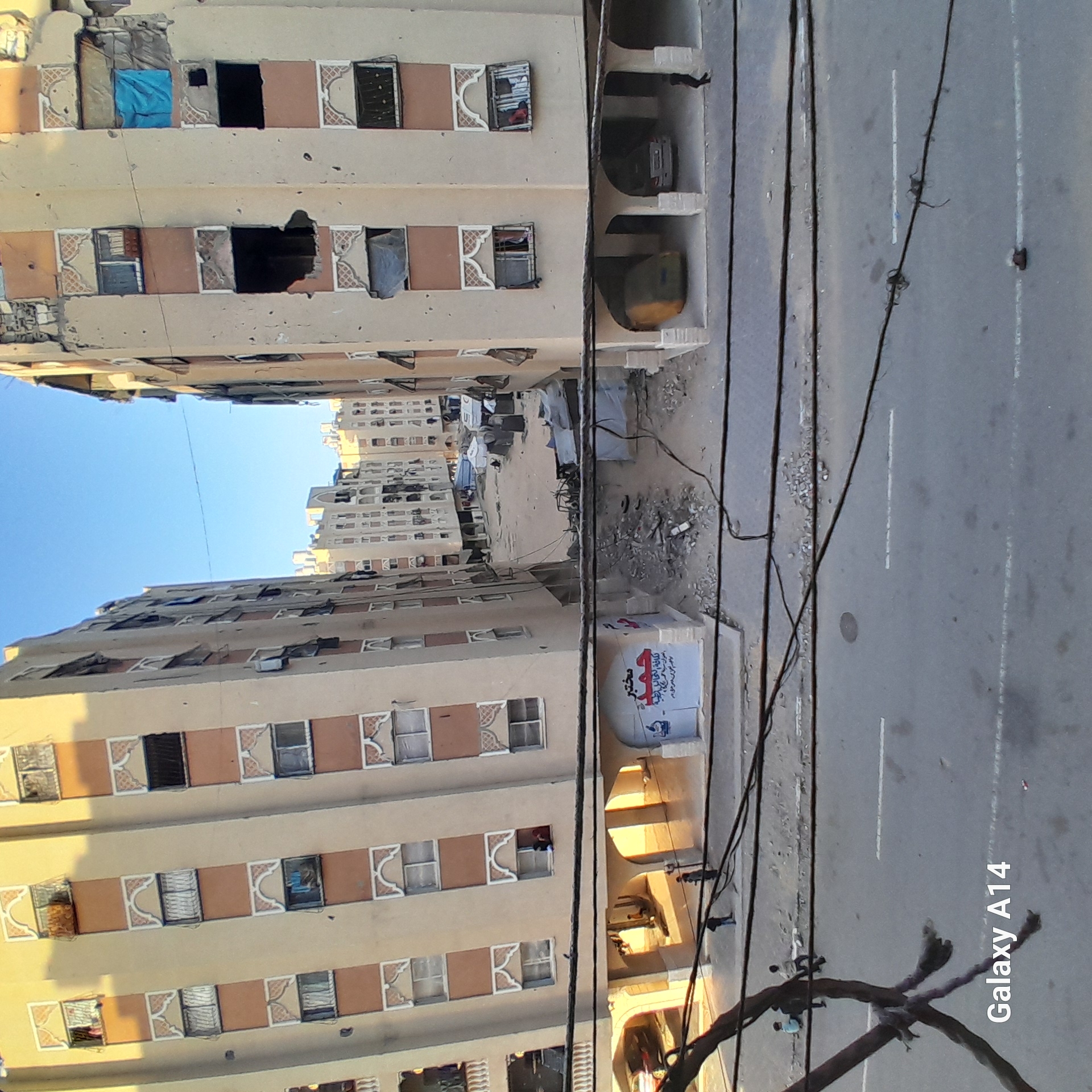
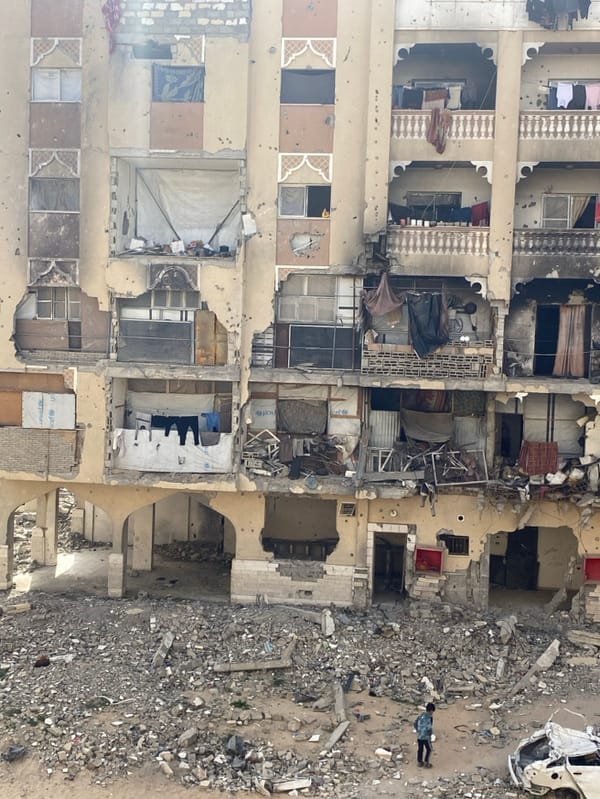
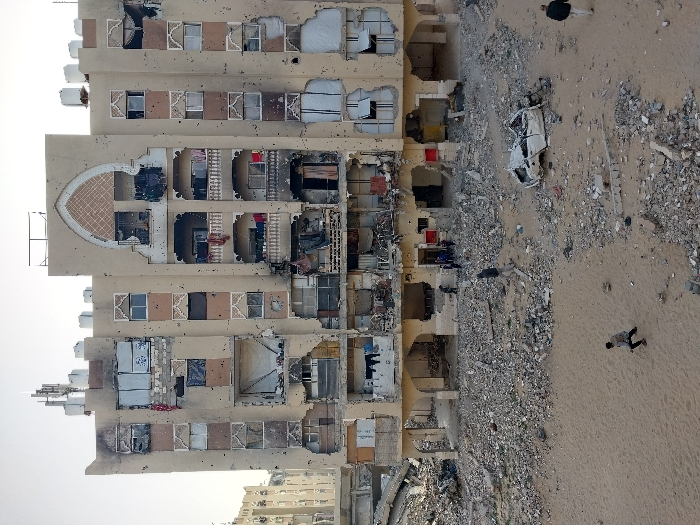
The image displays a desolate and heavily damaged urban landscape, centered around a multi-story building that has suffered extensive destruction. The building, which appears to be residential or commercial, is constructed of light-colored, possibly tan or beige, material. It spans at least six to seven visible floors.

The structure exhibits severe damage consistent with conflict or a major disaster. Many windows are shattered, entirely missing, or boarded up, exposing the interiors of numerous rooms. Large sections of the facade are blown out, revealing debris and destroyed furnishings within. Burn marks, characterized by blackened walls and charred remnants, are visible on several floors, particularly in the lower and middle sections. The building's exterior is extensively pockmarked with smaller holes, suggestive of bullet holes or shrapnel impacts. A distinctive architectural feature, an arched alcove with intricate patterned tiling, is prominent on an upper floor, possibly indicating a decorative element or a specific cultural design. Clothes and other personal items are faintly visible hanging from some damaged balconies or within the exposed rooms, hinting at the lives once lived there. Several satellite dishes are perched on the roof.

The ground in front of the building is a vast expanse of sandy terrain mixed with heavy rubble. Piles of concrete, twisted metal, shattered glass, and other building debris are scattered across the area, creating a chaotic and difficult-to-traverse environment. In the middle ground, a heavily damaged white sedan is overturned and completely wrecked, surrounded by the widespread debris.

Three individuals are visible within the scene, all dressed in dark clothing. One person walks across the sandy, less debris-strewn part of the ground in the lower right quadrant of the image, moving towards the left. Another person stands further back and to the right, near the transition zone between sand and heavy rubble. A third individual is partially visible on the far right edge, near the top of the frame. Their presence amidst the devastation suggests they are either residents, observers, or navigating the aftermath.

The sky is bright and appears overcast or hazy, indicating daytime conditions. There are no strong shadows, suggesting either an overcast day or a time of day when the sun is high. The overall scene conveys a profound sense of devastation and the aftermath of a destructive event. While no explicit location is identifiable from text, the architectural style and sandy environment could suggest a region in the Middle East or North Africa. No legible text is visible in the image.
reham

Feb 18, 2026, 2:41 PM

Khan Yunis, Palestinian Territory

Stake attention in this memory

war damage
destroyed building
rubble
urban decay
aftermath

The image displays a desolate and heavily damaged urban landscape, centered around a multi-story building that has suffered extensive destruction. The building, which appears to be residential or commercial, is constructed of light-colored, possibly tan or beige, material. It spans at least six to seven visible floors. The structure exhibits severe damage consistent with conflict or a major disaster. Many windows are shattered, entirely missing, or boarded up, exposing the interiors of numerous rooms. Large sections of the facade are blown out, revealing debris and destroyed furnishings within. Burn marks, characterized by blackened walls and charred remnants, are visible on several floors, particularly in the lower and middle sections. The building's exterior is extensively pockmarked with smaller holes, suggestive of bullet holes or shrapnel impacts. A distinctive architectural feature, an arched alcove with intricate patterned tiling, is prominent on an upper floor, possibly indicating a decorative element or a specific cultural design. Clothes and other personal items are faintly visible hanging from some damaged balconies or within the exposed rooms, hinting at the lives once lived there. Several satellite dishes are perched on the roof. The ground in front of the building is a vast expanse of sandy terrain mixed with heavy rubble. Piles of concrete, twisted metal, shattered glass, and other building debris are scattered across the area, creating a chaotic and difficult-to-traverse environment. In the middle ground, a heavily damaged white sedan is overturned and completely wrecked, surrounded by the widespread debris. Three individuals are visible within the scene, all dressed in dark clothing. One person walks across the sandy, less debris-strewn part of the ground in the lower right quadrant of the image, moving towards the left. Another person stands further back and to the right, near the transition zone between sand and heavy rubble. A third individual is partially visible on the far right edge, near the top of the frame. Their presence amidst the devastation suggests they are either residents, observers, or navigating the aftermath. The sky is bright and appears overcast or hazy, indicating daytime conditions. There are no strong shadows, suggesting either an overcast day or a time of day when the sun is high. The overall scene conveys a profound sense of devastation and the aftermath of a destructive event. While no explicit location is identifiable from text, the architectural style and sandy environment could suggest a region in the Middle East or North Africa. No legible text is visible in the image.

Loading AttnAds…

transactions
revenues
stakers
Earliest
Latest
Highest stake

No transactions found

More from this user

More from Khan Yunis

reham

Feb 18, 2026, 2:41 PM

Khan Yunis, Palestinian Territory

Licensed under Creative Commons Attribution 4.0 International License. You are free to share and adapt this content with proper attribution.