Sign in
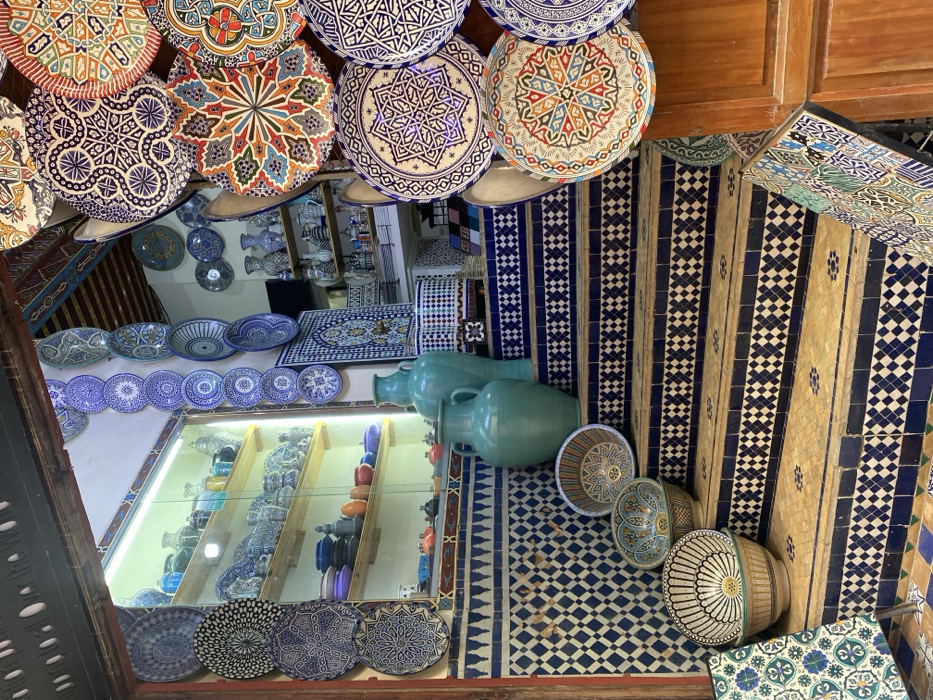
The image presents a vibrant and richly decorated interior, likely a shop or market stall specializing in handcrafted ceramics and pottery. The scene is filled with intricate patterns and colors, predominantly blues, whites, and earthy tones, showcasing a diverse array of traditional artisanal products.

Dominating the upper portion of the image are numerous large, circular decorative plates, seemingly hanging from a ceiling or high wall. These plates feature a wide variety of complex geometric and floral designs. Many are classic blue and white, displaying elaborate starbursts, interwoven lines, and arabesque motifs. Others are more colorful, incorporating shades of orange, red, yellow, green, and black into their detailed patterns, characteristic of traditional Moroccan or Mediterranean ceramic art. Each plate appears to have a unique design and color scheme.

Below these hanging plates, the space transitions into a display area. On the left, several rows of blue and white plates and shallow bowls are neatly arranged on shelves or flat surfaces, each exhibiting distinct patterns ranging from simple concentric circles to more complex abstract designs. Towards the right, three large, distinctly shaped ceramic vases or jugs, colored in a solid, striking turquoise or teal, stand out against the patterned background. These vessels appear traditional and robust.

The walls and structural elements throughout the shop are extensively adorned with mosaic tiles, a prominent feature of the decor. These tiles form captivating geometric patterns, primarily using shades of deep blue, light blue, white, and a warm yellowish-brown or gold. The patterns vary from striped arrangements of small squares and rectangles to intricate diamond grids, creating a textured and visually engaging backdrop for the pottery. Sections of warm brown wooden beams or shelves are also visible, framing parts of the display areas.

In the lower section of the image, more ceramics are displayed. An illuminated glass display case runs horizontally, revealing numerous smaller ceramic pieces, predominantly in blue and white, neatly arranged on shelves within. Below this display, on what appears to be a tiled floor, three large, beautifully crafted bowls are prominently showcased. These bowls feature intricate radial patterns in muted gold, blue, and white, with fine details and a glazed finish. The floor itself continues the theme of elaborate tiling, patterned with blue and white diamonds. In the background, behind the main displays, additional shelves packed with more ceramic items can be glimpsed, indicating a vast collection of merchandise.

The overall impression is one of cultural richness, meticulous craftsmanship, and an abundance of beautiful artisanal products. The bright lighting, possibly from internal shop lights, effectively highlights the intricate details and vibrant colors of the ceramics and tiles. No people are visible, allowing the focus to remain entirely on the exquisite merchandise and the decor. The style of the pottery and tiling strongly suggests a location within North Africa, likely Morocco, known for its distinctive Fes pottery and Zellige tilework. No discernible text is present in the image.
number one

Feb 25, 2026, 3:34 PM

Fez, Morocco

Stake attention in this memory

Intricate
Cultural
Vibrant
Artistic
Curious

The image presents a vibrant and richly decorated interior, likely a shop or market stall specializing in handcrafted ceramics and pottery. The scene is filled with intricate patterns and colors, predominantly blues, whites, and earthy tones, showcasing a diverse array of traditional artisanal products. Dominating the upper portion of the image are numerous large, circular decorative plates, seemingly hanging from a ceiling or high wall. These plates feature a wide variety of complex geometric and floral designs. Many are classic blue and white, displaying elaborate starbursts, interwoven lines, and arabesque motifs. Others are more colorful, incorporating shades of orange, red, yellow, green, and black into their detailed patterns, characteristic of traditional Moroccan or Mediterranean ceramic art. Each plate appears to have a unique design and color scheme. Below these hanging plates, the space transitions into a display area. On the left, several rows of blue and white plates and shallow bowls are neatly arranged on shelves or flat surfaces, each exhibiting distinct patterns ranging from simple concentric circles to more complex abstract designs. Towards the right, three large, distinctly shaped ceramic vases or jugs, colored in a solid, striking turquoise or teal, stand out against the patterned background. These vessels appear traditional and robust. The walls and structural elements throughout the shop are extensively adorned with mosaic tiles, a prominent feature of the decor. These tiles form captivating geometric patterns, primarily using shades of deep blue, light blue, white, and a warm yellowish-brown or gold. The patterns vary from striped arrangements of small squares and rectangles to intricate diamond grids, creating a textured and visually engaging backdrop for the pottery. Sections of warm brown wooden beams or shelves are also visible, framing parts of the display areas. In the lower section of the image, more ceramics are displayed. An illuminated glass display case runs horizontally, revealing numerous smaller ceramic pieces, predominantly in blue and white, neatly arranged on shelves within. Below this display, on what appears to be a tiled floor, three large, beautifully crafted bowls are prominently showcased. These bowls feature intricate radial patterns in muted gold, blue, and white, with fine details and a glazed finish. The floor itself continues the theme of elaborate tiling, patterned with blue and white diamonds. In the background, behind the main displays, additional shelves packed with more ceramic items can be glimpsed, indicating a vast collection of merchandise. The overall impression is one of cultural richness, meticulous craftsmanship, and an abundance of beautiful artisanal products. The bright lighting, possibly from internal shop lights, effectively highlights the intricate details and vibrant colors of the ceramics and tiles. No people are visible, allowing the focus to remain entirely on the exquisite merchandise and the decor. The style of the pottery and tiling strongly suggests a location within North Africa, likely Morocco, known for its distinctive Fes pottery and Zellige tilework. No discernible text is present in the image.

Loading AttnAds…

transactions
revenues
stakers
Earliest
Latest
Highest stake

No transactions found

More from this user

More from Fez

number one

Feb 25, 2026, 3:34 PM

Fez, Morocco

Licensed under Creative Commons Attribution 4.0 International License. You are free to share and adapt this content with proper attribution.