
Stake attention in this memory
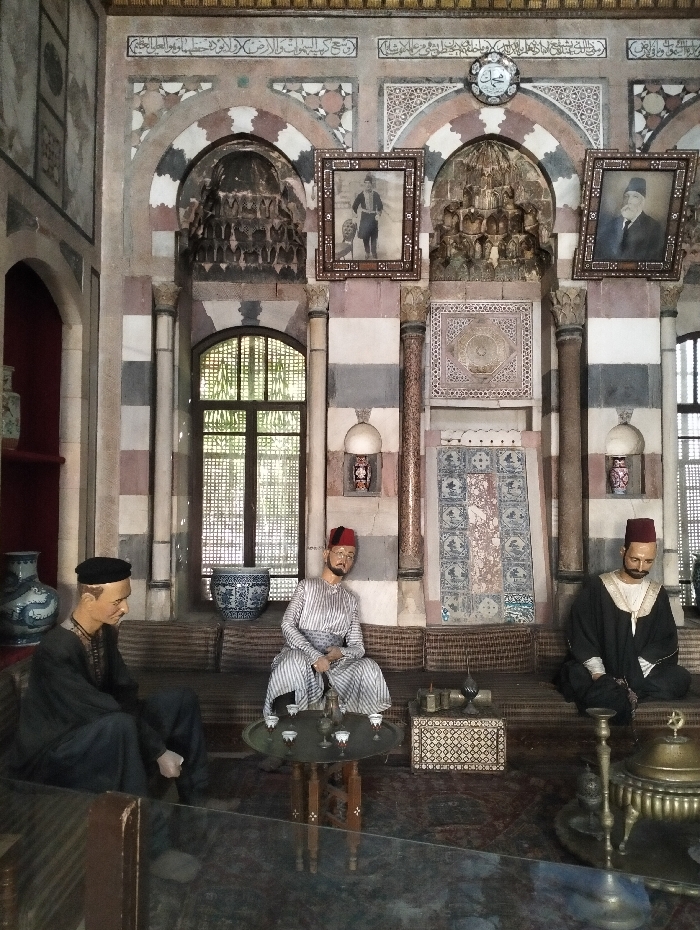
The image depicts an interior scene within a traditional Damascene residential space, characteristic of a museum exhibit in Damascus, Syria. The room's architecture features walls constructed with ablaq masonry, exhibiting alternating horizontal bands of light and dark stone. Two prominent upper arched niches are detailed with intricate carved muqarnas (stalactite vaulting). Panels with Arabic calligraphy are present above these arches, and a central circular clock is mounted high on the wall. Between the arches, two framed portraits, one depicting a man in traditional attire with a saber and another an older man in formal wear, flank a central framed geometric artwork. A large rectangular panel with detailed geometric patterns is centered on the lower wall. Three male mannequins are posed in seated positions on a low, striped fabric-covered bench (dikkat) that extends along the wall. From left to right: 1. A mannequin wearing a black cap and a dark, long-sleeved robe, seated facing right. 2. A central mannequin wearing a red fez and a striped robe, seated facing forward. In front of this figure is a low, round wooden table topped with a brass tray holding a metal teapot/ewer and several small, empty cups. 3. A mannequin wearing a red fez and a dark robe with a light-colored collar, seated cross-legged, facing left. To his right (viewer's left) is a small, rectangular wooden box inlaid with mother-of-pearl. Further objects within the scene include a large blue and white ceramic pot adorned with dragon motifs, positioned on the bench to the left of the central mannequin. To the right of the rightmost mannequin, a large, ornate brass or copper vessel rests on the floor. Two arched windows with patterned grilles are visible, one prominently on the left providing natural light, and another partially on the far right. A reflective glass barrier is present in the foreground, indicating the display's enclosure. The floor is covered with an ornate, patterned rug.
No transactions found