
Sign in
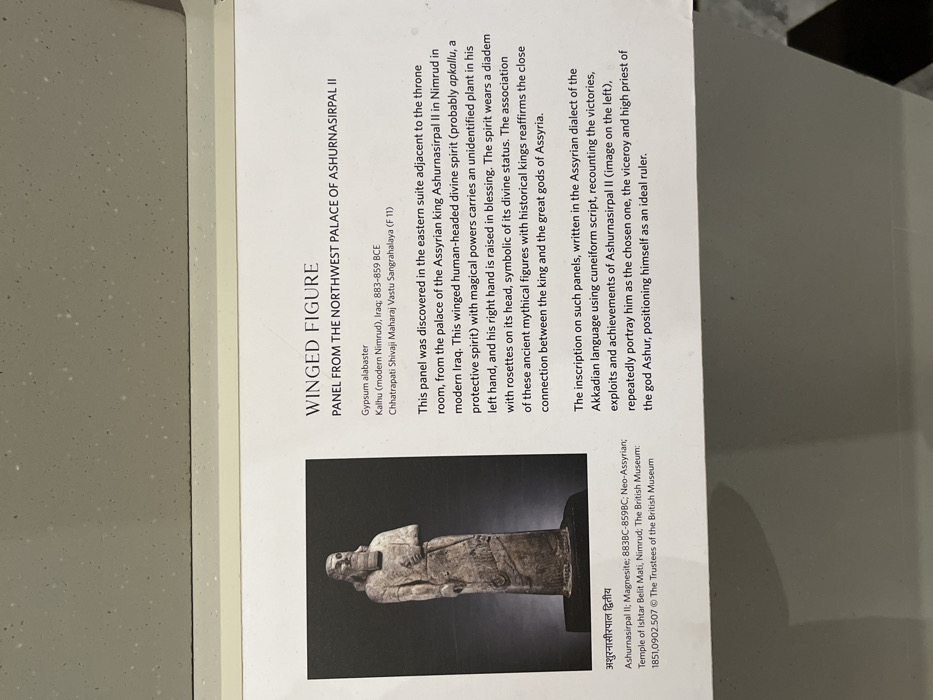
The image displays a museum exhibit featuring an ancient Assyrian stone carving and its descriptive label. The primary subject is a light-colored, full-length carving of a standing winged human-headed figure, made of gypsum alabaster. The figure has a prominent beard, wears a diadem with rosettes, and large wings. Its left hand holds an unidentified plant, while its right hand is raised in a gesture of blessing. The carving is mounted on a dark, flat base.

The accompanying informational panel, oriented vertically, provides comprehensive details. It identifies the carving as a "WINGED FIGURE PANEL FROM THE NORTHWEST PALACE OF ASHURNASIRPAL II," dating from 883-859 BCE, originating from Kalhu (modern Nimrud), Iraq. The figure is described as a human-headed divine spirit, likely an *apkallu* (protective spirit), with magical powers. Its diadem symbolizes divine status, linking ancient mythical figures to historical kings and the great gods of Assyria. The text also explains that similar panels bear cuneiform inscriptions in Akkadian, recounting the victories and achievements of Ashurnasirpal II, portraying him as a chosen, ideal ruler. The artwork is part of The British Museum's collection (accession number 1851,0902.507) and is on display at the Chhatrapati Shivaji Maharaj Vastu Sangrahalaya in Mumbai, India, as indicated on the label. The scene is an indoor museum setting.
FM-OhtiC3

Dec 10, 2024

Mumbai, India

Stake attention in this memory

The image displays a museum exhibit featuring an ancient Assyrian stone carving and its descriptive label. The primary subject is a light-colored, full-length carving of a standing winged human-headed figure, made of gypsum alabaster. The figure has a prominent beard, wears a diadem with rosettes, and large wings. Its left hand holds an unidentified plant, while its right hand is raised in a gesture of blessing. The carving is mounted on a dark, flat base. The accompanying informational panel, oriented vertically, provides comprehensive details. It identifies the carving as a "WINGED FIGURE PANEL FROM THE NORTHWEST PALACE OF ASHURNASIRPAL II," dating from 883-859 BCE, originating from Kalhu (modern Nimrud), Iraq. The figure is described as a human-headed divine spirit, likely an *apkallu* (protective spirit), with magical powers. Its diadem symbolizes divine status, linking ancient mythical figures to historical kings and the great gods of Assyria. The text also explains that similar panels bear cuneiform inscriptions in Akkadian, recounting the victories and achievements of Ashurnasirpal II, portraying him as a chosen, ideal ruler. The artwork is part of The British Museum's collection (accession number 1851,0902.507) and is on display at the Chhatrapati Shivaji Maharaj Vastu Sangrahalaya in Mumbai, India, as indicated on the label. The scene is an indoor museum setting.

transactions
revenues
stakers
Earliest
Latest
Highest stake

No transactions found

More from this user

More from Mumbai

FM-OhtiC3

Dec 10, 2024

Mumbai, India

Licensed under Creative Commons Attribution 4.0 International License. You are free to share and adapt this content with proper attribution.