
Sign in
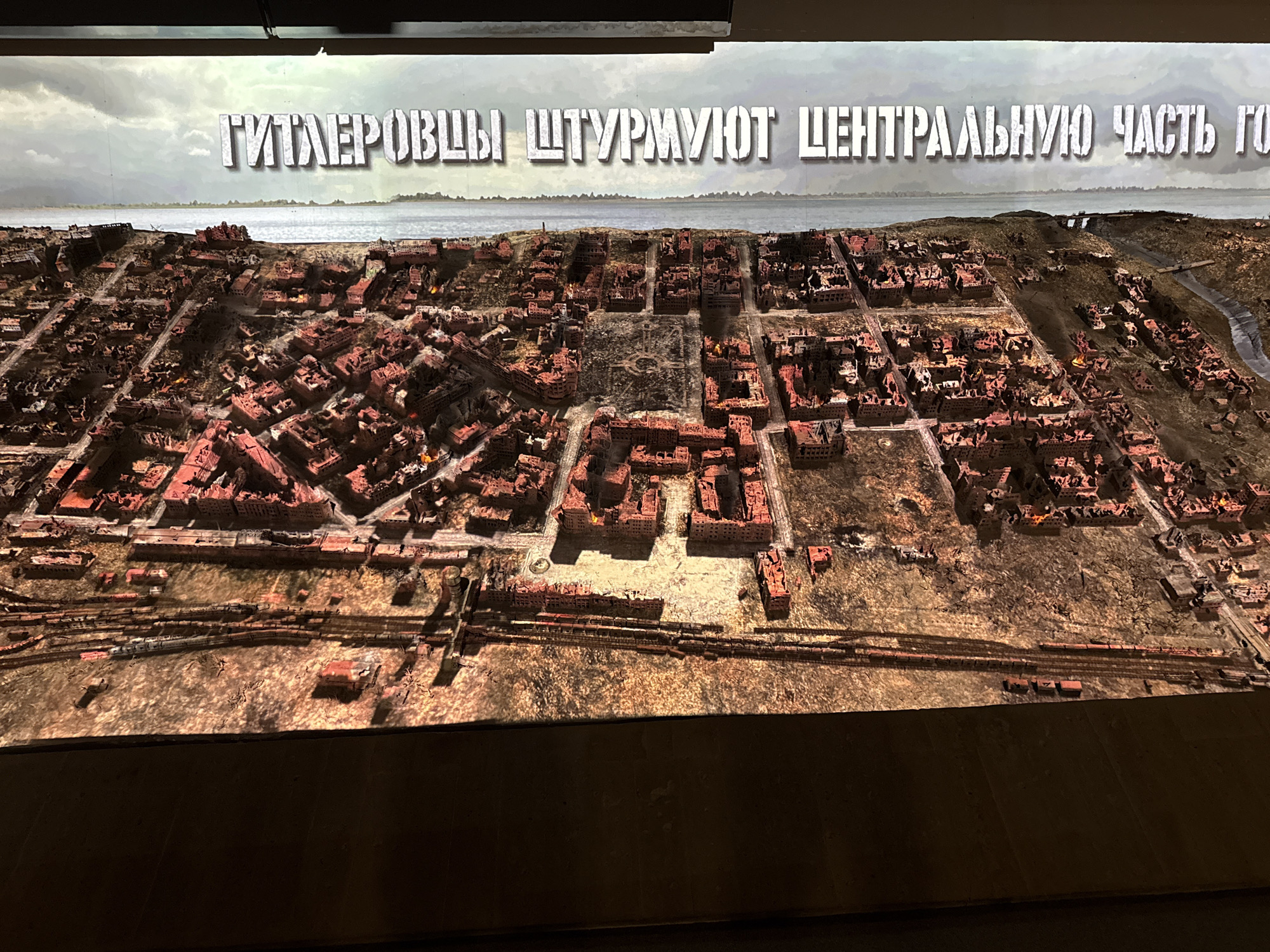
This media file displays a diorama of a city in ruins, illuminated by dramatic lighting that casts long shadows. Above the diorama, a panoramic backdrop depicts a body of water with a distant shoreline and a cloudy sky, suggesting a somber and possibly overcast atmosphere. Prominently displayed in large, embossed white lettering across the backdrop is text in Cyrillic script.

The diorama itself is a detailed miniature representation of a war-torn urban environment. Numerous buildings are shown in various states of destruction, with roofs collapsed, walls crumbling, and gaping holes. The architecture appears to be European, possibly from the mid-20th century. Evidence of fires can be seen in some areas, indicated by small red and orange glows within the damaged structures. The ground is littered with debris and rubble. A prominent feature of the diorama is a complex network of railway tracks running across the foreground and middle ground, with several train cars visible on them, also appearing damaged or destroyed.

The overall scene conveys a powerful sense of devastation and conflict. The careful arrangement of the diorama, combined with the lighting and the backdrop, aims to evoke a specific historical event. The visible text, "ГИТЛЕPОВЦЫ ШТУРМУЮТ ЦЕНТРАЛЬНУЮ ЧАСТЬ ГО" translates to "Hitlerites Storm the Central Part of the City," strongly suggesting that the diorama depicts a battle during World War II, likely in Stalingrad (now Volgograd), Russia, given the location context. The scene is likely meant to represent the intense fighting and destruction that occurred in the city. There are no visible people or discernible emotions in the diorama itself, as it focuses on the aftermath of human conflict. The time of day is indeterminate due to the artificial lighting, and the weather appears to be cloudy and perhaps rainy, contributing to the bleak mood.
MasterDen

Jun 26, 2026

Volgograd, Russia

Stake attention in this memory

somber
devastated
haunting
solemn
bleak

This media file displays a diorama of a city in ruins, illuminated by dramatic lighting that casts long shadows. Above the diorama, a panoramic backdrop depicts a body of water with a distant shoreline and a cloudy sky, suggesting a somber and possibly overcast atmosphere. Prominently displayed in large, embossed white lettering across the backdrop is text in Cyrillic script. The diorama itself is a detailed miniature representation of a war-torn urban environment. Numerous buildings are shown in various states of destruction, with roofs collapsed, walls crumbling, and gaping holes. The architecture appears to be European, possibly from the mid-20th century. Evidence of fires can be seen in some areas, indicated by small red and orange glows within the damaged structures. The ground is littered with debris and rubble. A prominent feature of the diorama is a complex network of railway tracks running across the foreground and middle ground, with several train cars visible on them, also appearing damaged or destroyed. The overall scene conveys a powerful sense of devastation and conflict. The careful arrangement of the diorama, combined with the lighting and the backdrop, aims to evoke a specific historical event. The visible text, "ГИТЛЕPОВЦЫ ШТУРМУЮТ ЦЕНТРАЛЬНУЮ ЧАСТЬ ГО" translates to "Hitlerites Storm the Central Part of the City," strongly suggesting that the diorama depicts a battle during World War II, likely in Stalingrad (now Volgograd), Russia, given the location context. The scene is likely meant to represent the intense fighting and destruction that occurred in the city. There are no visible people or discernible emotions in the diorama itself, as it focuses on the aftermath of human conflict. The time of day is indeterminate due to the artificial lighting, and the weather appears to be cloudy and perhaps rainy, contributing to the bleak mood.

transactions
revenues
stakers
Earliest
Latest
Highest stake

No transactions found

More from this user

More from Volgograd

MasterDen

Jun 26, 2026

Volgograd, Russia

Licensed under Creative Commons Attribution 4.0 International License. You are free to share and adapt this content with proper attribution.