Sign in
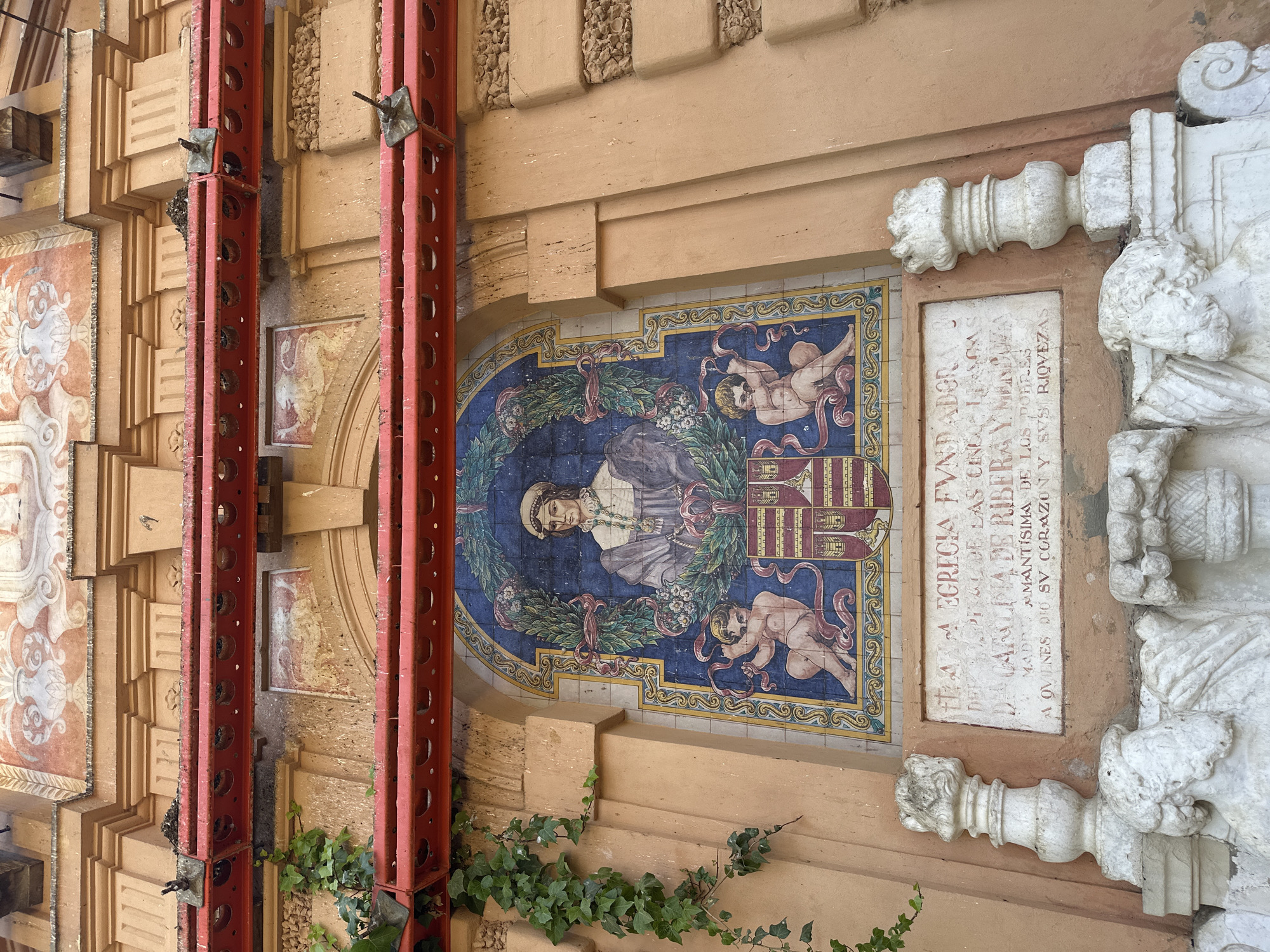
The image captures a vibrant segment of a historical building wall, characterized by a large, ornate ceramic tile (azulejo) mural and an adjacent stone inscription, partially obstructed by modern red metal support beams.

The central subject is a detailed azulejo mural depicting a dignified figure, likely a woman, in historical attire with a white cap, necklace, and dark cloak. She is framed by a lush green laurel wreath adorned with ribbons and white flowers. Two winged putti (cherubs) flank the wreath, one at the top right and another at the bottom right, both with flowing ribbons. To the right of the figure and below the upper putto is a prominent coat of arms with heraldic symbols, primarily in red and gold. The mural's background is a deep blue, enclosed by an intricate yellow and blue border.

To the right of the ceramic mural, a carved stone plaque bears an inscription in Spanish, partially obscured by a marble sculptural element. The visible text reads: "PARA EGRECIA FUNDADOR DEL HOSPITAL DE LAS CINCO LLAGAS DOÑA CATALINA DE RIBERA Y MENDOZA MADRE AMANTÍSIMA DE LOS POBRES A QUIENES DIO SU CORAZÓN Y SUS RIQUEZAS." This dedication commemorates Doña Catalina de Ribera y Mendoza as the esteemed founder of the Hospital de las Cinco Llagas, highlighting her benevolence towards the poor. Adjacent to this plaque, to its right, are ornate white marble carvings, including a decorative finial and a classical relief featuring a figure.

The wall itself is constructed of light tan/beige stone or plaster, featuring intricate moldings, recessed panels, and textured elements. Faded frescoes with classical motifs, possibly depicting vases and scrolls, are visible on the far left. Two bright red, perforated metal support beams run vertically across the scene, indicating ongoing construction, renovation, or structural reinforcement. Green ivy climbs along the base of the wall, adding a touch of nature to the weathered architecture. The scene is brightly lit by daylight, suggesting an outdoor setting, likely in Seville, Spain, given the architectural and artistic style.
Dani

Apr 22, 2026

Seville, Spain

Stake attention in this memory

historical
ornate
grand
artistic
traditional

The image captures a vibrant segment of a historical building wall, characterized by a large, ornate ceramic tile (azulejo) mural and an adjacent stone inscription, partially obstructed by modern red metal support beams. The central subject is a detailed azulejo mural depicting a dignified figure, likely a woman, in historical attire with a white cap, necklace, and dark cloak. She is framed by a lush green laurel wreath adorned with ribbons and white flowers. Two winged putti (cherubs) flank the wreath, one at the top right and another at the bottom right, both with flowing ribbons. To the right of the figure and below the upper putto is a prominent coat of arms with heraldic symbols, primarily in red and gold. The mural's background is a deep blue, enclosed by an intricate yellow and blue border. To the right of the ceramic mural, a carved stone plaque bears an inscription in Spanish, partially obscured by a marble sculptural element. The visible text reads: "PARA EGRECIA FUNDADOR DEL HOSPITAL DE LAS CINCO LLAGAS DOÑA CATALINA DE RIBERA Y MENDOZA MADRE AMANTÍSIMA DE LOS POBRES A QUIENES DIO SU CORAZÓN Y SUS RIQUEZAS." This dedication commemorates Doña Catalina de Ribera y Mendoza as the esteemed founder of the Hospital de las Cinco Llagas, highlighting her benevolence towards the poor. Adjacent to this plaque, to its right, are ornate white marble carvings, including a decorative finial and a classical relief featuring a figure. The wall itself is constructed of light tan/beige stone or plaster, featuring intricate moldings, recessed panels, and textured elements. Faded frescoes with classical motifs, possibly depicting vases and scrolls, are visible on the far left. Two bright red, perforated metal support beams run vertically across the scene, indicating ongoing construction, renovation, or structural reinforcement. Green ivy climbs along the base of the wall, adding a touch of nature to the weathered architecture. The scene is brightly lit by daylight, suggesting an outdoor setting, likely in Seville, Spain, given the architectural and artistic style.

transactions
revenues
stakers
Earliest
Latest
Highest stake

No transactions found

More from this user

More from Seville

Dani

Apr 22, 2026

Seville, Spain

Licensed under Creative Commons Attribution 4.0 International License. You are free to share and adapt this content with proper attribution.