Sign in
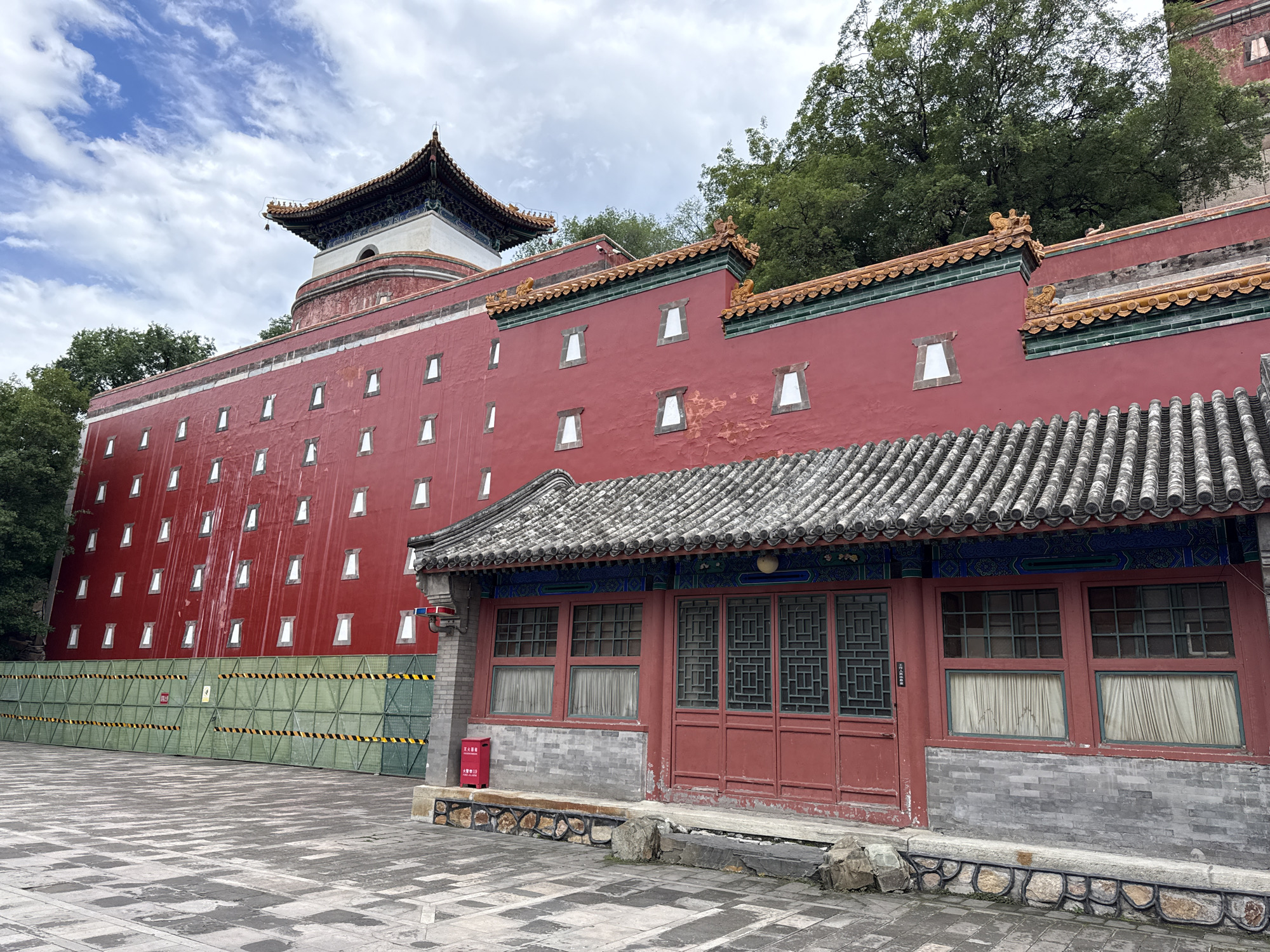
This image captures a traditional Chinese architectural scene in Haidian District, China. The primary subject is a tall, deep red wall, rising prominently across the midground from left to right. This wall features numerous evenly spaced, vertically aligned trapezoidal openings, framed in white, arranged in multiple rows and columns. The top edge of the wall, particularly on the right, is adorned with traditional green and yellow-orange glazed tiles, and decorative roof ornaments shaped like mythical creatures are visible at the corners.

Behind and above the red wall, on a natural elevation, stands a multi-tiered, pagoda-like structure. Its upper body is white with a red base, topped by a dark-tiled, multi-eaved roof with distinctive upturned corners and ornate finials. Lush green trees are visible on the left, behind the red wall, and extending along the upper right side, suggesting a hilly landscape.

In the lower right foreground, a smaller, single-story traditional building with a red facade and a grey tiled roof is present. Its eaves are decorated with blue and green painted patterns. The building features windows with internal curtains and external grilles on the left, and two doors with gridded upper panels on the right. Its base is constructed from grey bricks with a decorative stone border. Roughly hewn stone steps lead to the building's entrance. A red fire extinguisher box is positioned near the building's front.

The ground in the foreground is paved with grey and tan interlocking pavers. To the lower left, a section of green construction fencing, marked with yellow and black caution tape, blocks off an area along the base of the tall red wall. The sky above is partly cloudy, with patches of blue visible through the white clouds. No people are present in the scene.
Laurent

Jun 7, 2026, 5:40 AM

Haidian District, China

Stake attention in this memory

awe
historical
grand
serene
intrigued

This image captures a traditional Chinese architectural scene in Haidian District, China. The primary subject is a tall, deep red wall, rising prominently across the midground from left to right. This wall features numerous evenly spaced, vertically aligned trapezoidal openings, framed in white, arranged in multiple rows and columns. The top edge of the wall, particularly on the right, is adorned with traditional green and yellow-orange glazed tiles, and decorative roof ornaments shaped like mythical creatures are visible at the corners. Behind and above the red wall, on a natural elevation, stands a multi-tiered, pagoda-like structure. Its upper body is white with a red base, topped by a dark-tiled, multi-eaved roof with distinctive upturned corners and ornate finials. Lush green trees are visible on the left, behind the red wall, and extending along the upper right side, suggesting a hilly landscape. In the lower right foreground, a smaller, single-story traditional building with a red facade and a grey tiled roof is present. Its eaves are decorated with blue and green painted patterns. The building features windows with internal curtains and external grilles on the left, and two doors with gridded upper panels on the right. Its base is constructed from grey bricks with a decorative stone border. Roughly hewn stone steps lead to the building's entrance. A red fire extinguisher box is positioned near the building's front. The ground in the foreground is paved with grey and tan interlocking pavers. To the lower left, a section of green construction fencing, marked with yellow and black caution tape, blocks off an area along the base of the tall red wall. The sky above is partly cloudy, with patches of blue visible through the white clouds. No people are present in the scene.

Loading AttnAds…

transactions
revenues
stakers
Earliest
Latest
Highest stake

No transactions found

More from this user

More from Haidian District

Laurent

Jun 7, 2026, 5:40 AM

Haidian District, China

Licensed under Creative Commons Attribution 4.0 International License. You are free to share and adapt this content with proper attribution.