
Sign in
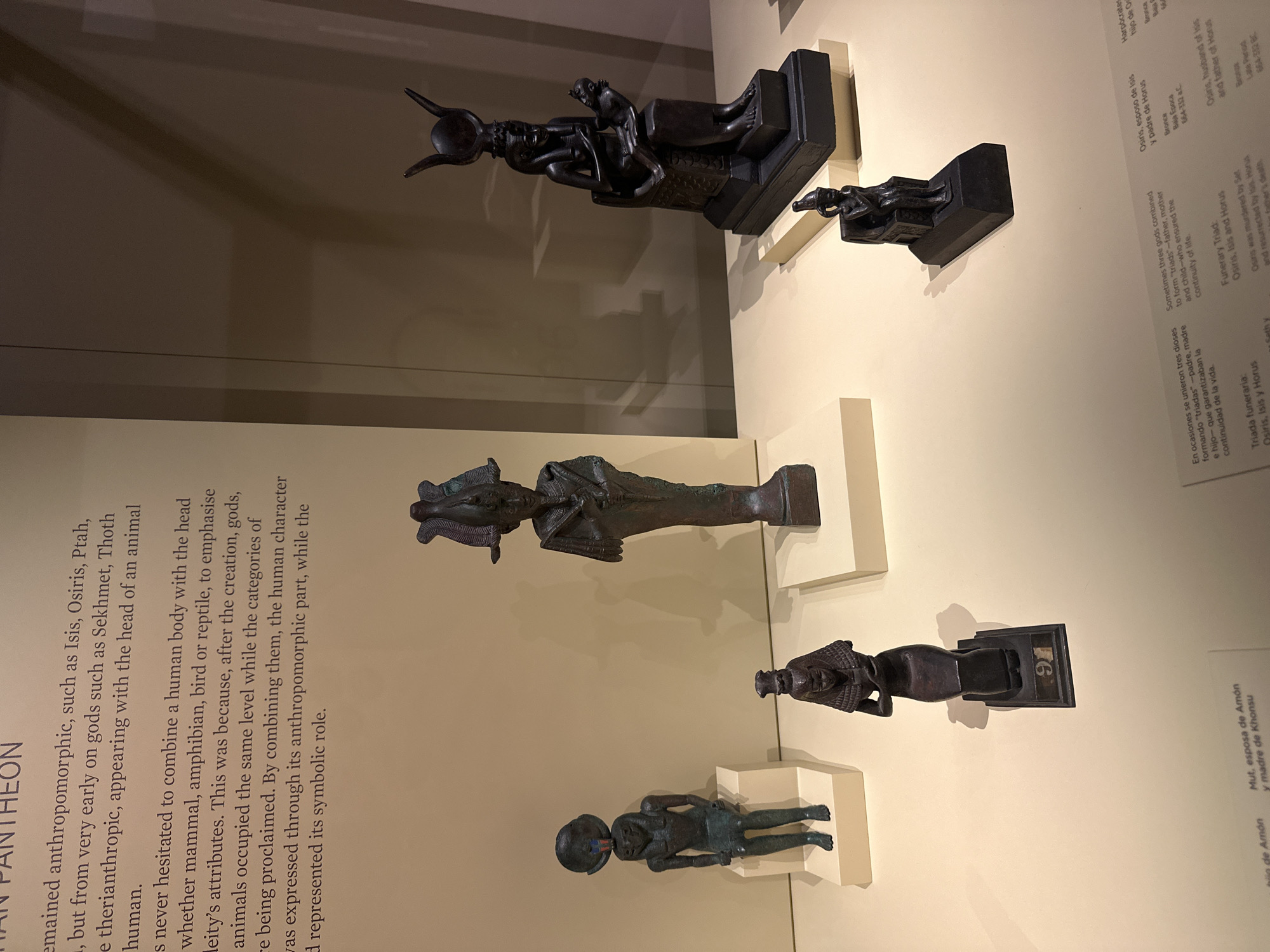
This media file depicts a museum display of ancient Egyptian bronze statues. The primary subjects are anthropomorphic statues, which combine human bodies with animal heads, representing various deities such as Isis, Osiris, Ptah, Sekhmet, and Thoth. The statues are presented on pedestals against a neutral, light-colored wall, with soft lighting that casts shadows.

The display includes several distinct figures. The largest and most prominent is a statue of a seated figure with the head of a falcon and a solar disk, accompanied by a smaller monkey figure. To its right, a smaller statue shows a reclining figure on a platform. Further down, a longer statue depicts a figure with an elaborate headdress, possibly a god or goddess. At the bottom of the display, a small, standing figure with a falcon head, representing Horus, is visible. To the right of the statues, a label provides text in what appears to be Spanish and English, with the Spanish text indicating "Mut, esposa de Amón y madre de Khonsu" (Mut, wife of Amon and mother of Khonsu) and "hijo de Amón" (son of Amon), suggesting the figures represent members of the Egyptian pantheon. Other labels mention "Osiris, esposo de Isis y padre de Horus" (Osiris, husband of Isis and father of Horus) and "Osiris, husband of Isis and father of Horus".

The scene is set within a museum, likely in Madrid, Spain, as indicated by the context. The overall atmosphere is solemn and educational, highlighting the artistic and religious significance of ancient Egyptian artifacts. The statues are dark bronze and show signs of age, contributing to their historical value. The text provides information about the figures' roles in Egyptian mythology, particularly their representation in "funerary triads" (Osiris, Isis, and Horus) and their importance in ensuring the continuity of life.
Tati

Jun 30, 2026

Madrid, Spain

Stake attention in this memory

reverent
contemplative
mysterious
serene
solemn

This media file depicts a museum display of ancient Egyptian bronze statues. The primary subjects are anthropomorphic statues, which combine human bodies with animal heads, representing various deities such as Isis, Osiris, Ptah, Sekhmet, and Thoth. The statues are presented on pedestals against a neutral, light-colored wall, with soft lighting that casts shadows. The display includes several distinct figures. The largest and most prominent is a statue of a seated figure with the head of a falcon and a solar disk, accompanied by a smaller monkey figure. To its right, a smaller statue shows a reclining figure on a platform. Further down, a longer statue depicts a figure with an elaborate headdress, possibly a god or goddess. At the bottom of the display, a small, standing figure with a falcon head, representing Horus, is visible. To the right of the statues, a label provides text in what appears to be Spanish and English, with the Spanish text indicating "Mut, esposa de Amón y madre de Khonsu" (Mut, wife of Amon and mother of Khonsu) and "hijo de Amón" (son of Amon), suggesting the figures represent members of the Egyptian pantheon. Other labels mention "Osiris, esposo de Isis y padre de Horus" (Osiris, husband of Isis and father of Horus) and "Osiris, husband of Isis and father of Horus". The scene is set within a museum, likely in Madrid, Spain, as indicated by the context. The overall atmosphere is solemn and educational, highlighting the artistic and religious significance of ancient Egyptian artifacts. The statues are dark bronze and show signs of age, contributing to their historical value. The text provides information about the figures' roles in Egyptian mythology, particularly their representation in "funerary triads" (Osiris, Isis, and Horus) and their importance in ensuring the continuity of life.

transactions
revenues
stakers
Earliest
Latest
Highest stake

No transactions found

More from this user

More from Madrid

Tati

Jun 30, 2026

Madrid, Spain

Licensed under Creative Commons Attribution 4.0 International License. You are free to share and adapt this content with proper attribution.