Stake attention in this memory
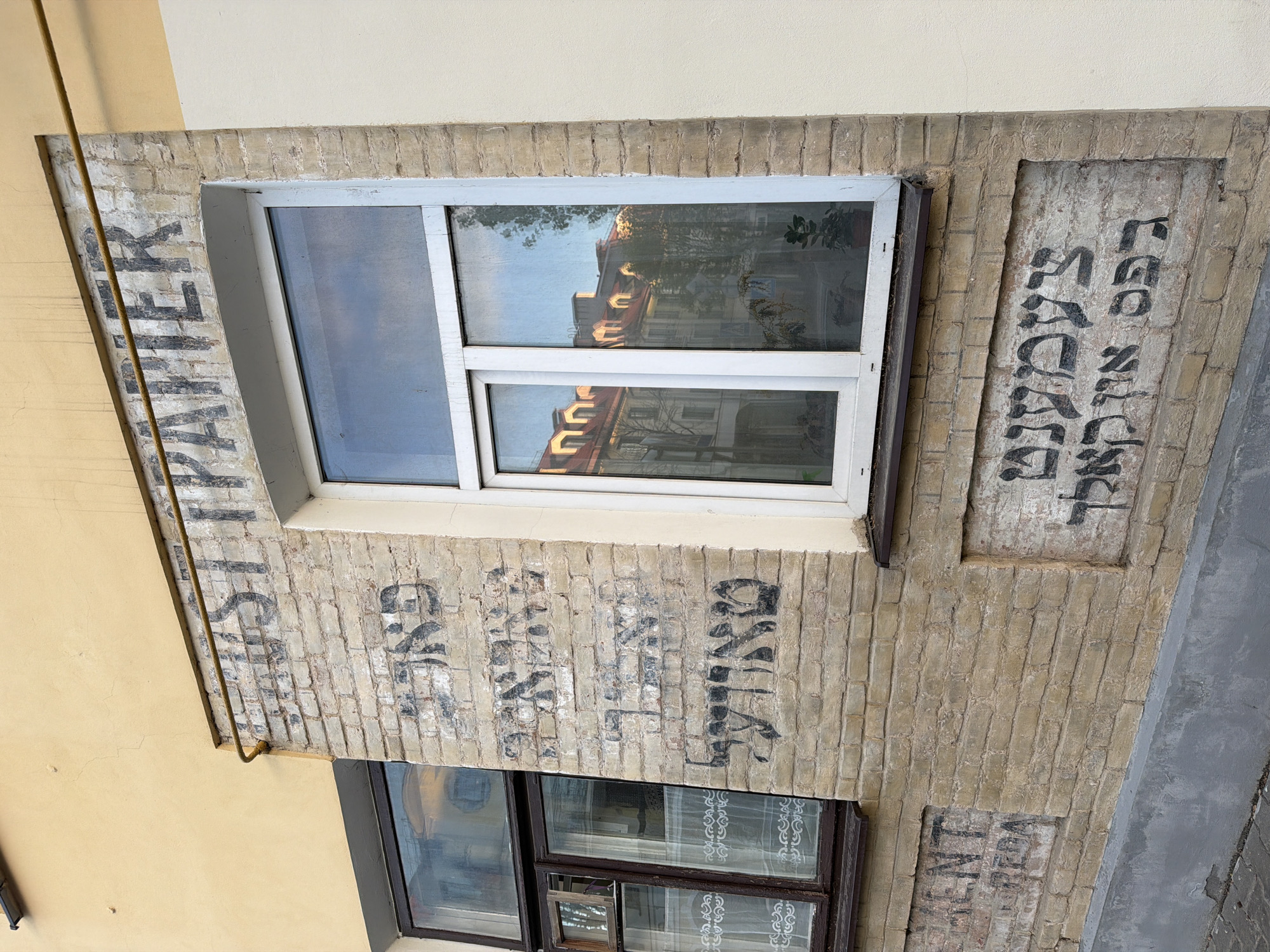
The image captures a section of an old brick building facade in Brest, Belarus, under natural daylight. The wall is constructed from light brown/beige bricks, showing signs of age with faded paint and some repairs. Two windows are visible: a modern white-framed, double-pane window occupies the upper central part of the frame, reflecting nearby buildings with reddish roofs and green foliage. Below and to its left is a smaller, older window with a dark brown frame. A thin, golden-colored pipe runs vertically along the left edge of the brick wall, then bends horizontally. The building's adjacent section, to the left and below the brickwork, is painted a smooth yellow-beige. A grey, concrete-like surface is visible at the bottom right. The most striking features are the faded black painted texts, historical ghost signs in multiple languages. - On the left side of the brick wall, running vertically, fragmented letters are discernible, likely spelling "KANISTER" or "КАНІСТЕР" (Kanister), possibly indicating a type of container or a business related to goods. - In a recessed panel to the upper right of the white window, clear Hebrew/Yiddish script reads `כשר מצות` (Kosher Matzos), denoting a business that sold kosher Passover unleavened bread. - Below the white window, horizontal Hebrew/Yiddish text is partially visible. Distinct words include `קאנטאר` (Kantor, meaning "Office" or "Counter"), `מצות` (Matzos), and `דער` (Der, meaning "The"). These fragments suggest a business such as "The Matzos Office/Counter." - A very faded vertical text panel is seen on the bottom right, with its specific content mostly illegible, but contextually likely related to the other Yiddish signage. No people or explicit activities are depicted. The dual-script signage, particularly the Hebrew/Yiddish "Kosher Matzos" and "Kantor," strongly indicates the location was once home to a Jewish business, reflecting the historical multicultural character of Eastern European cities like Brest.
No transactions found