
Stake attention in this memory
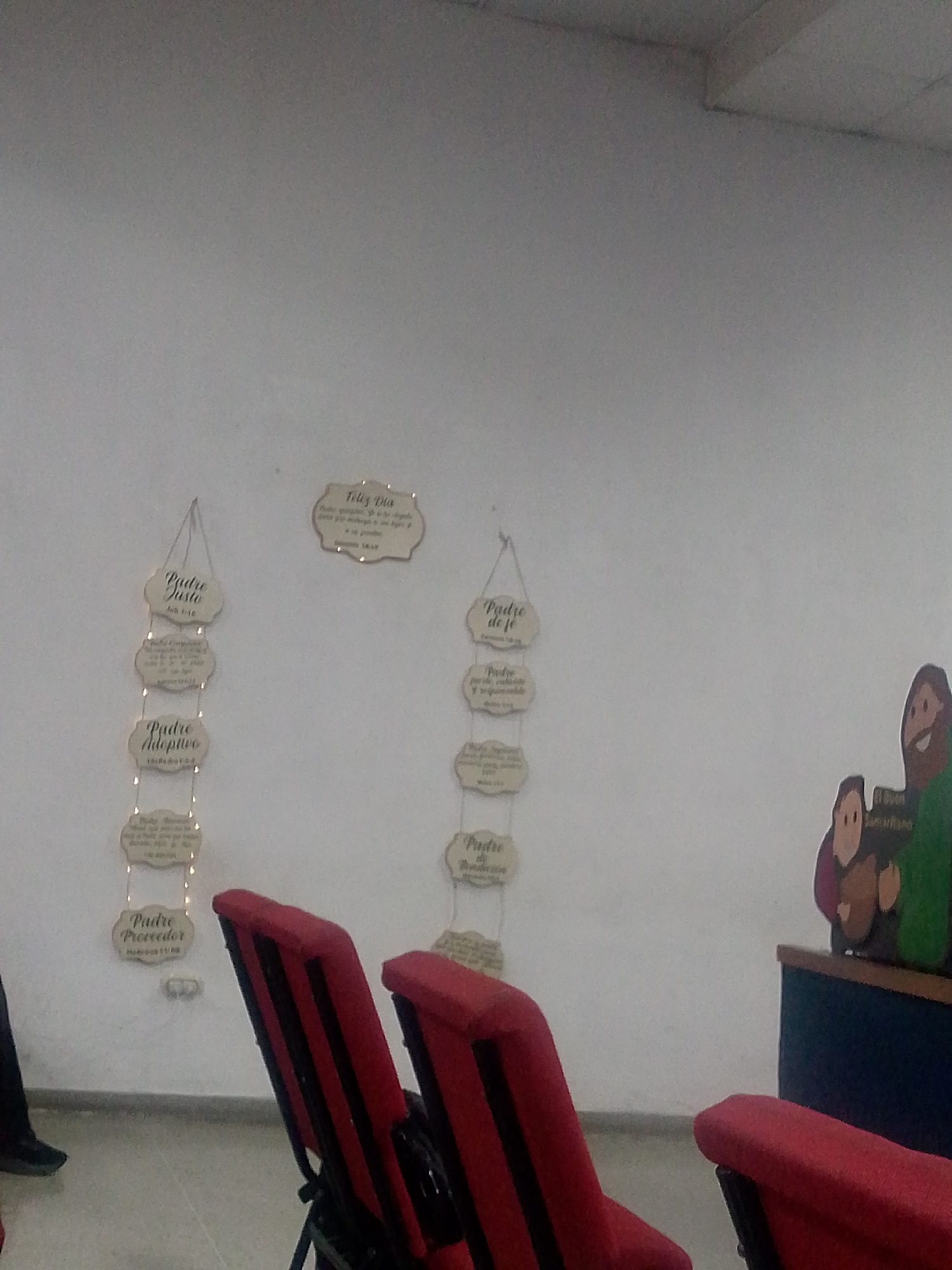
The image depicts an interior scene, likely a community hall or a place of worship, with a light-colored wall as the primary background. Several decorative plaques with text are affixed to the wall, some hanging from strings and others directly attached. To the left, a vertical arrangement of three plaques is visible, each with scalloped edges. The top plaque reads "Padre Justo" and a biblical reference. Below it, another plaque is partially visible, and the lowest one reads "Padre Adoptivo" with a biblical reference. In the center of the image, another vertical arrangement of plaques hangs, also with scalloped edges. The topmost plaque of this group reads "Padre de fe" and a biblical reference. Below it, two more plaques are visible, each containing text, likely biblical verses or dedications related to fatherhood. To the right, a larger, irregularly shaped plaque with the text "Feliz Dia" and a biblical reference is mounted on the wall. Further to the right, a shelf or counter is present, on which a cut-out decorative piece featuring three cartoon-like figures is placed. One figure appears to be an adult male with a beard and green clothing, and two smaller figures are positioned in front of him. Text is visible on the figures, including "El Buen Samaritano". In the foreground, the backrests of several red chairs are visible, suggesting an event or gathering space. The chairs have dark-colored vertical accents. The floor appears to be a light-colored tiled surface. A portion of a dark-colored shoe and pant leg is visible on the far left, indicating the presence of at least one person, likely observing or participating in an event. The lighting in the scene is even, with no harsh shadows, suggesting ambient indoor lighting. The overall impression is one of a festive or commemorative occasion, possibly celebrating Father's Day. The presence of religious text on the plaques suggests a faith-based context. The image does not provide any explicit visual cues to pinpoint its exact location within Caracas, Venezuela. However, the style of decoration and the presence of the red chairs could be consistent with various community centers, churches, or educational institutions found throughout the city.
No transactions found