Sign in
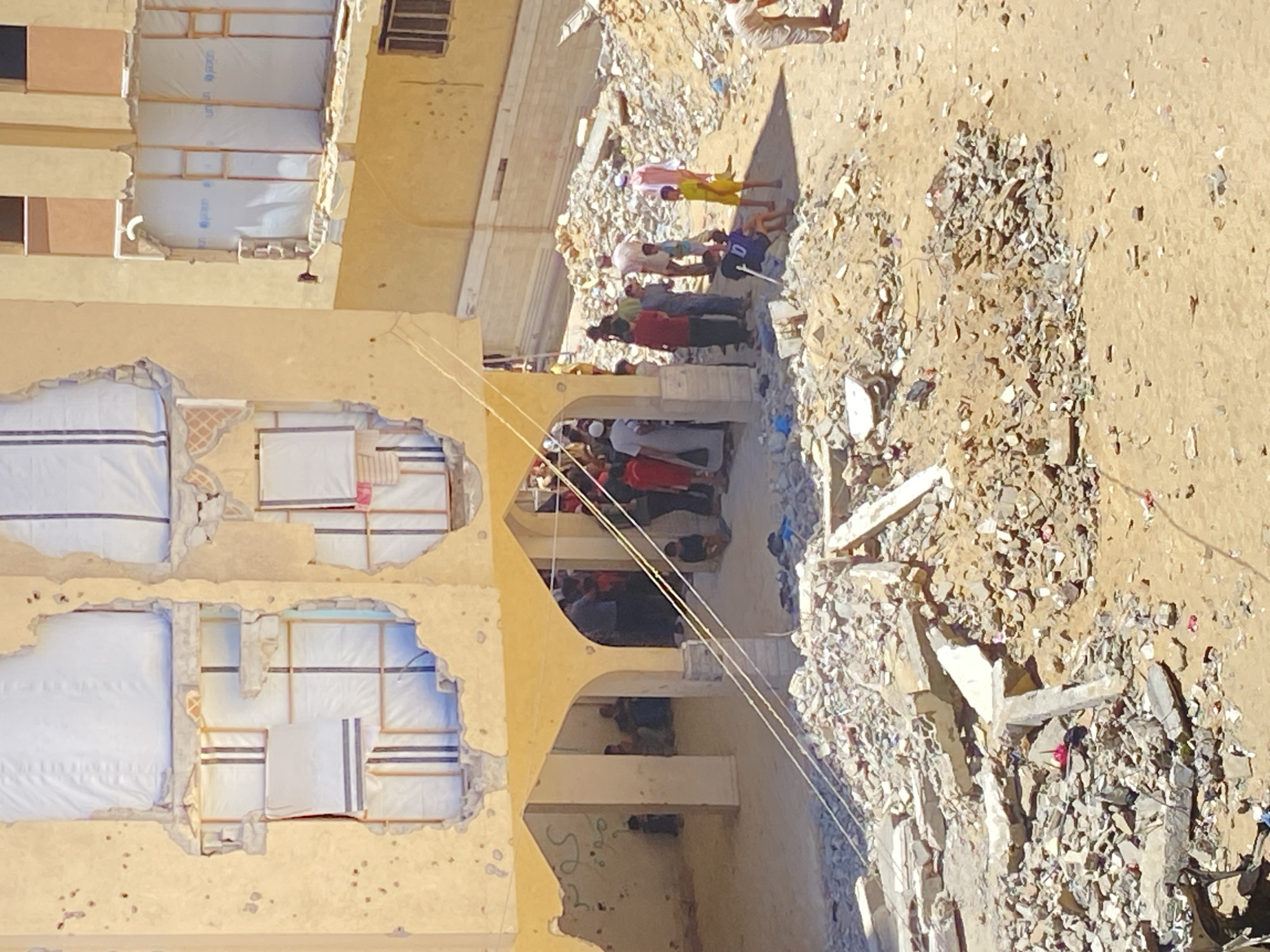
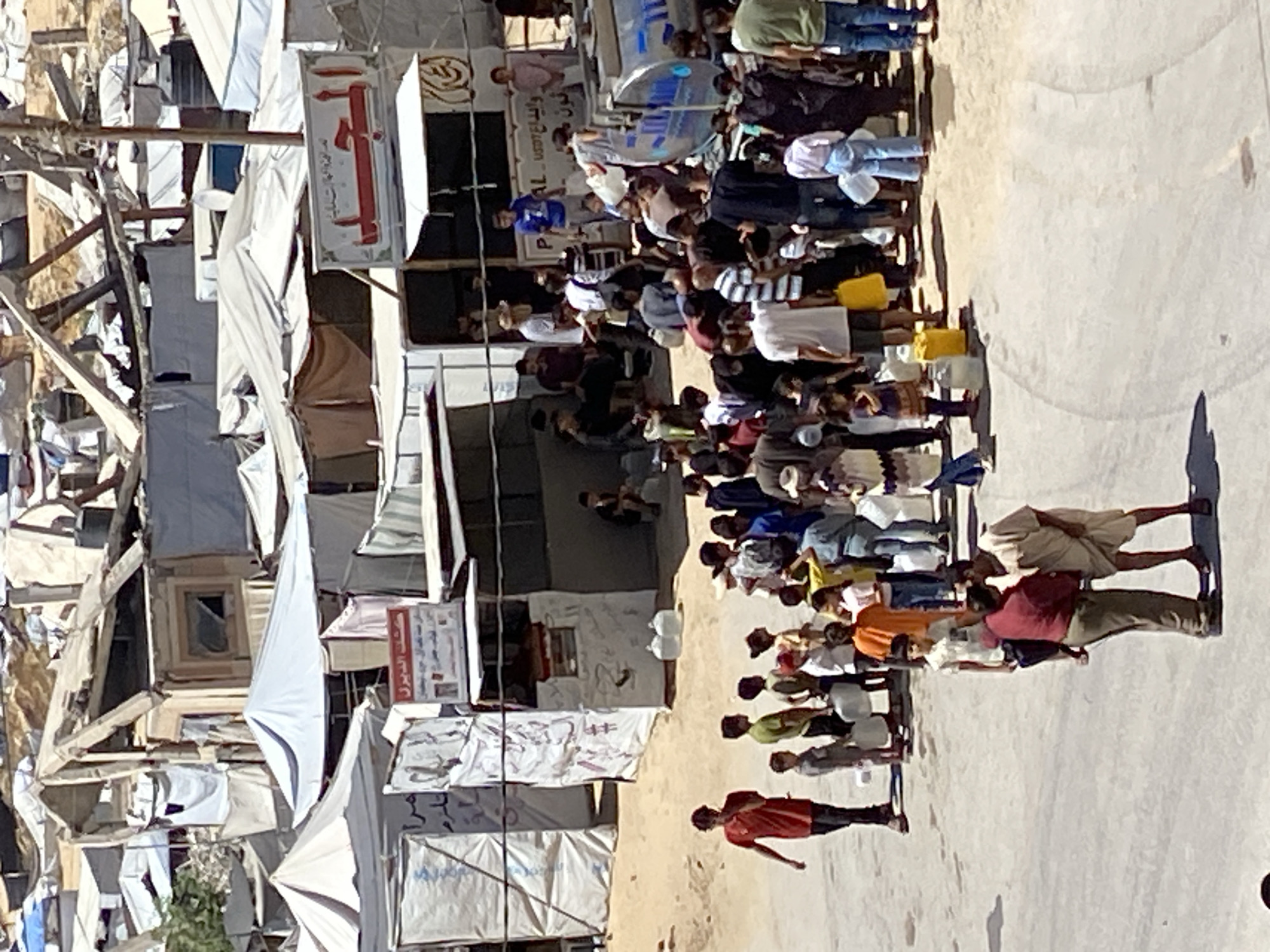
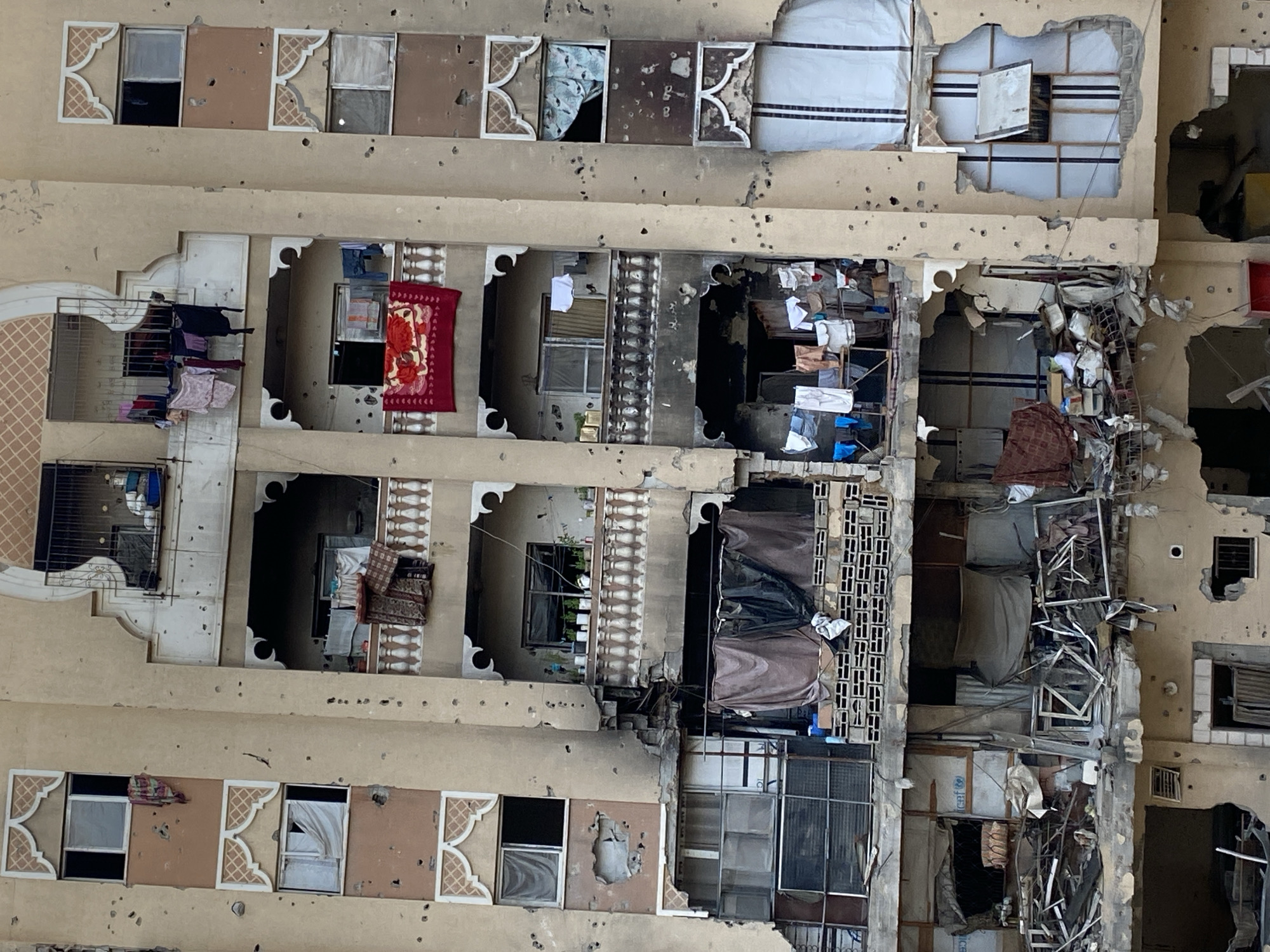
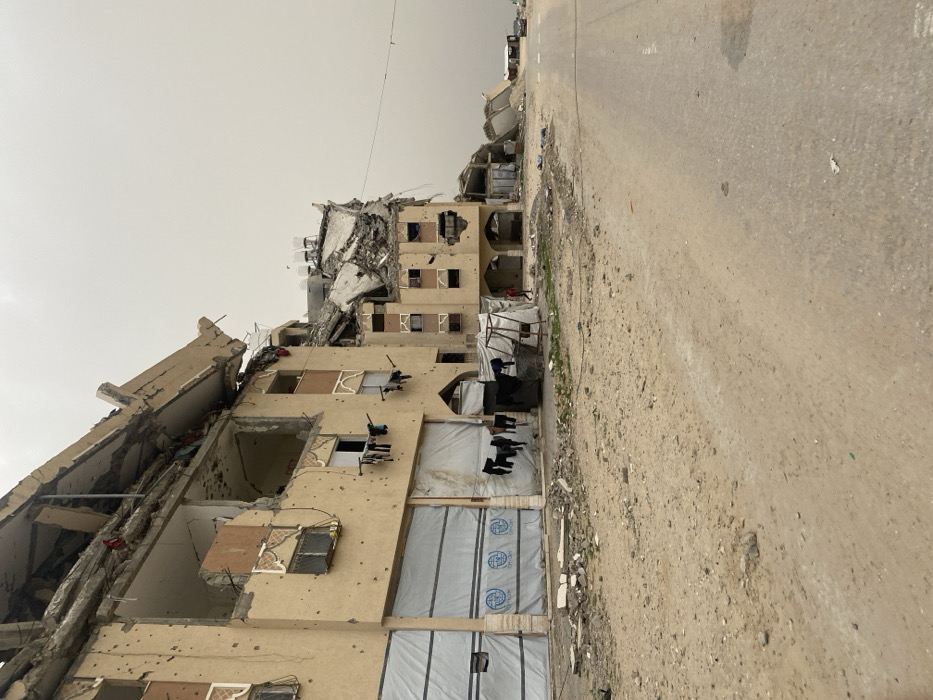
The image, originally captured in portrait orientation but depicting a horizontal scene, presents a desolate view of a heavily damaged multi-story building alongside a dusty, unpaved road. The overall impression is one of significant destruction and disrepair, suggesting the aftermath of conflict or a major disaster.

On the left side of the frame, the tall, light-colored building (likely beige or off-white) exhibits extensive structural damage. The upper floors appear to have collapsed or been severely impacted, with large sections of concrete and rebar twisted and exposed, forming jagged, broken edges against the sky. Some parts of the upper structure are precariously hanging. The facade of the lower, relatively intact floors is riddled with numerous small, dark holes, consistent with bullet impacts or shrapnel. Many windows are either shattered, boarded up, or completely missing, revealing darkened interiors.

Despite the destruction, there are signs of human presence and makeshift attempts at repair or habitation. Clothes are visible hanging to dry on lines extending from some windows or on temporary structures in front of the building. On the ground floor, several sections are covered with white, corrugated-looking sheets, possibly for temporary boarding up or insulation. One large section features white tarpaulins with blue circular logos, each consisting of three concentric circles, suggesting materials from a humanitarian aid organization, though the text within them is not legible. In front of the building, particularly near the lower levels, there are rudimentary shelters or structures constructed from scaffolding and tarpaulin, implying temporary living arrangements.

To the right of the damaged building runs a wide, unpaved road. The road surface is a light brown, dusty dirt or gravel, with visible tire tracks and scattered debris. The ground around the road and the base of the building is uneven and littered with rubble. In the distance along the road, indistinct shapes that might be more damaged structures or vehicles can be vaguely seen.

The sky is uniformly overcast, a light gray or off-white color, providing soft, diffused lighting and contributing to the somber atmosphere. There are no visible signs of direct sunlight. The scene conveys a sense of abandonment and hardship, yet the presence of drying clothes and makeshift shelters hints at ongoing human resilience amidst profound loss and devastation.
NERMEEN SALEH

Feb 13, 2026, 3:18 PM

Khan Yunis, Palestinian Territory

Stake attention in this memory

Devastation
Sorrow
Despair
Loss
Trauma

The image, originally captured in portrait orientation but depicting a horizontal scene, presents a desolate view of a heavily damaged multi-story building alongside a dusty, unpaved road. The overall impression is one of significant destruction and disrepair, suggesting the aftermath of conflict or a major disaster. On the left side of the frame, the tall, light-colored building (likely beige or off-white) exhibits extensive structural damage. The upper floors appear to have collapsed or been severely impacted, with large sections of concrete and rebar twisted and exposed, forming jagged, broken edges against the sky. Some parts of the upper structure are precariously hanging. The facade of the lower, relatively intact floors is riddled with numerous small, dark holes, consistent with bullet impacts or shrapnel. Many windows are either shattered, boarded up, or completely missing, revealing darkened interiors. Despite the destruction, there are signs of human presence and makeshift attempts at repair or habitation. Clothes are visible hanging to dry on lines extending from some windows or on temporary structures in front of the building. On the ground floor, several sections are covered with white, corrugated-looking sheets, possibly for temporary boarding up or insulation. One large section features white tarpaulins with blue circular logos, each consisting of three concentric circles, suggesting materials from a humanitarian aid organization, though the text within them is not legible. In front of the building, particularly near the lower levels, there are rudimentary shelters or structures constructed from scaffolding and tarpaulin, implying temporary living arrangements. To the right of the damaged building runs a wide, unpaved road. The road surface is a light brown, dusty dirt or gravel, with visible tire tracks and scattered debris. The ground around the road and the base of the building is uneven and littered with rubble. In the distance along the road, indistinct shapes that might be more damaged structures or vehicles can be vaguely seen. The sky is uniformly overcast, a light gray or off-white color, providing soft, diffused lighting and contributing to the somber atmosphere. There are no visible signs of direct sunlight. The scene conveys a sense of abandonment and hardship, yet the presence of drying clothes and makeshift shelters hints at ongoing human resilience amidst profound loss and devastation.

Loading AttnAds…

transactions
revenues
stakers
Earliest
Latest
Highest stake

No transactions found

More from this user

More from Khan Yunis

NERMEEN SALEH

Feb 13, 2026, 3:18 PM

Khan Yunis, Palestinian Territory

Licensed under Creative Commons Attribution 4.0 International License. You are free to share and adapt this content with proper attribution.