
Sign in
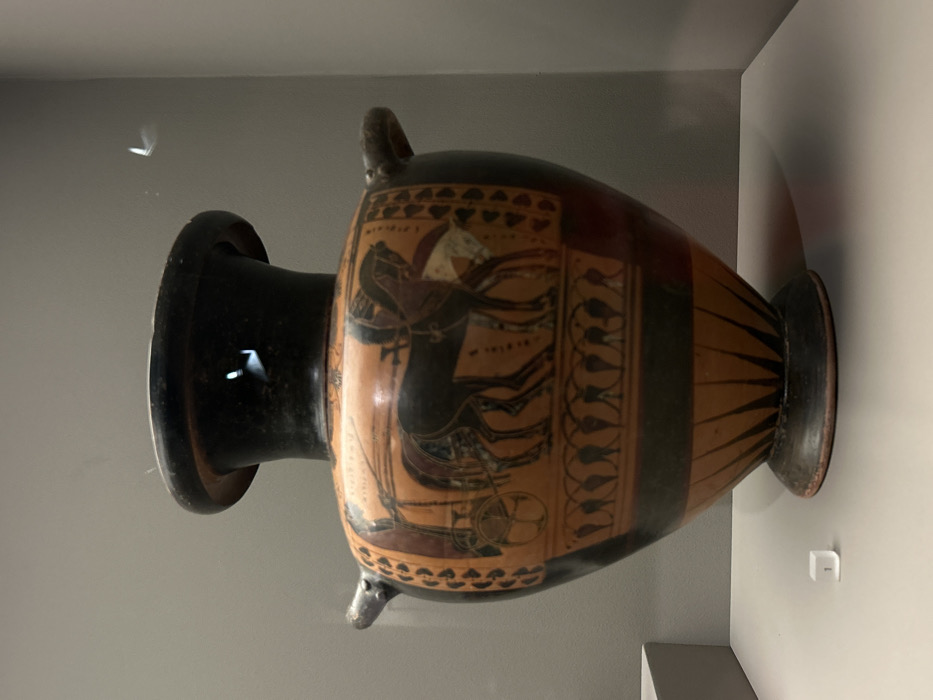
An ancient Greek black-figure amphora or similar vase is depicted, oriented horizontally in the image, but standing upright with a flared mouth, two handles, a bulbous body, and a footed base. The vase showcases the distinctive black-figure pottery style, where dark figures are painted on the natural reddish-orange clay background.

The central pictorial panel features a dynamic scene, likely mythological or heroic. A prominent human figure, rendered in black, is depicted in profile, seemingly engaged with a horse or a chariot. The horse, painted in a lighter, off-white pigment, is seen in motion with its legs raised. The black human figure wears elaborate attire, including a helmet or headdress, and is positioned near the horse's flank, possibly holding reins or a weapon. Below the figures, a circular object, possibly a shield or a chariot wheel, is visible.

Decorative bands frame the main scene. Above it, a frieze of small, stylized, repeated shapes, possibly hearts or palmettes, runs along the shoulder. Below the central panel, another band features a recurring floral or geometric pattern, likely a palmette chain or tendrils. The neck, handles, and foot of the vase are painted solid black, providing a stark contrast to the terracotta body.

The vase is displayed in a museum or exhibition setting, indicated by the plain, light-colored background and subtle reflections on what might be a display case in the upper left. The lighting is artificial, accentuating the vase's details. No visible text appears on the vase or in its immediate surroundings. The artifact is located in Athina, Greece.
FM-zLJPr2

Jan 11, 2025

Athina, Greece

Stake attention in this memory

An ancient Greek black-figure amphora or similar vase is depicted, oriented horizontally in the image, but standing upright with a flared mouth, two handles, a bulbous body, and a footed base. The vase showcases the distinctive black-figure pottery style, where dark figures are painted on the natural reddish-orange clay background. The central pictorial panel features a dynamic scene, likely mythological or heroic. A prominent human figure, rendered in black, is depicted in profile, seemingly engaged with a horse or a chariot. The horse, painted in a lighter, off-white pigment, is seen in motion with its legs raised. The black human figure wears elaborate attire, including a helmet or headdress, and is positioned near the horse's flank, possibly holding reins or a weapon. Below the figures, a circular object, possibly a shield or a chariot wheel, is visible. Decorative bands frame the main scene. Above it, a frieze of small, stylized, repeated shapes, possibly hearts or palmettes, runs along the shoulder. Below the central panel, another band features a recurring floral or geometric pattern, likely a palmette chain or tendrils. The neck, handles, and foot of the vase are painted solid black, providing a stark contrast to the terracotta body. The vase is displayed in a museum or exhibition setting, indicated by the plain, light-colored background and subtle reflections on what might be a display case in the upper left. The lighting is artificial, accentuating the vase's details. No visible text appears on the vase or in its immediate surroundings. The artifact is located in Athina, Greece.

transactions
revenues
stakers
Earliest
Latest
Highest stake

No transactions found

More from this user

More from Athina

FM-zLJPr2

Jan 11, 2025

Athina, Greece

Licensed under Creative Commons Attribution 4.0 International License. You are free to share and adapt this content with proper attribution.