
Stake attention in this memory
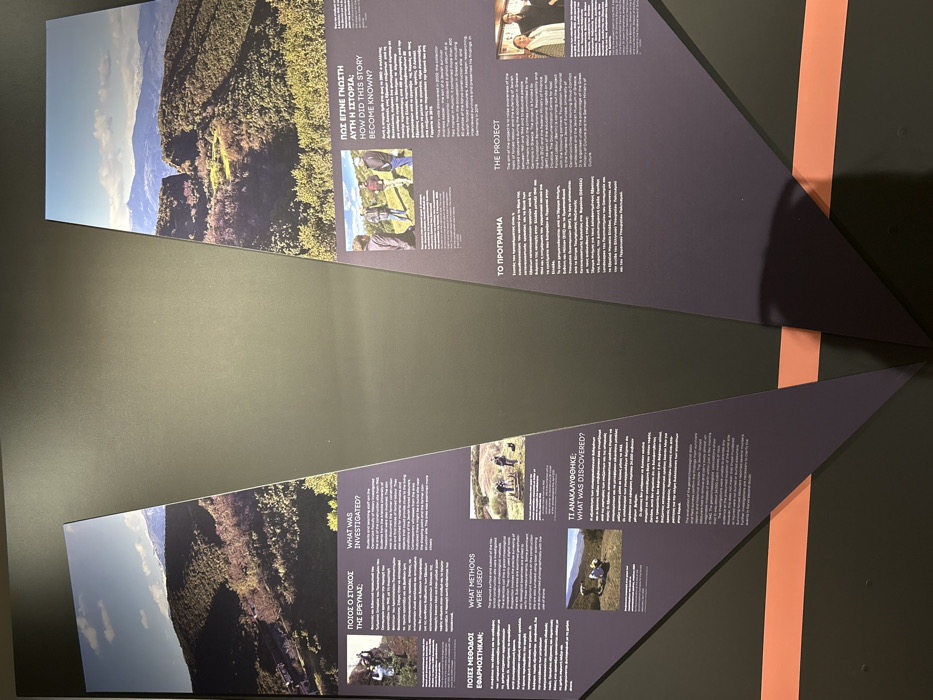
The image displays two large, triangular information panels mounted diagonally on a dark green wall, appearing to be part of an exhibition or museum display. A thin, horizontal orange stripe is visible on the wall behind the lower panel. The entire scene is captured from a slightly tilted angle. The upper panel, oriented towards the top right, features a large landscape photograph of a verdant, mountainous region with a bright sky in the upper left corner. Below this main image, two smaller photographs and extensive bilingual text (Greek and English) are arranged in columns. One smaller photo shows three individuals, possibly researchers, outdoors in a field, while the other shows two men, one older, possibly examining documents or artifacts indoors. The text is divided into two main sections with titles: "ΠΩΣ ΕΓΙΝΕ ΓΝΩΣΤΗ ΑΥΤΗ Η ΙΣΤΟΡΙΑ: HOW DID THIS STORY BECOME KNOWN?" and "ΤΟ ΠΡΟΓΡΑΜΜΑ: THE PROJECT." The English text explains that the story of hidden belongings during the German Occupation came to light through the initiative of George Kofos and oral testimonies. The project's aim was to retrieve these belongings, found by German soldiers in 1943, and was realized through cooperation between various Greek and German organizations, funded by the German Reparations Organization. The lower panel, oriented towards the bottom left, similarly features a large landscape photograph of a similar mountainous, forested area, likely related to the location discussed. Below this, three smaller photographs accompany additional bilingual text sections. One small photo depicts a group of people, likely researchers, working outdoors in a field, possibly investigating an archaeological site. Another shows an individual using a metal detector in a grassy area, and a third, less clear photo also shows an outdoor scene with people. The text on this panel is divided into three sections: "ΠΟΙΟΣ Ο ΣΤΟΧΟΣ ΤΗΣ ΕΡΕΥΝΑΣ: WHAT WAS INVESTIGATED?", "ΠΟΙΕΣ ΜΕΘΟΔΟΙ ΕΦΑΡΜΟΣΤΗΚΑΝ: WHAT METHODS WERE USED?", and "ΤΙ ΑΝΑΚΑΛΥΦΘΗΚΕ: WHAT WAS DISCOVERED?". The English text elaborates on the research focus, which included investigating hidden objects and collecting testimonies from the German Occupation in 1943 in Kato Gardiki. Methods used included archival research, oral testimonies, and archaeological techniques such as geophysical surveys, metal detecting, and excavations. The discoveries confirmed the presence of hidden objects, including agricultural tools, household items, and personal belongings, which corroborated oral testimonies and provided insights into daily life and resistance during the occupation. The retrieved artifacts are now preserved and exhibited. The overall impression is that of an informative museum exhibit detailing a historical research project focused on discovering and preserving artifacts and stories from a specific period, likely World War II, in a Greek village. The lighting in the room is ambient, casting some soft shadows.
No transactions found