
Stake attention in this memory
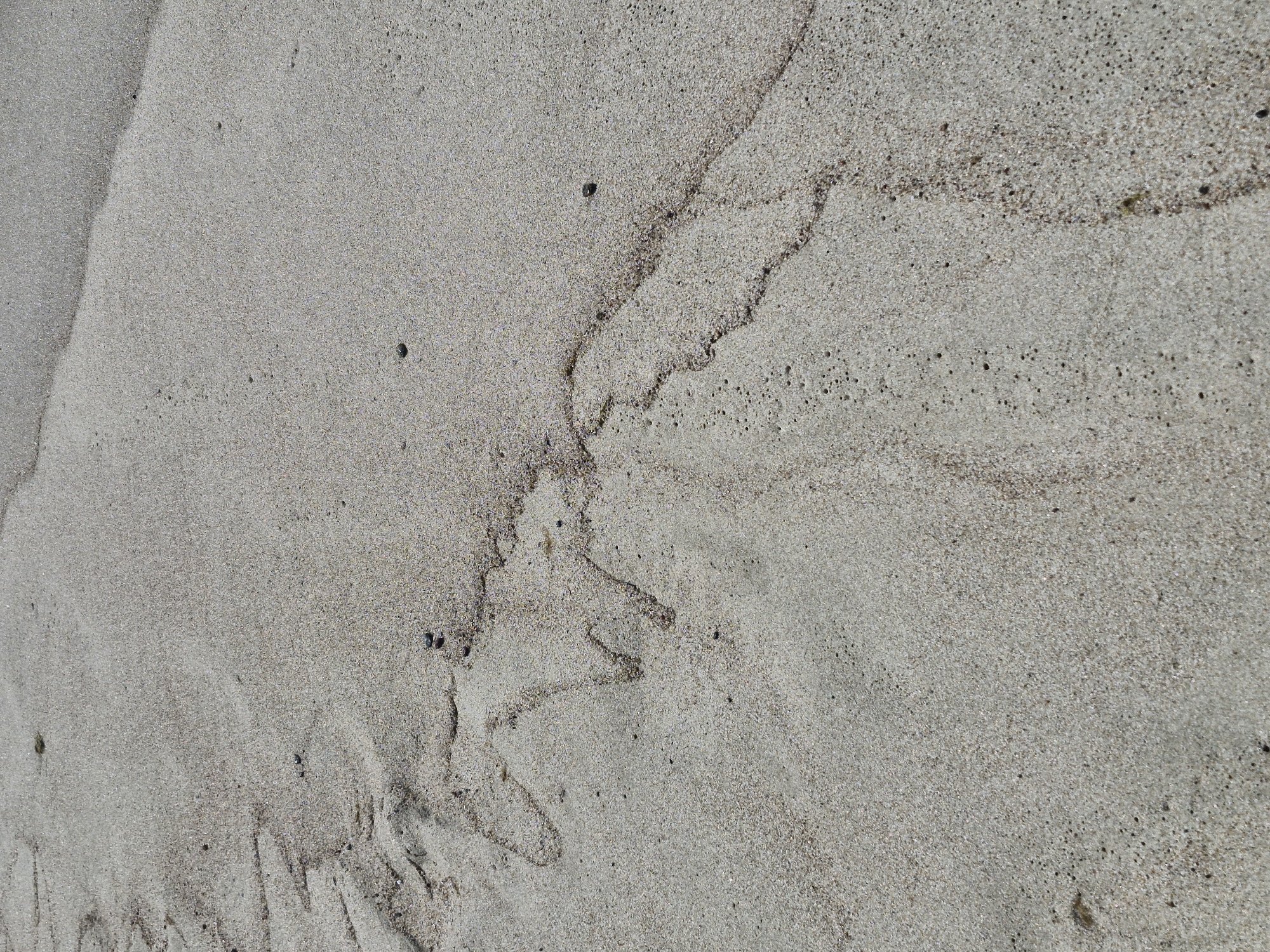
The image is a close-up, top-down view of wet sand with distinct patterns created by receding water. The sand is light brown and speckled with darker grains, indicative of a beach or sandy area. The primary subject is the texture and patterns on the sand's surface. The scene depicts the aftermath of a tide or a water flow, leaving behind wavy lines and ripples as the water drains away. Darker, wet sand contrasts with the drier, lighter sand, forming intricate, organic shapes that resemble veins or a branching network. Small, dark specks, possibly small pebbles or debris, are scattered across the sand, and a few small dark holes are visible, likely air bubbles or indentations. The lighting suggests it is daytime, likely under natural sunlight, as evidenced by the shadows and the way the wet sand reflects light. There are no people or artificial objects visible, focusing solely on the natural geological formations of the sand. The location context of Neringa, Lithuania, often associated with the Curonian Spit, implies a coastal environment. The image evokes a sense of natural processes, tranquility, and the transient beauty of a beach after the water has retreated. No text is visible in the image.
Loading AttnAds…
No transactions found