
Sign in
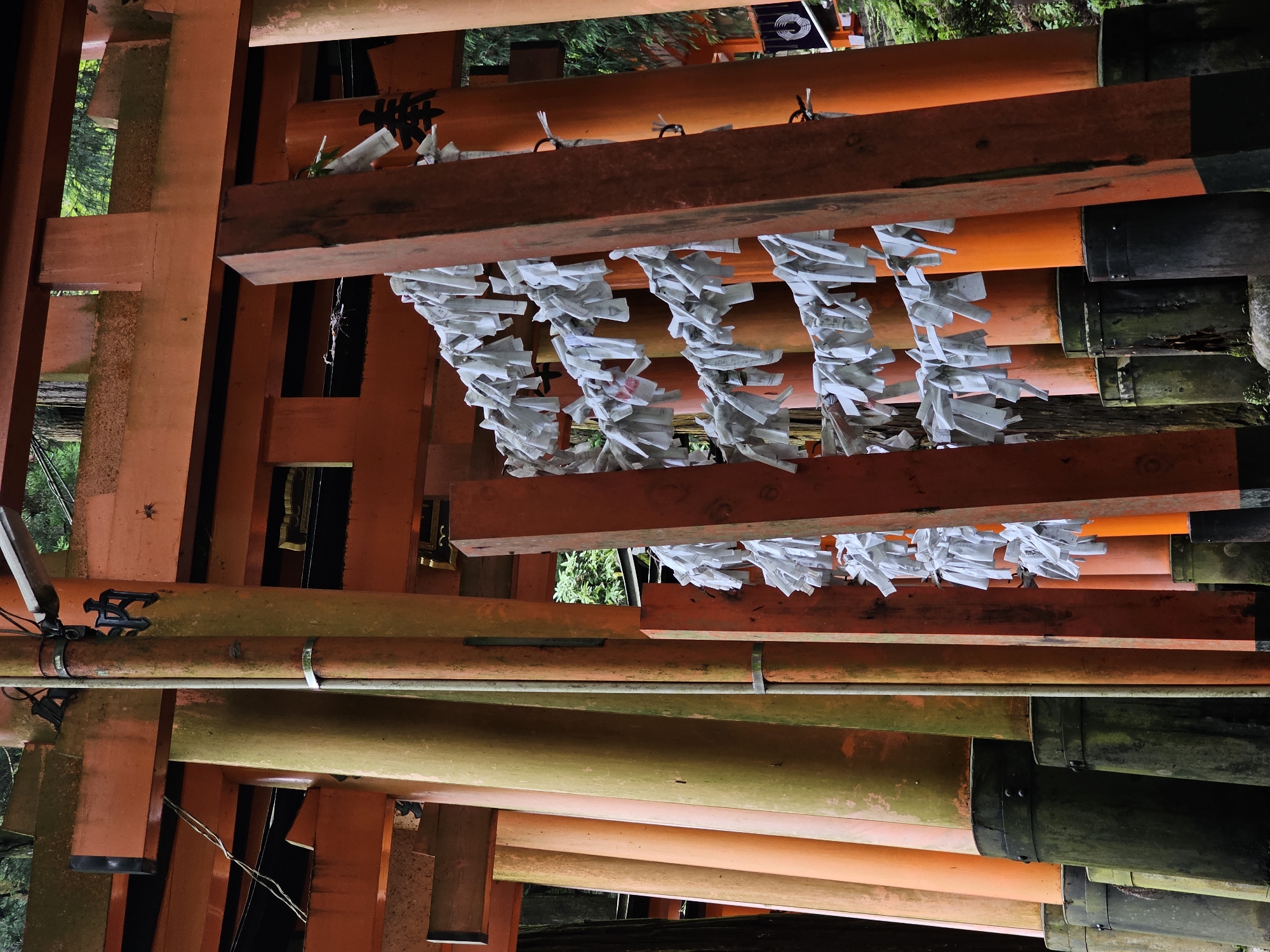
The image presents an immersive view looking through a dense pathway constructed from numerous vermilion (red-orange) torii gates, characteristic of a Japanese Shinto shrine like Fushimi Inari Taisha in Kyoto. The scene is dominated by the vibrant reddish-orange hue of the gates, which are made of wooden beams and pillars.

Hundreds of small, folded white paper strips are tied in dense rows to the horizontal crossbeams of the torii gates, creating a striking visual texture. These strips, likely *omikuji* (fortune slips) or prayer slips, are clustered together, hanging down from the beams in multiple layers.

Through the gaps between the tightly packed gates, lush green foliage is visible, indicating a natural, possibly forested environment surrounding the shrine path. Some sections of the wooden gates appear weathered, with darker areas and possibly patches of moss or discoloration, suggesting age and exposure to the elements. Metal bands and brackets are visible, securing parts of the wooden structures.

Subtle details include a few black stylized characters or symbols on some of the wooden elements, likely part of dedications or traditional emblems, though they are not clearly legible as specific words. The lighting suggests it is daytime, with light filtering through the dense architectural structure, creating varying shades and highlights across the wooden surfaces. There are no people visible, but the presence of the paper strips signifies past visitor activity and prayer. The image conveys a sense of tradition, intricate design, and a connection to nature and spirituality.
daria_l

Jun 3, 2026

Kyoto, Japan

Stake attention in this memory

mysterious
sacred
serene
ancient
hopeful

The image presents an immersive view looking through a dense pathway constructed from numerous vermilion (red-orange) torii gates, characteristic of a Japanese Shinto shrine like Fushimi Inari Taisha in Kyoto. The scene is dominated by the vibrant reddish-orange hue of the gates, which are made of wooden beams and pillars. Hundreds of small, folded white paper strips are tied in dense rows to the horizontal crossbeams of the torii gates, creating a striking visual texture. These strips, likely *omikuji* (fortune slips) or prayer slips, are clustered together, hanging down from the beams in multiple layers. Through the gaps between the tightly packed gates, lush green foliage is visible, indicating a natural, possibly forested environment surrounding the shrine path. Some sections of the wooden gates appear weathered, with darker areas and possibly patches of moss or discoloration, suggesting age and exposure to the elements. Metal bands and brackets are visible, securing parts of the wooden structures. Subtle details include a few black stylized characters or symbols on some of the wooden elements, likely part of dedications or traditional emblems, though they are not clearly legible as specific words. The lighting suggests it is daytime, with light filtering through the dense architectural structure, creating varying shades and highlights across the wooden surfaces. There are no people visible, but the presence of the paper strips signifies past visitor activity and prayer. The image conveys a sense of tradition, intricate design, and a connection to nature and spirituality.

transactions
revenues
stakers
Earliest
Latest
Highest stake

No transactions found

More from this user

More from Kyoto

daria_l

Jun 3, 2026

Kyoto, Japan

Licensed under Creative Commons Attribution 4.0 International License. You are free to share and adapt this content with proper attribution.