
Sign in
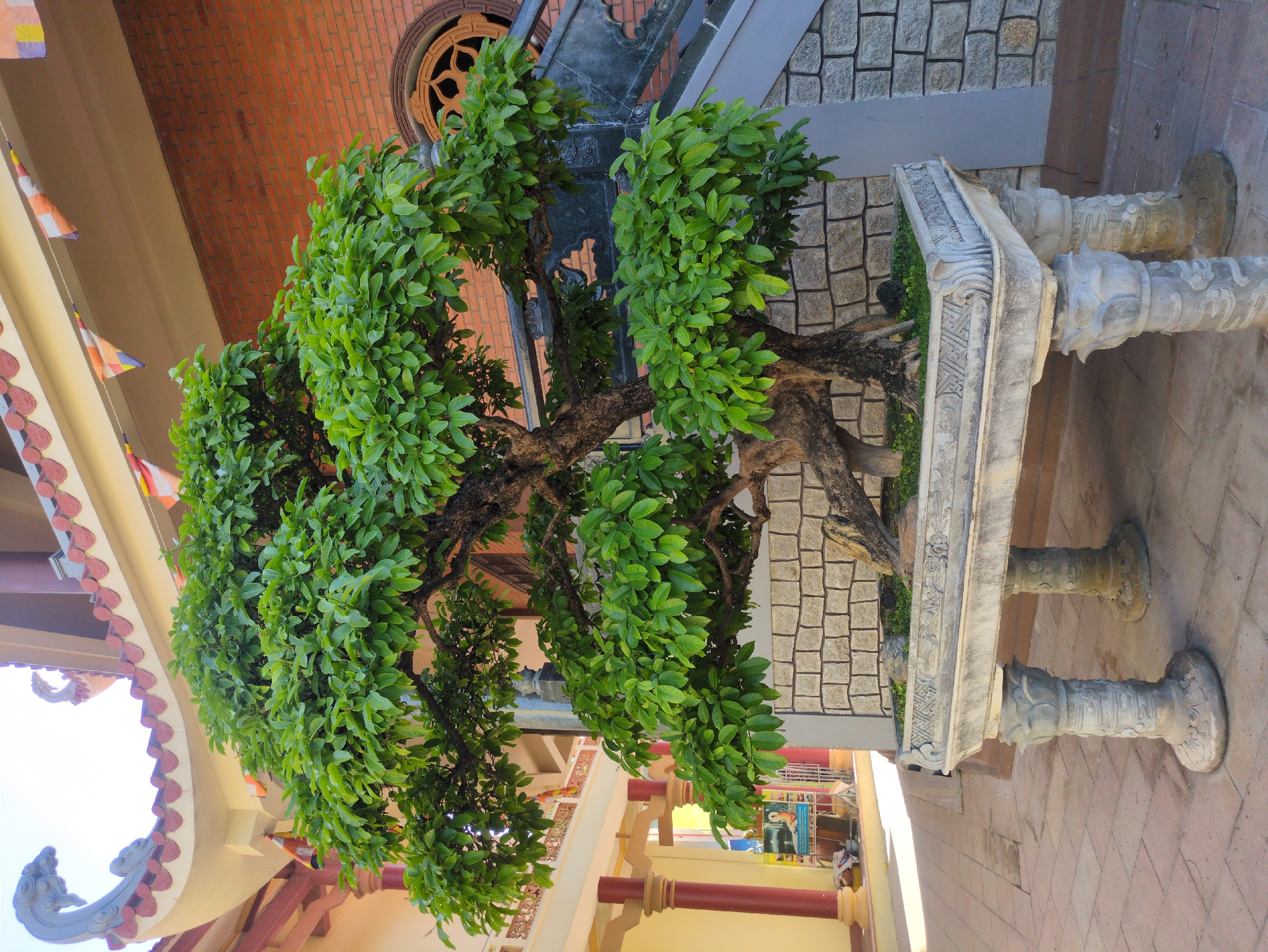
The image depicts an outdoor scene within a temple or pagoda complex in Quy Nhon Ward, Vietnam.

In the foreground and central to the image is a large, meticulously pruned bonsai tree, characterized by multiple thick, gnarled trunks and dense, vibrant green foliage. This tree is planted in an elevated, rectangular concrete planter. The planter is light grey, featuring intricate carved patterns along its exterior, and rests upon four substantial, sculpted concrete pillars that are also adorned with carvings. The ground beneath the planter is paved with reddish-brown square tiles.

The background on the left reveals a traditional Vietnamese architectural structure. This building features pale yellow walls, prominent deep red pillars, and a distinctive curved roofline with reddish-brown tiles and ornate decorative elements, including what appear to be sculpted finials. A string of numerous small, multi-colored rectangular flags or banners is suspended beneath the eaves of this structure. Further in the distance on the left, partially obscured, is a stand displaying a poster, likely depicting a religious figure.

The background on the right features a wall constructed from reddish-brown bricks. Integrated into this brick wall is a circular, ornately carved wooden or stone window or opening, displaying a symmetrical, possibly floral or geometric design. Adjacent to this brick wall, a grey stone staircase or railing with sculpted details ascends towards the right. Below the brick wall and staircase, a section of the wall is faced with light grey, rectangular, rough-hewn stones.

The scene is brightly illuminated by natural daylight, resulting in distinct shadows and clear visibility of the architectural and botanical details. No individuals are present in the frame, and no specific actions or interactions are occurring.
EvgenSmit

Mar 26, 2026, 7:31 AM

Quy Nhon Ward, Vietnam

Stake attention in this memory

Peaceful
Serene
Calm
Tranquil
Mindful

The image depicts an outdoor scene within a temple or pagoda complex in Quy Nhon Ward, Vietnam. In the foreground and central to the image is a large, meticulously pruned bonsai tree, characterized by multiple thick, gnarled trunks and dense, vibrant green foliage. This tree is planted in an elevated, rectangular concrete planter. The planter is light grey, featuring intricate carved patterns along its exterior, and rests upon four substantial, sculpted concrete pillars that are also adorned with carvings. The ground beneath the planter is paved with reddish-brown square tiles. The background on the left reveals a traditional Vietnamese architectural structure. This building features pale yellow walls, prominent deep red pillars, and a distinctive curved roofline with reddish-brown tiles and ornate decorative elements, including what appear to be sculpted finials. A string of numerous small, multi-colored rectangular flags or banners is suspended beneath the eaves of this structure. Further in the distance on the left, partially obscured, is a stand displaying a poster, likely depicting a religious figure. The background on the right features a wall constructed from reddish-brown bricks. Integrated into this brick wall is a circular, ornately carved wooden or stone window or opening, displaying a symmetrical, possibly floral or geometric design. Adjacent to this brick wall, a grey stone staircase or railing with sculpted details ascends towards the right. Below the brick wall and staircase, a section of the wall is faced with light grey, rectangular, rough-hewn stones. The scene is brightly illuminated by natural daylight, resulting in distinct shadows and clear visibility of the architectural and botanical details. No individuals are present in the frame, and no specific actions or interactions are occurring.

Loading AttnAds…

transactions
revenues
stakers
Earliest
Latest
Highest stake

No transactions found

More from this user

More from Quy Nhon Ward

EvgenSmit

Mar 26, 2026, 7:31 AM

Quy Nhon Ward, Vietnam

Licensed under Creative Commons Attribution 4.0 International License. You are free to share and adapt this content with proper attribution.