
Sign in
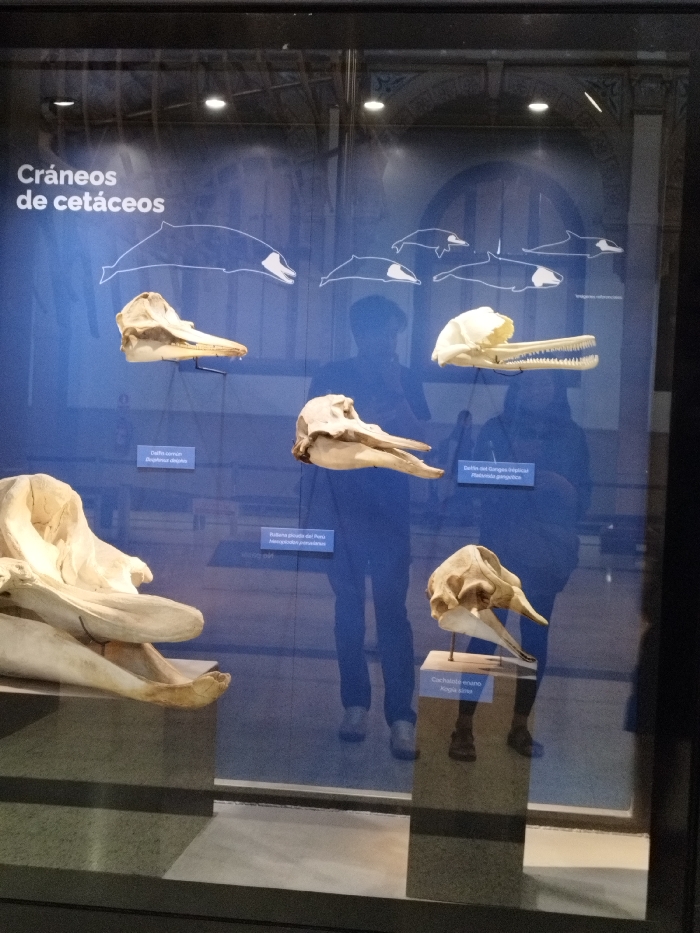
The image displays a museum exhibit showcasing various cetacean skulls behind a reflective glass case. The scene is an indoor museum, likely located in Santiago, Chile.

The main subjects are several bleached white skulls of dolphins and whales, meticulously arranged on stands of varying heights. These skeletal remains represent diverse marine mammal species. In the reflection on the glass, two indistinct human figures are visible: a male figure standing centrally and a female figure partially obscured to the right. These are likely museum visitors, and the reflection of the photographer is also subtly present.

The background of the display is a dark blue wall, featuring simple white outline drawings of different cetaceans, adding an illustrative element to the exhibit. Overhead lighting illuminates the display.

Notable text within the exhibit, all in Spanish, includes a prominent title in the upper left corner: "Cranios de cetáceos" (Cetacean skulls). Individual plaques beneath the skulls identify the species. Visible examples include:
-   "Delfín común" (Common dolphin) with its scientific name "Delphinus delphis".
-   "Ballena piloto del Perú" (Peruvian pilot whale), followed by "Neophocaena phocaenoides" (scientific name for Finless Porpoise, indicating a potential local common name or historical classification).
-   "Delfín del Ganges tropical" (Ganges river dolphin) with "Platanista gangetica".
-   "Cachalote enano" (Dwarf sperm whale) with "Kogia sima".

The exhibit serves an educational purpose, detailing the cranial structures of different cetacean species for public viewing.
Melani

Jan 7, 2025

Santiago, Chile

Stake attention in this memory

The image displays a museum exhibit showcasing various cetacean skulls behind a reflective glass case. The scene is an indoor museum, likely located in Santiago, Chile. The main subjects are several bleached white skulls of dolphins and whales, meticulously arranged on stands of varying heights. These skeletal remains represent diverse marine mammal species. In the reflection on the glass, two indistinct human figures are visible: a male figure standing centrally and a female figure partially obscured to the right. These are likely museum visitors, and the reflection of the photographer is also subtly present. The background of the display is a dark blue wall, featuring simple white outline drawings of different cetaceans, adding an illustrative element to the exhibit. Overhead lighting illuminates the display. Notable text within the exhibit, all in Spanish, includes a prominent title in the upper left corner: "Cranios de cetáceos" (Cetacean skulls). Individual plaques beneath the skulls identify the species. Visible examples include: - "Delfín común" (Common dolphin) with its scientific name "Delphinus delphis". - "Ballena piloto del Perú" (Peruvian pilot whale), followed by "Neophocaena phocaenoides" (scientific name for Finless Porpoise, indicating a potential local common name or historical classification). - "Delfín del Ganges tropical" (Ganges river dolphin) with "Platanista gangetica". - "Cachalote enano" (Dwarf sperm whale) with "Kogia sima". The exhibit serves an educational purpose, detailing the cranial structures of different cetacean species for public viewing.

transactions
revenues
stakers
Earliest
Latest
Highest stake

No transactions found

More from this user

More from Santiago

Melani

Jan 7, 2025

Santiago, Chile

Licensed under Creative Commons Attribution 4.0 International License. You are free to share and adapt this content with proper attribution.