
Stake attention in this memory
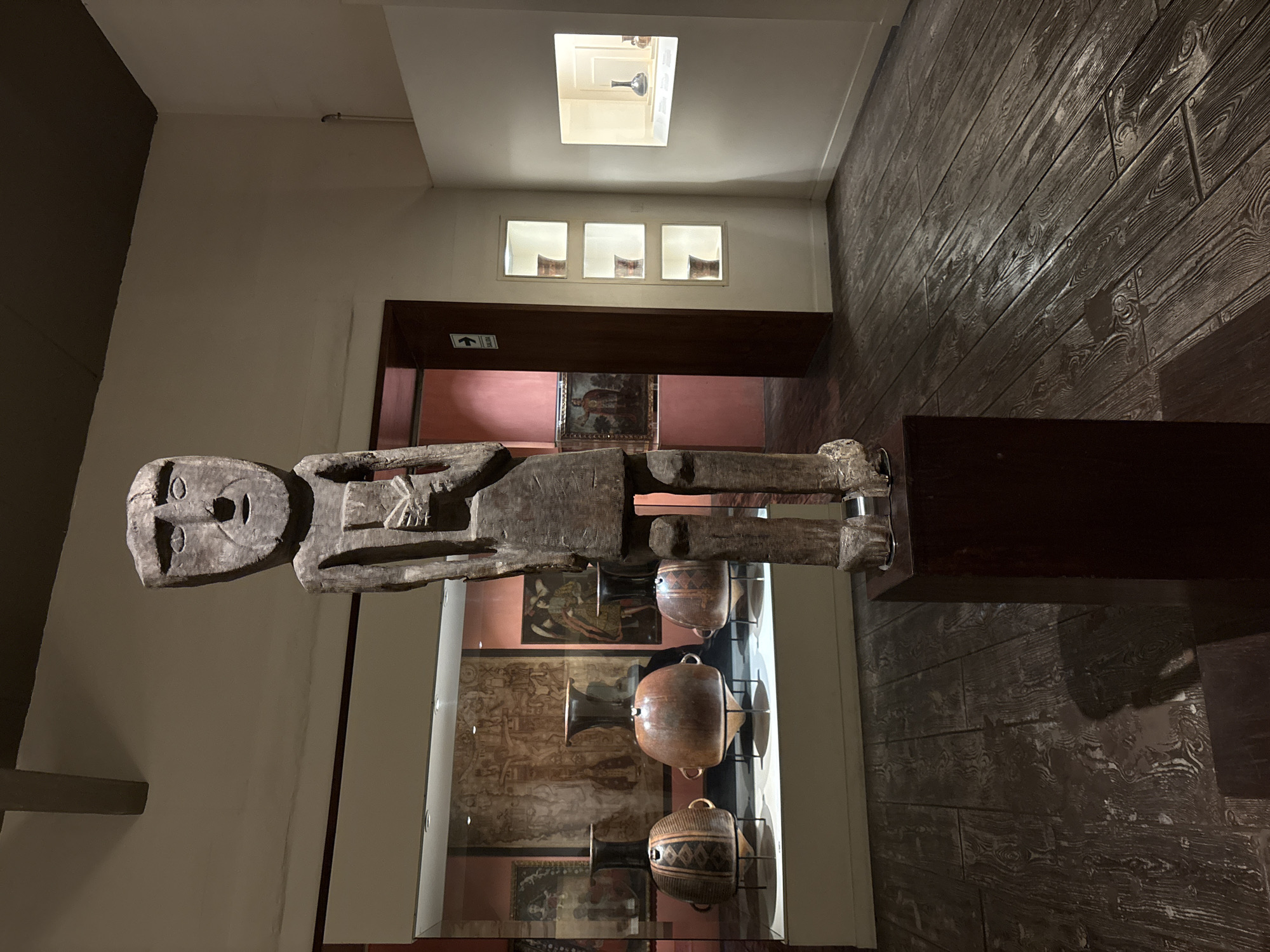
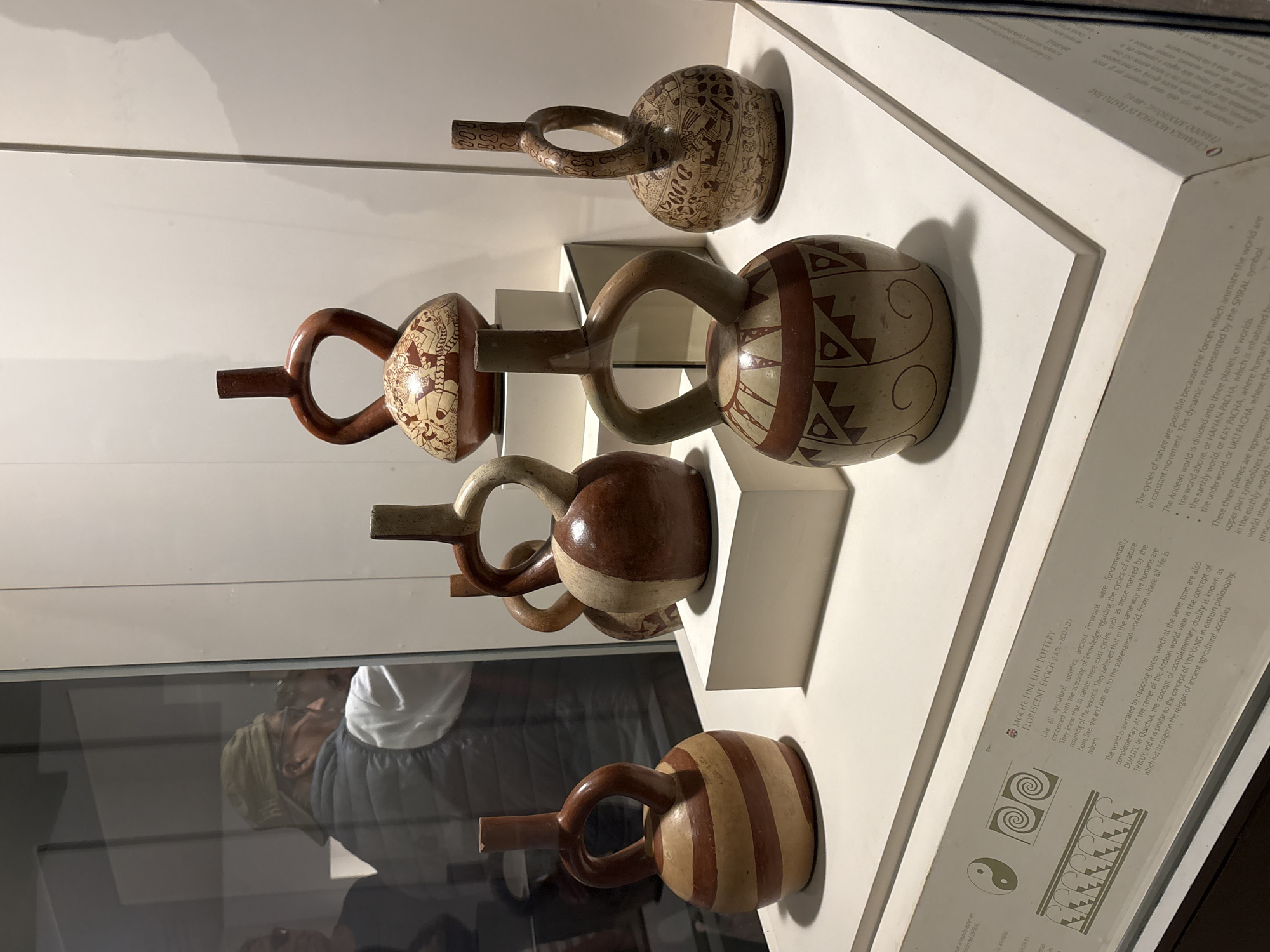
The image captures a museum display case featuring five ancient Moche ceramic vessels, likely from the Florescent Epoch (1 AD - 800 AD). The pottery, characterized by distinct stirrup handles and spout formations, is crafted from terracotta-colored clay and decorated with reddish-brown and cream designs. The vessels showcase a variety of artistic styles: the top vessel features complex, detailed figures (possibly anthropomorphic or zoomorphic), while others exhibit geometric patterns, including triangles and spirals, and striped motifs. These artifacts are arranged vertically within a white display enclosure. To the right, a white informational panel provides context for the "Moche Fine Line Pottery." The text explains that ancient Peruvian societies were fundamentally concerned with the cycles of nature, life, death, and rebirth. It introduces the Andean concept of "DUALITY" or "TINKUY," which is likened to the Eastern philosophy of Yin-Yang, describing it as the balance of opposing yet complementary forces. The text also outlines the division of the Andean world into three planes: HANAN PACHA (the world above), KAY PACHA (the earthly world), and UKU PACHA (the underworld), with the SPIRAL symbol representing the constant movement and dynamic forces animating the world. Spanish text, including "CERAMICA MOCHICA DE TRATTO FINE," is also visible. The glass of the display case reflects the blurred figures of at least two people, indicating visitors observing the exhibition. The setting is clearly an indoor museum or gallery, consistent with a display of ancient Peruvian artifacts in Pueblo Libre, Peru. The image itself is oriented 90 degrees clockwise.
Loading AttnAds…
No transactions found