
Sign in
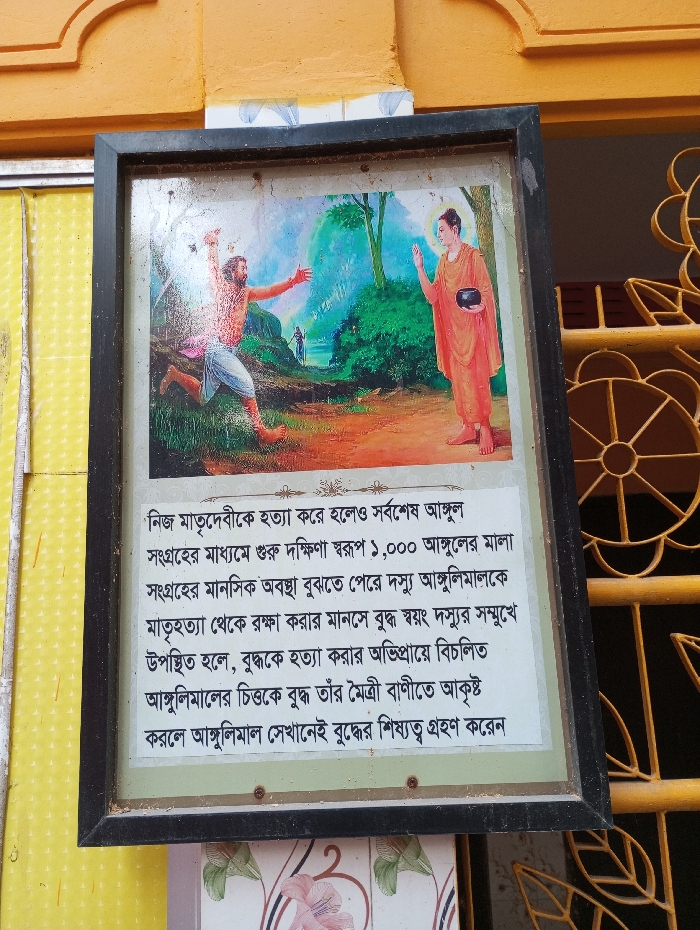
The image displays a framed picture mounted on a vibrant yellow wall, likely an exterior wall of a building in Dhaka, Bangladesh. The main subject is a religious artwork depicting a pivotal Buddhist narrative.

The artwork shows two central figures: on the left, a wild-haired man, identified as the robber Angulimala, is depicted running with a desperate or aggressive expression, his arms outstretched. He wears simple, ragged clothing. Facing him calmly on the right is the Buddha, clad in an orange monastic robe and holding a black begging bowl, with one hand raised in a gesture of peace or teaching. The setting of the painting is an outdoor landscape with green trees, hills, and a path; small, indistinct figures are visible in the background.

Below the artwork, within the same frame, is a block of Bengali text. The text explains that Angulimala was seeking to complete a garland of 1,000 fingers as a guru's fee, even if it meant killing his own mother. The Buddha, understanding Angulimala's disturbed mental state, appeared before him to prevent this matricide. Initially intending to kill the Buddha, Angulimala was captivated by the Buddha's message of loving-kindness and subsequently accepted discipleship on the spot.

The surrounding environment includes decorative floral tiles beneath the frame and a yellow ornamental metal gate with a circular pattern to the right, consistent with local architectural aesthetics. The scene is illuminated by daylight. The image captures a moment of spiritual transformation, presented through both visual art and explanatory text.
FM-5X1RA2

Feb 1, 2025, 10:42 AM

ঢাকা, Bangladesh

Stake attention in this memory

The image displays a framed picture mounted on a vibrant yellow wall, likely an exterior wall of a building in Dhaka, Bangladesh. The main subject is a religious artwork depicting a pivotal Buddhist narrative. The artwork shows two central figures: on the left, a wild-haired man, identified as the robber Angulimala, is depicted running with a desperate or aggressive expression, his arms outstretched. He wears simple, ragged clothing. Facing him calmly on the right is the Buddha, clad in an orange monastic robe and holding a black begging bowl, with one hand raised in a gesture of peace or teaching. The setting of the painting is an outdoor landscape with green trees, hills, and a path; small, indistinct figures are visible in the background. Below the artwork, within the same frame, is a block of Bengali text. The text explains that Angulimala was seeking to complete a garland of 1,000 fingers as a guru's fee, even if it meant killing his own mother. The Buddha, understanding Angulimala's disturbed mental state, appeared before him to prevent this matricide. Initially intending to kill the Buddha, Angulimala was captivated by the Buddha's message of loving-kindness and subsequently accepted discipleship on the spot. The surrounding environment includes decorative floral tiles beneath the frame and a yellow ornamental metal gate with a circular pattern to the right, consistent with local architectural aesthetics. The scene is illuminated by daylight. The image captures a moment of spiritual transformation, presented through both visual art and explanatory text.

Loading AttnAds…

transactions
revenues
stakers
Earliest
Latest
Highest stake

No transactions found

More from this user

More from ঢাকা

FM-5X1RA2

Feb 1, 2025, 10:42 AM

ঢাকা, Bangladesh

Licensed under Creative Commons Attribution 4.0 International License. You are free to share and adapt this content with proper attribution.