
Sign in
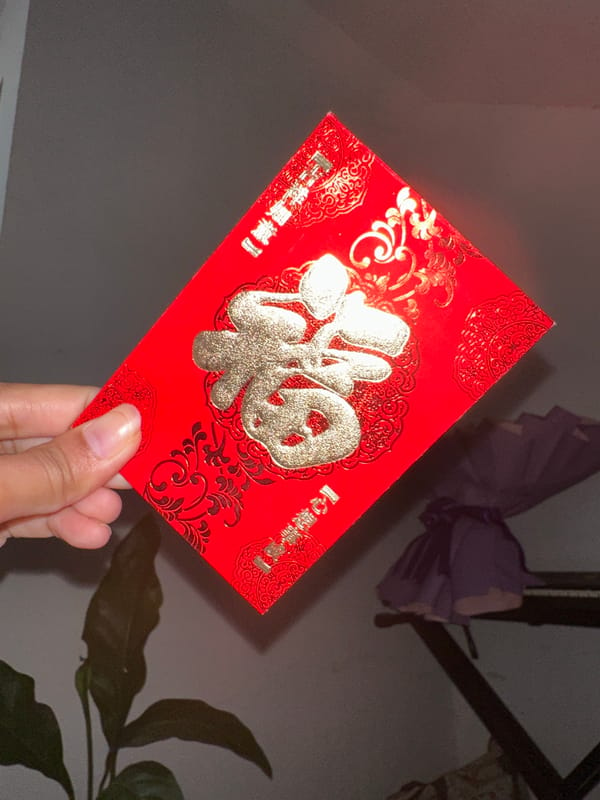
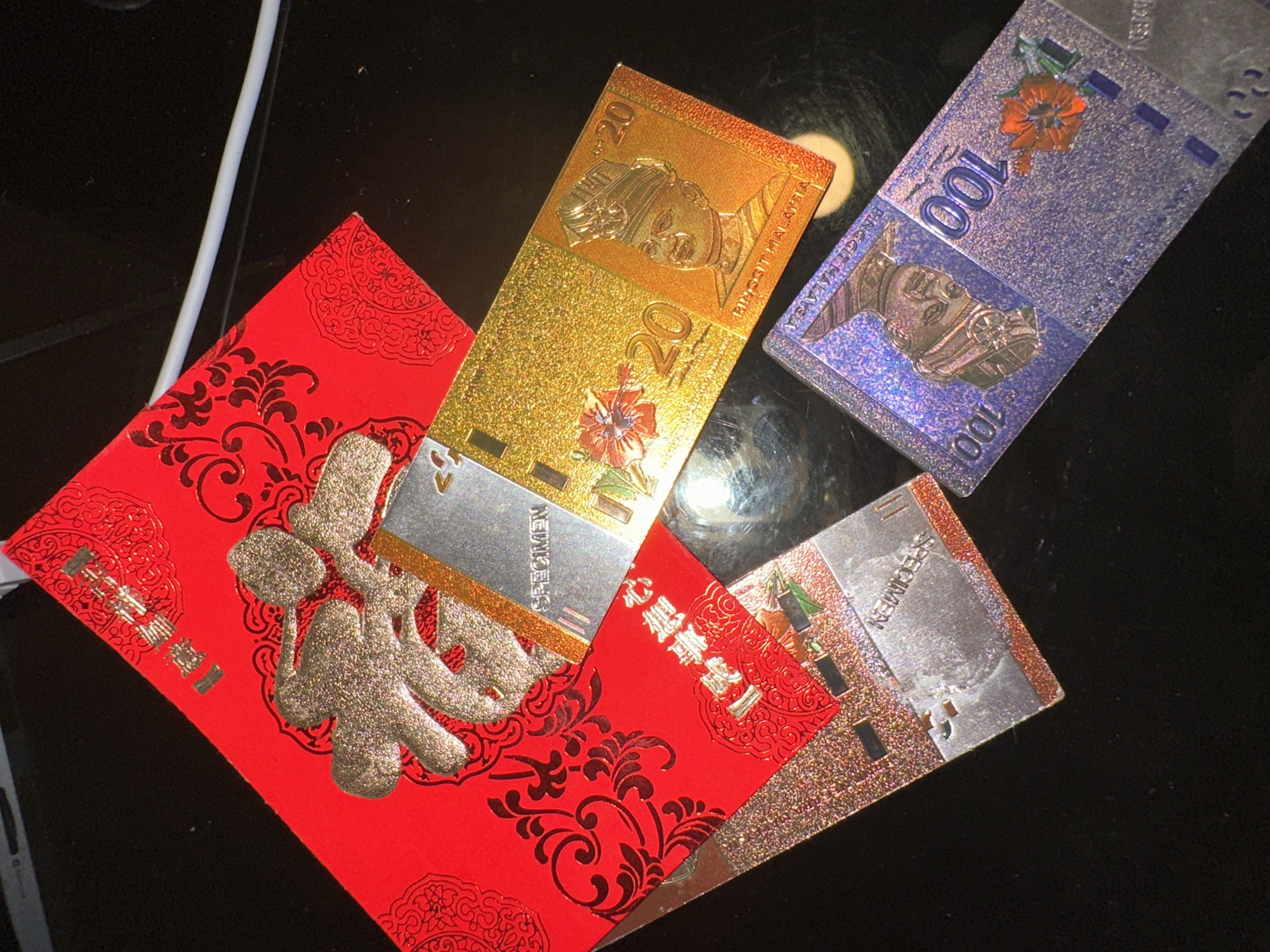
The image displays a collection of red envelopes, commonly known as *ang pao*, and several metallic, decorative "specimen" banknotes, all arranged on a dark, reflective surface. The setting appears to be indoors, with overhead lights casting reflections on the glossy background and the items themselves.

Three red envelopes are visible. The most prominent one features the large, sparkling gold Chinese character "Fu" (福), signifying good fortune or blessing, set against a background of intricate, darker red floral patterns. Other visible Chinese inscriptions on the envelopes include "恭喜发财" (gōng xǐ fā cái - Wishing you prosperity) and "万事如意" (wàn shì rú yì - May all your wishes come true), rendered in gold or silver.

Interspersed with the envelopes are several metallic cards resembling Malaysian Ringgit banknotes. These items are clearly marked "SPECIMEN" in vertical text. One card, gold-toned, depicts the number "20," the text "RINGGIT MALAYSIA," a portrait of an iconic Malaysian figure, and the hibiscus flower. Another card, in shades of purple or blue, shows the number "100" with similar designs and text. A third partially visible card appears silver or bronze, also bearing the "SPECIMEN" label. These metallic notes have a distinct glittery texture, indicating they are decorative items rather than actual currency.

A white cable is partially visible in the upper left corner of the frame. The arrangement suggests a cultural context of gifting or celebration, often associated with events like Chinese New Year in regions like Davao City, Philippines, where such cultural influences are present.
zyanyyy

Jun 2, 2026, 6:44 PM

Davao City, Philippines

Stake attention in this memory

auspicious
celebratory
wealth
gift
fortune

The image displays a collection of red envelopes, commonly known as *ang pao*, and several metallic, decorative "specimen" banknotes, all arranged on a dark, reflective surface. The setting appears to be indoors, with overhead lights casting reflections on the glossy background and the items themselves. Three red envelopes are visible. The most prominent one features the large, sparkling gold Chinese character "Fu" (福), signifying good fortune or blessing, set against a background of intricate, darker red floral patterns. Other visible Chinese inscriptions on the envelopes include "恭喜发财" (gōng xǐ fā cái - Wishing you prosperity) and "万事如意" (wàn shì rú yì - May all your wishes come true), rendered in gold or silver. Interspersed with the envelopes are several metallic cards resembling Malaysian Ringgit banknotes. These items are clearly marked "SPECIMEN" in vertical text. One card, gold-toned, depicts the number "20," the text "RINGGIT MALAYSIA," a portrait of an iconic Malaysian figure, and the hibiscus flower. Another card, in shades of purple or blue, shows the number "100" with similar designs and text. A third partially visible card appears silver or bronze, also bearing the "SPECIMEN" label. These metallic notes have a distinct glittery texture, indicating they are decorative items rather than actual currency. A white cable is partially visible in the upper left corner of the frame. The arrangement suggests a cultural context of gifting or celebration, often associated with events like Chinese New Year in regions like Davao City, Philippines, where such cultural influences are present.

Loading AttnAds…

transactions
revenues
stakers
Earliest
Latest
Highest stake

No transactions found

More from this user

More from Davao City

zyanyyy

Jun 2, 2026, 6:44 PM

Davao City, Philippines

Licensed under Creative Commons Attribution 4.0 International License. You are free to share and adapt this content with proper attribution.