Stake attention in this memory
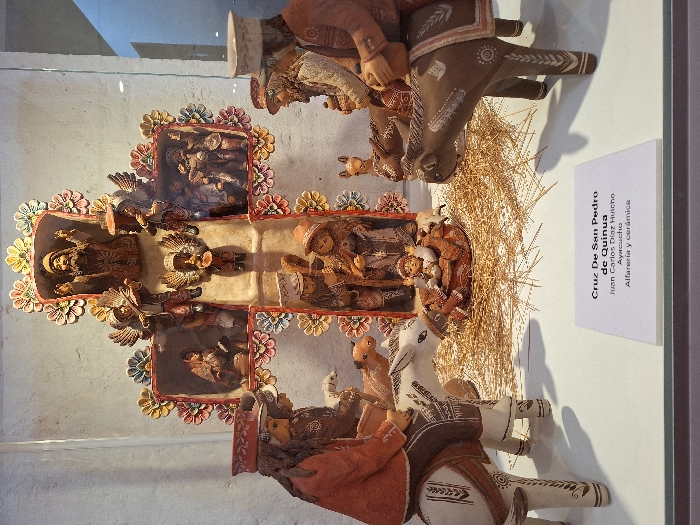
This media file displays a richly detailed, cross-shaped artisanal sculpture, likely made from ceramics and pottery. The central subject is a "Cruz De San Pedro de Quinua," as identified by the accompanying text. The cross structure is adorned with colorful, flower-like motifs along the borders of its internal sections. Each arm of the cross, as well as the central nexus, contains distinct miniature dioramas featuring numerous figures. These figures depict people, including men, women, and angels, often dressed in traditional attire. Small animals are also present within these scenes. The overall arrangement of these internal tableaux suggests a narrative, possibly religious, reminiscent of nativity scenes or traditional Andean storytelling. Beyond the main cross, additional figures are positioned around its base. These include intricately crafted people riding animals resembling llamas or alpacas, and donkeys or horses. These larger figures seem to be part of a procession or journey, further contributing to the narrative implied by the central cross. Hay-like material is scattered around the base of these external figures, adding to the rural or naturalistic setting of the scene. Notable details include the intricate craftsmanship of the figures, with visible textures suggesting hand-molded clay. The clothing and animals exhibit stylized patterns and colors. The display is set in what appears to be a museum or exhibition context, presented on a clean white surface, possibly behind glass, with a light-colored wall in the background. The visible text on a white placard reads: "Cruz De San Pedro" "de Quinua" "Juan Carlos Diaz Huleño" "Ayacucho" "Alfarería y cerámica" This information identifies the artwork, its style or origin ("de Quinua"), the artist ("Juan Carlos Diaz Huleño"), its place of creation ("Ayacucho," a region in Peru known for its crafts), and the materials used ("Alfarería y cerámica," meaning pottery and ceramics). Although the artwork originates from Ayacucho, it is photographed in Arequipa, Peru, likely as part of an exhibition or collection.
No transactions found