
Stake attention in this memory
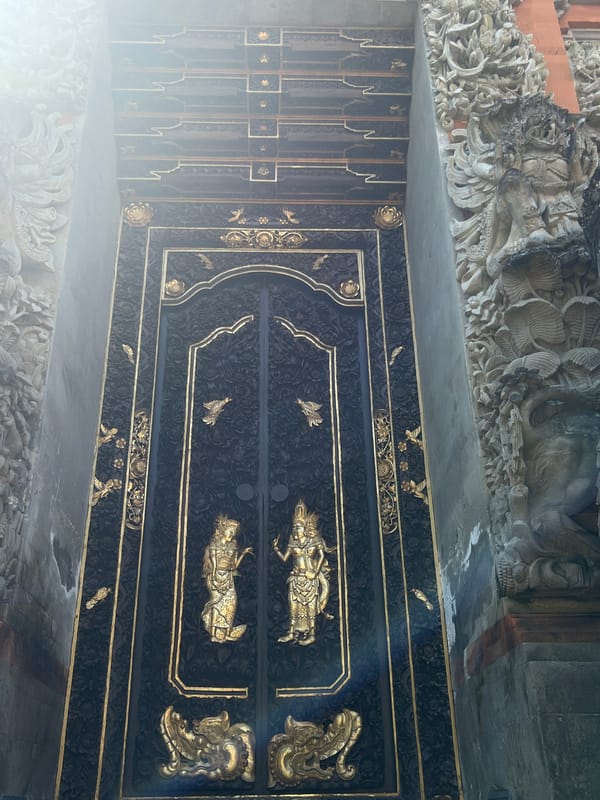
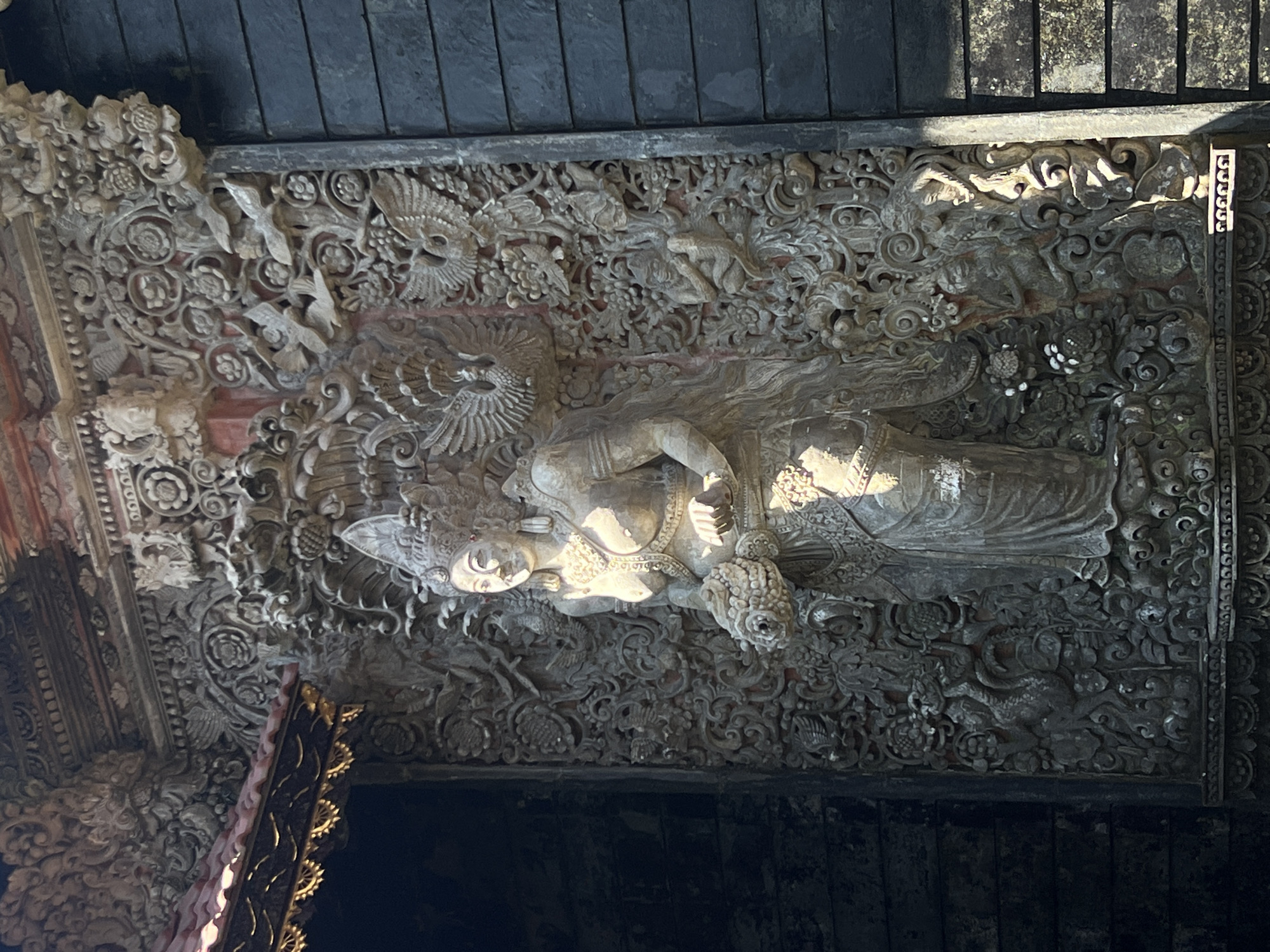
A detailed view captures a standing stone statue of a female deity, possibly an Apsara or Devata, carved from light-colored weathered stone. The figure is adorned with an elaborate headdress and traditional jewelry, holding a cluster of spherical objects, possibly fruit or flowers, in her left hand. Her lower body is draped in intricately carved fabric. The statue is positioned against a wall covered in dense, ornate bas-relief carvings characteristic of Balinese Hindu art. These carvings depict a rich tapestry of mythological birds with spread wings (including phoenix-like figures), various flora, swirling vegetative motifs, monkeys, and other intricate figures. Traces of reddish-brown material or pigment are visible in the deeper recesses of the carvings. To the upper left, a portion of a traditional Balinese roof with red tiles and a golden, scalloped eave is visible, extending over a dark, recessed entrance. To the far right, a vertical section of a darker, textured wall, possibly wood or dark stone, with horizontal lines, frames the scene. The entire composition is brightly illuminated by strong direct sunlight from the upper right, creating pronounced highlights on the statue and carvings, and deep shadows that emphasize their three-dimensional relief. This architectural and sculptural ensemble is located at a Balinese Hindu temple or royal palace in the city of Ubud District, Indonesia.
Loading AttnAds…
No transactions found