
Sign in
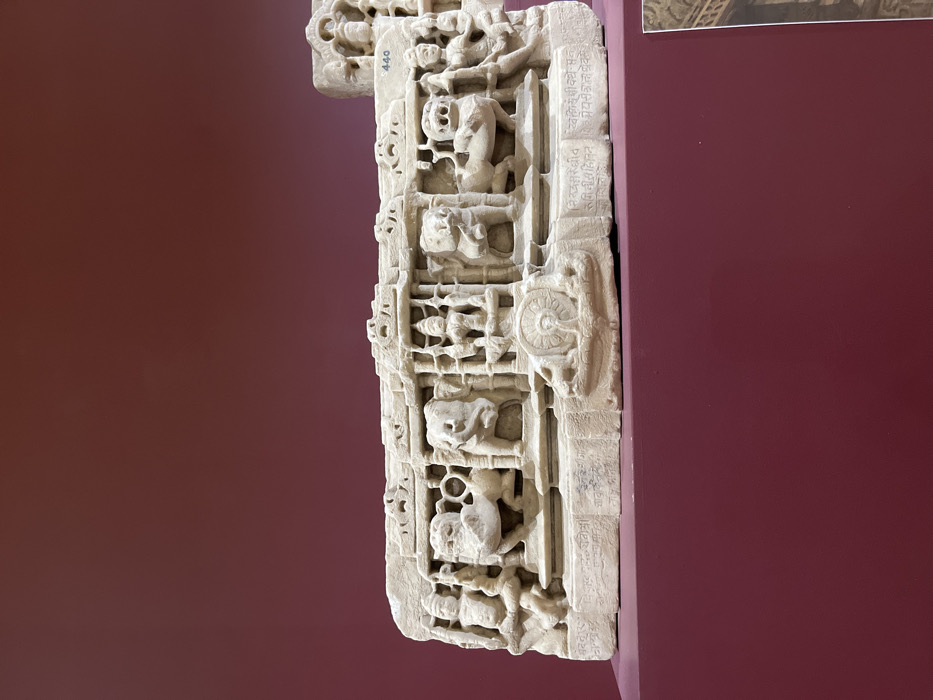
The image displays an intricately carved, light-colored stone relief, likely a fragment of an ancient architectural element such as a door jamb or pillar, presented vertically against a plain, dark red wall. This setting suggests it is an exhibit in a museum or gallery.

The relief features multiple tiers of detailed sculptures. These include numerous humanoid figures, possibly deities or mythological beings, depicted in various poses – some dancing, others in action, and some seemingly in repose or performing rituals. Prominent animal figures, notably elephants, are integrated into the design across different panels, alongside other stylized creatures. Intricate decorative elements like floral motifs, geometric patterns, and small architectural niches frame the figures. A distinct wheel-like motif, possibly a chakra, is visible on the right side in one of the central panels. The carving style is characteristic of ancient or medieval Indian art, known for its narrative complexity and fine detail.

On the upper left portion of the carved stone, a small white label with the number "440" is attached, indicating an inventory or display identification. Along the right vertical edge of the relief, inscriptions in an ancient Indian script, appearing to be Devanagari or a similar script, are carved into the stone. These texts likely provide historical context or dedications.

The object is well-lit, typical of an indoor display environment. The dark red wall serves as a contrasting backdrop, highlighting the pale stone's delicate details. The location context of Mumbai, India, is consistent with the artifact's historical and cultural characteristics.
FM-OhtiC3

Dec 10, 2024

Mumbai, India

Stake attention in this memory

The image displays an intricately carved, light-colored stone relief, likely a fragment of an ancient architectural element such as a door jamb or pillar, presented vertically against a plain, dark red wall. This setting suggests it is an exhibit in a museum or gallery. The relief features multiple tiers of detailed sculptures. These include numerous humanoid figures, possibly deities or mythological beings, depicted in various poses – some dancing, others in action, and some seemingly in repose or performing rituals. Prominent animal figures, notably elephants, are integrated into the design across different panels, alongside other stylized creatures. Intricate decorative elements like floral motifs, geometric patterns, and small architectural niches frame the figures. A distinct wheel-like motif, possibly a chakra, is visible on the right side in one of the central panels. The carving style is characteristic of ancient or medieval Indian art, known for its narrative complexity and fine detail. On the upper left portion of the carved stone, a small white label with the number "440" is attached, indicating an inventory or display identification. Along the right vertical edge of the relief, inscriptions in an ancient Indian script, appearing to be Devanagari or a similar script, are carved into the stone. These texts likely provide historical context or dedications. The object is well-lit, typical of an indoor display environment. The dark red wall serves as a contrasting backdrop, highlighting the pale stone's delicate details. The location context of Mumbai, India, is consistent with the artifact's historical and cultural characteristics.

transactions
revenues
stakers
Earliest
Latest
Highest stake

No transactions found

More from this user

More from Mumbai

FM-OhtiC3

Dec 10, 2024

Mumbai, India

Licensed under Creative Commons Attribution 4.0 International License. You are free to share and adapt this content with proper attribution.