
Stake attention in this memory
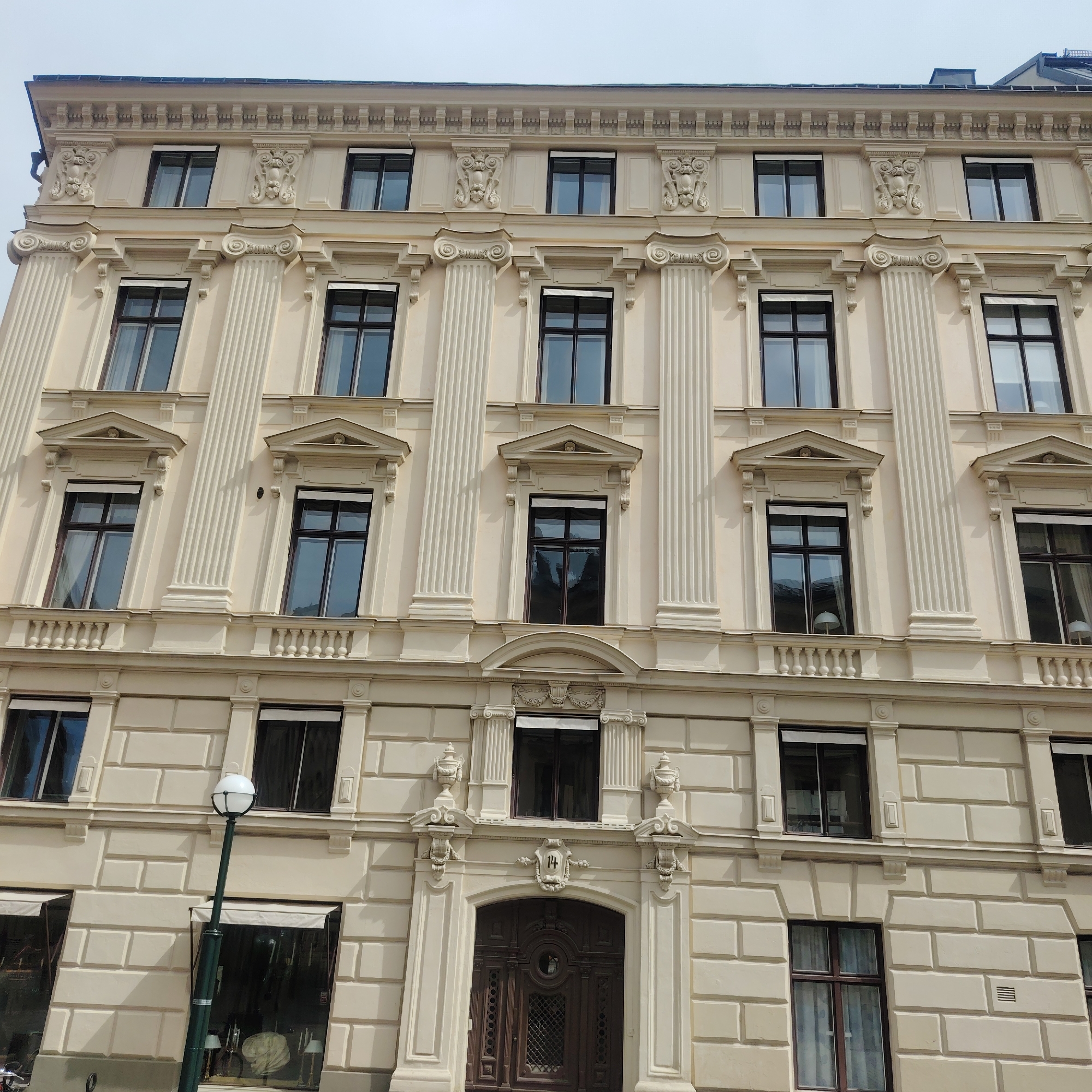
A multi-story building, predominantly cream-colored, exhibits a grand Neoclassical or Neo-Renaissance architectural style under an overcast sky. The facade is meticulously detailed with classical elements. The uppermost visible floor features regularly spaced rectangular windows with dark frames. Above these windows are ornate decorative elements resembling cartouches with scrollwork and foliage motifs, interspersed with stylized masks or faces along the prominent cornice. The cornice itself is adorned with dentil molding. A dark, gabled roof is partially visible in the upper right background. The middle floors are characterized by tall, fluted pilasters extending vertically across multiple levels. These pilasters are topped with stylized Ionic capitals featuring prominent volutes. Windows on these floors are rectangular with dark frames and are often crowned by elaborate pediments, some triangular and others segmental, supported by decorative corbels. Some windows on the second floor (from the top) feature small balustrades directly below them, while the floor below has a continuous balustrade along the window line. The ground floor features a prominent central entrance. The main door is large, made of dark wood, and intricately carved with a central circular window covered by a metal grille. Above the door, within a decorative cartouche, the number "14" is clearly displayed. The entrance is framed by robust pilasters and an arched doorway. Flanking the main entrance are large display windows, likely belonging to commercial establishments, partially covered by light-colored retractable awnings. The lower portion of the ground floor facade exhibits rustication, with rectangular block patterns. A dark green lamppost with a spherical white luminaire stands in front of the building on the lower left, partially obscuring one of the ground-floor windows. No individuals are visible. The architectural style, including the ornate classical details, scale, and material appearance (likely stucco over brick or stone), is highly consistent with late 19th or early 20th-century urban architecture found in historical districts of Stockholm, Sweden. The building is situated in an urban environment.
No transactions found