Stake attention in this memory
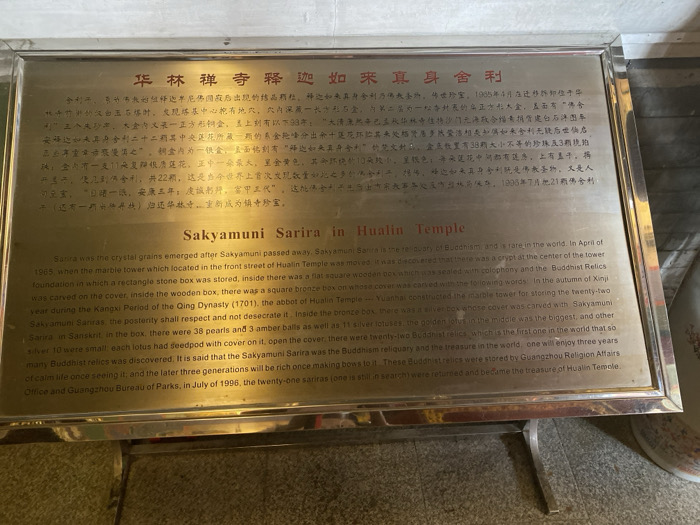
The image displays a rectangular, bronze-colored plaque with text in both Chinese and English, mounted on a dark, metallic stand. The plaque has a slightly reflective surface and is framed with a darker metal border. The setting appears to be indoors, likely within a museum, temple, or historical exhibition area in Guangzhou, China, suggested by the tiled floor visible at the bottom of the frame and the subject matter of the plaque. The plaque describes the "Sakyamuni Sarira in Hualin Temple." The text, presented in both Chinese characters at the top and English below, details the discovery of Buddhist relics. It explains that in April 1965, during the relocation of a marble tower at Hualin Temple, a crypt was found. Inside, a series of nested containers—a stone box, a wooden box sealed with colophony, and a bronze box—were discovered. The bronze box was carved with inscriptions from the Kangxi Period (1701), attributing the construction of the marble tower to Abbot Yuanhai. Within these, a silver box was found, containing 38 pearls, 3 amber balls, and 11 silver lotus flowers. Each lotus had a seedpod, and when opened, revealed twenty-two Buddhist relics (Sarira), which are crystal grains believed to have formed after Sakyamuni Buddha's cremation. The text emphasizes the rarity and significance of these relics, stating they bring calm and prosperity to those who venerate them. It concludes by mentioning that in July 1996, twenty-one of these sariras (one is still being searched for) were returned to Hualin Temple, becoming its prized treasure. No people or specific activities are depicted in the image, which focuses solely on the informational plaque.
Loading AttnAds…
No transactions found