
Stake attention in this memory
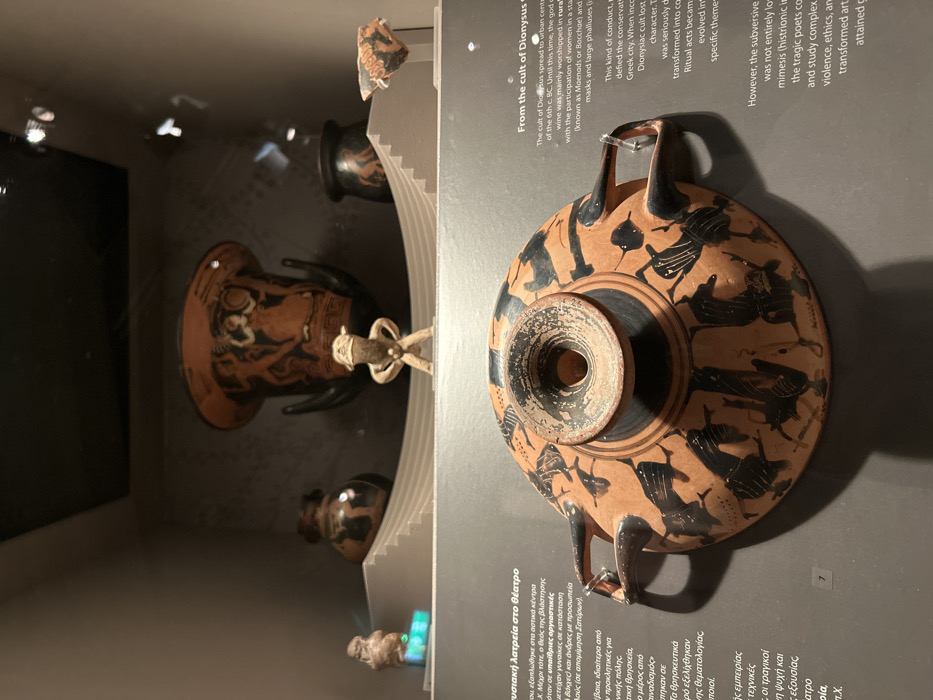
This media file captures an indoor museum display, showcasing ancient Greek artifacts. The image is rotated 90 degrees clockwise. The central subject is a black-figure kylix (drinking cup) with two handles, lying on its side. Its reddish-brown clay body is adorned with black-painted figures depicting what appear to be revelers, possibly satyrs or maenads, in dynamic poses. The central foot and interior of the cup are visible. In the background, two other black-figure vases/amphorae are displayed within a glass case or on shelves, reflecting the light. One larger vase, standing upright, clearly shows a similar style of black-figure decoration with human or mythological figures. A smaller, less distinct vase is further back. To the left, a small, light-colored figurine, possibly terracotta, depicts a standing figure, perhaps a dancer or cult figure. Above the larger background vase, a pottery fragment with black-figure decoration is also displayed. The setting is a museum exhibit, indicated by the display arrangement, controlled lighting, and informational plaques. Shadows from the prominent kylix are cast on the display surface. Accompanying the artifacts are display texts in both English and Greek. The English text, titled "From the cult of Dionysus and the theatre," describes the spread of the Dionysian cult from rural to urban centers in the 6th century BC, its characteristics including ecstatic worship by women (Maenads/Bacchae) and men with masks and phalluses. It explains how this cult's practices, initially subversive, evolved into structured theatrical performances, influencing tragic poets and the exploration of complex human emotions, thus transforming art and literature. The Greek text, titled "Διονυσιακή λατρεία στο θέατρο" (Dionysian worship in the theater), conveys similar information about the cult's history and its connection to early theatre.
No transactions found