Sign in
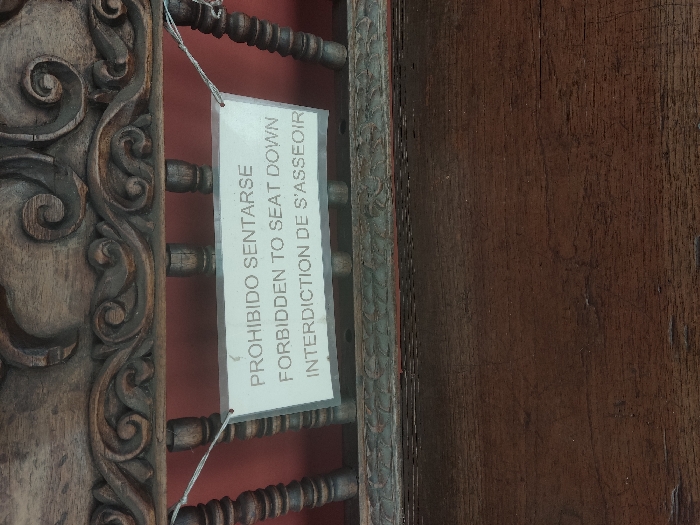
The image presents a close-up view of an ornate, dark brown wooden structure, likely part of furniture or architectural decor, in an indoor setting. The wood features intricate carvings, including scrollwork and turned balusters. Behind the carved wood, a reddish-brown wall or surface is visible.

A white, rectangular sign is suspended vertically from the top of the wooden structure by thin strings. The sign bears text in three languages, instructing visitors not to sit. The visible text reads:
*   "PROHIBIDO SENTARSE" (Spanish for "Forbidden to sit")
*   "FORBIDDEN TO SEAT DOWN" (English, with a grammatical error, commonly "to sit down")
*   "INTERDICTION DE S'ASSEEOIR" (French for "Forbidden to sit")

There are no people visible, and no active event is taking place; the scene captures a static display. The sign suggests that the wooden piece is either valuable, fragile, or part of an exhibit that should not be used as seating. Given the intricate craftsmanship of the wood and the nature of the prohibition, the setting is likely a historical building, museum, or religious institution in La Paz, Bolivia, where such artifacts are preserved.
FM-2vcBI3

Dec 21, 2024, 5:33 PM

La Paz, Bolivia

Stake attention in this memory

The image presents a close-up view of an ornate, dark brown wooden structure, likely part of furniture or architectural decor, in an indoor setting. The wood features intricate carvings, including scrollwork and turned balusters. Behind the carved wood, a reddish-brown wall or surface is visible. A white, rectangular sign is suspended vertically from the top of the wooden structure by thin strings. The sign bears text in three languages, instructing visitors not to sit. The visible text reads: * "PROHIBIDO SENTARSE" (Spanish for "Forbidden to sit") * "FORBIDDEN TO SEAT DOWN" (English, with a grammatical error, commonly "to sit down") * "INTERDICTION DE S'ASSEEOIR" (French for "Forbidden to sit") There are no people visible, and no active event is taking place; the scene captures a static display. The sign suggests that the wooden piece is either valuable, fragile, or part of an exhibit that should not be used as seating. Given the intricate craftsmanship of the wood and the nature of the prohibition, the setting is likely a historical building, museum, or religious institution in La Paz, Bolivia, where such artifacts are preserved.

Loading AttnAds…

transactions
revenues
stakers
Earliest
Latest
Highest stake

No transactions found

More from this user

More from La Paz

FM-2vcBI3

Dec 21, 2024, 5:33 PM

La Paz, Bolivia

Licensed under Creative Commons Attribution 4.0 International License. You are free to share and adapt this content with proper attribution.