
Stake attention in this memory
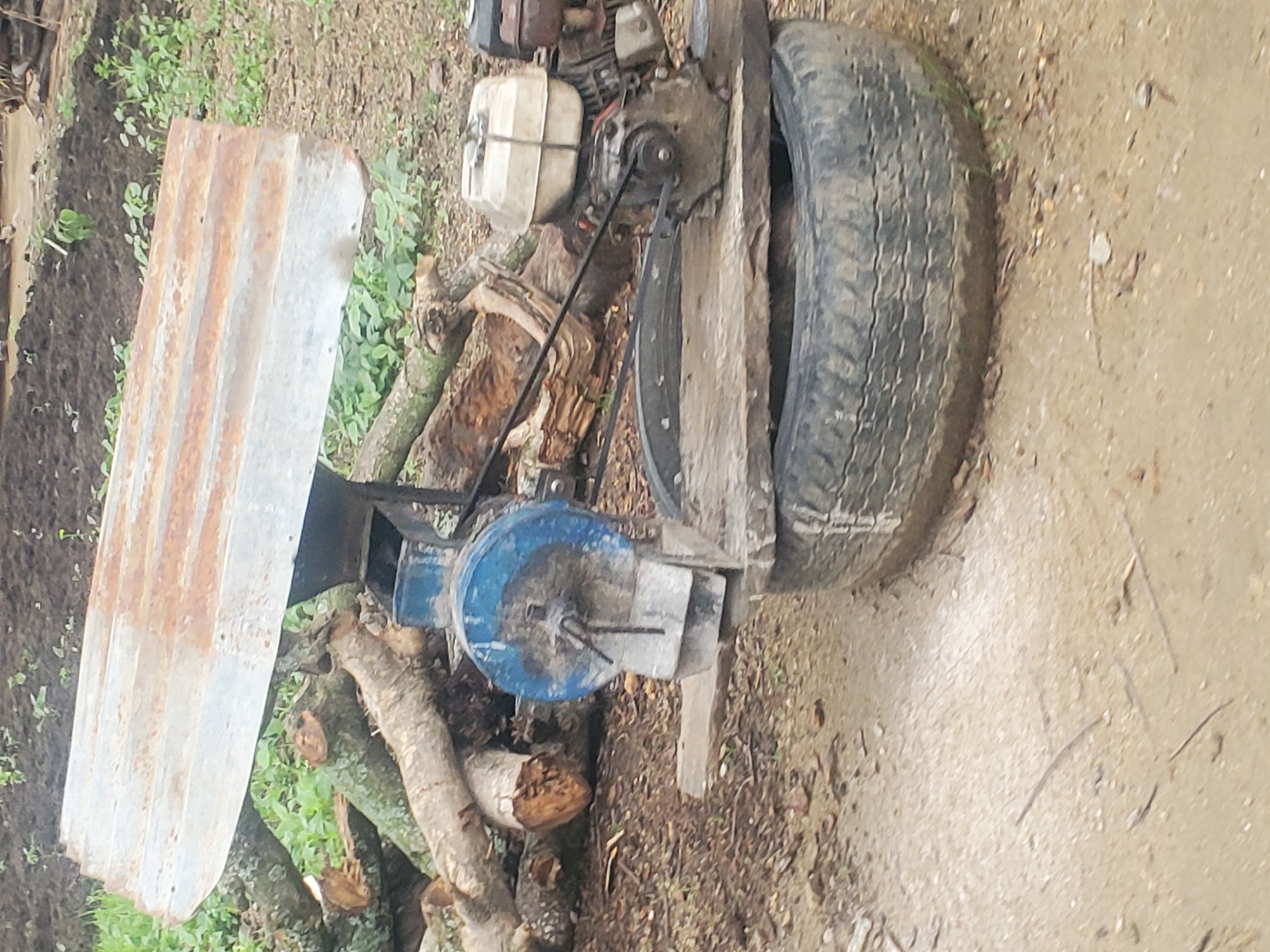
The image shows a homemade wood-cutting saw, likely a chainsaw or a similar device, positioned outdoors in what appears to be a rural setting. The saw is constructed from salvaged parts. A rusty piece of corrugated metal forms a makeshift protective shield or table over part of the mechanism. A small engine, possibly a gasoline-powered one, is mounted to a wooden frame, connected to a pulley system via a belt. Adjacent to the engine, a car tire is affixed to the frame, suggesting it might be used for stabilization, as a flywheel, or as part of a power transmission system. The device is situated amongst logs of wood, indicating it is set up for use in cutting firewood or timber. The ground around the saw is muddy and uneven, with scattered debris and some vegetation, typical of an outdoor workspace in a village or countryside. The overall appearance is that of a functional, if rustic, piece of equipment built for a practical purpose. There are no people visible in the image. The lighting suggests it is daytime, with overcast or diffused light rather than direct sunlight. The context of Kabwir, Nigeria, places this scene within a community where such resourceful, self-made tools are common for essential tasks like preparing fuel for cooking and heating. The image captures the essence of improvisation and resourcefulness.
Loading AttnAds…
No transactions found