Sign in
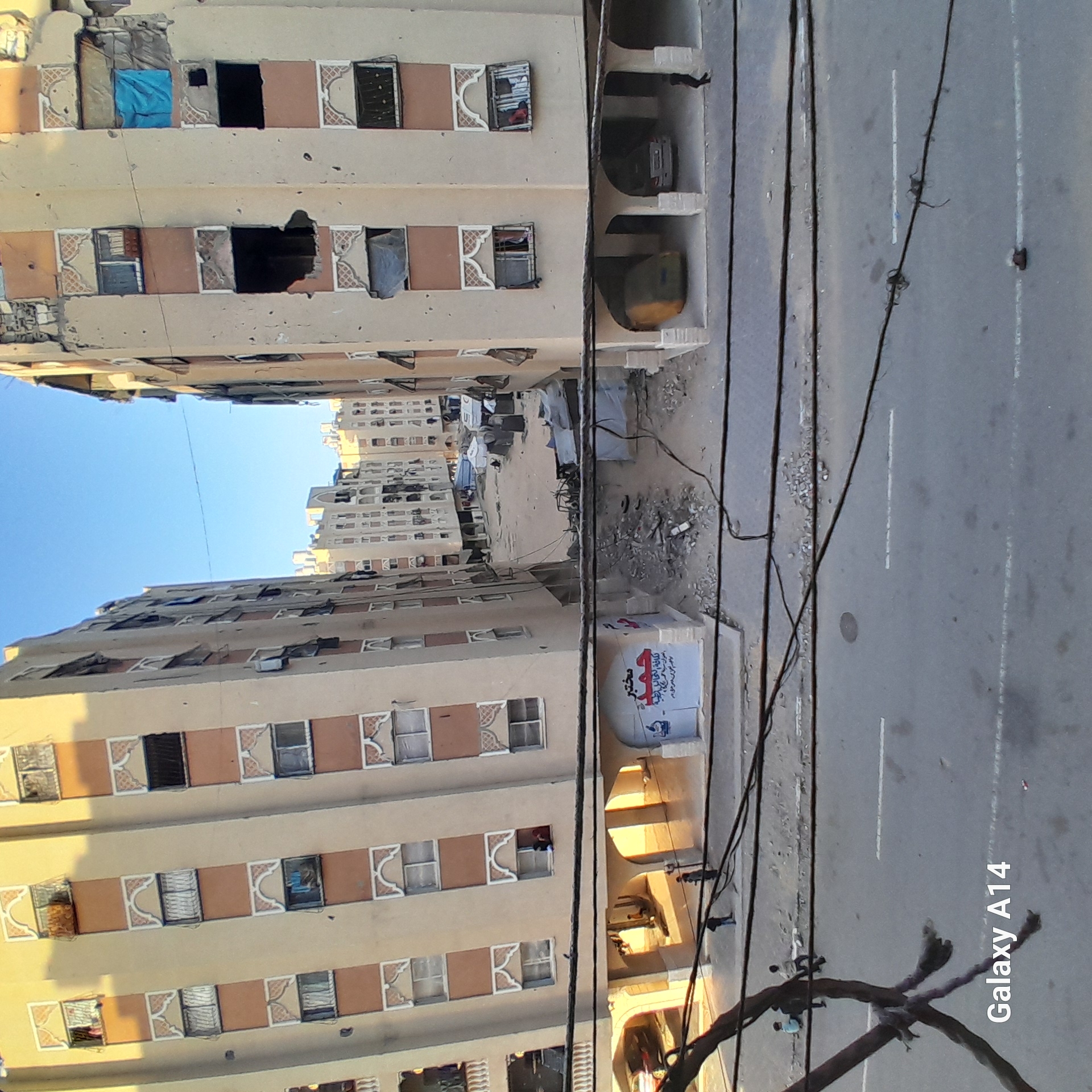
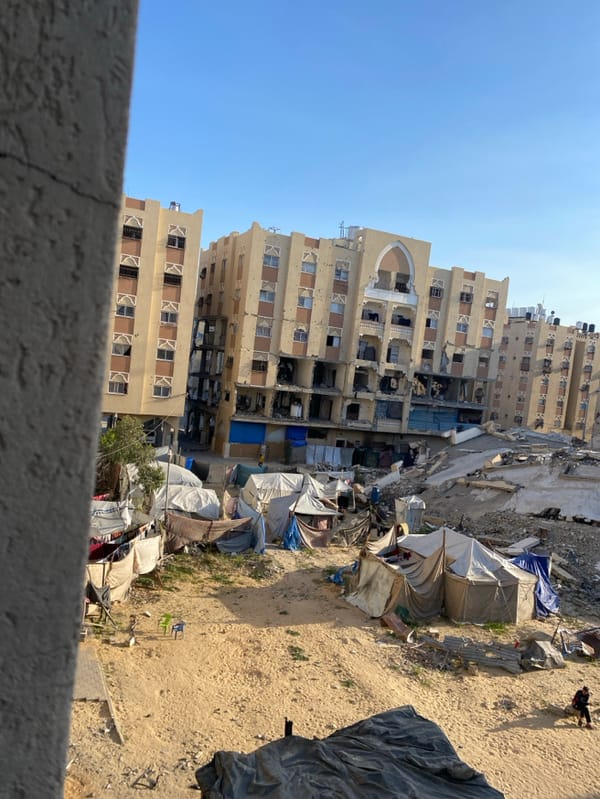
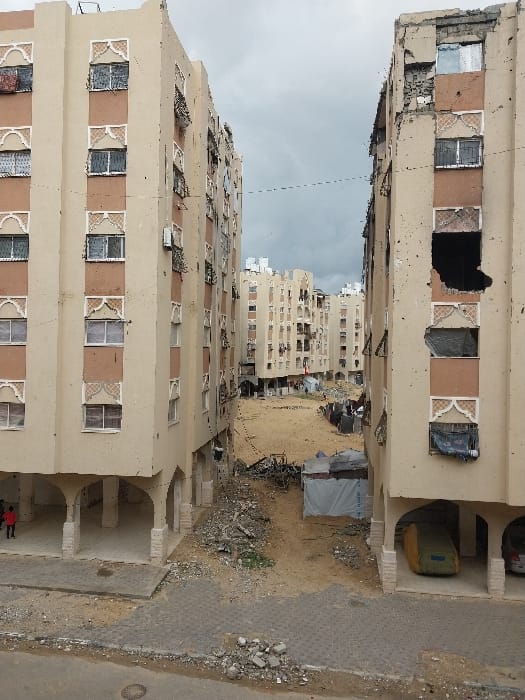
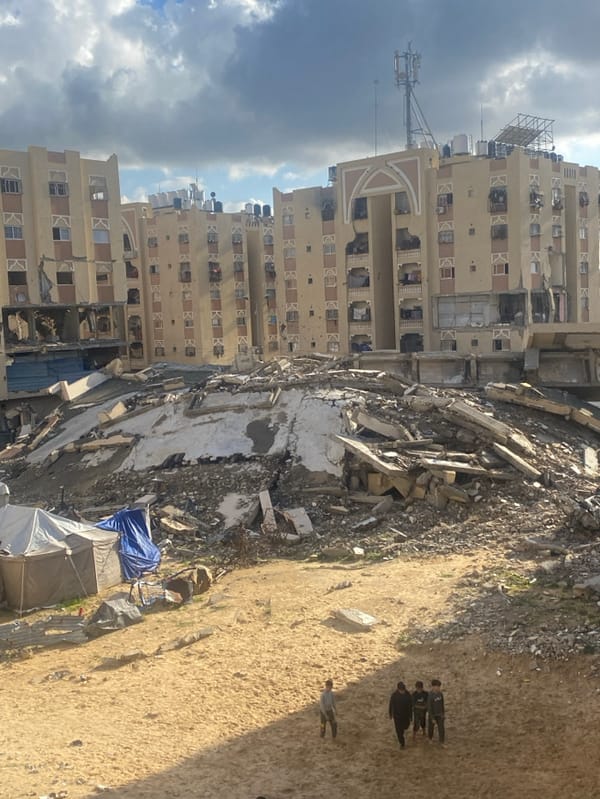
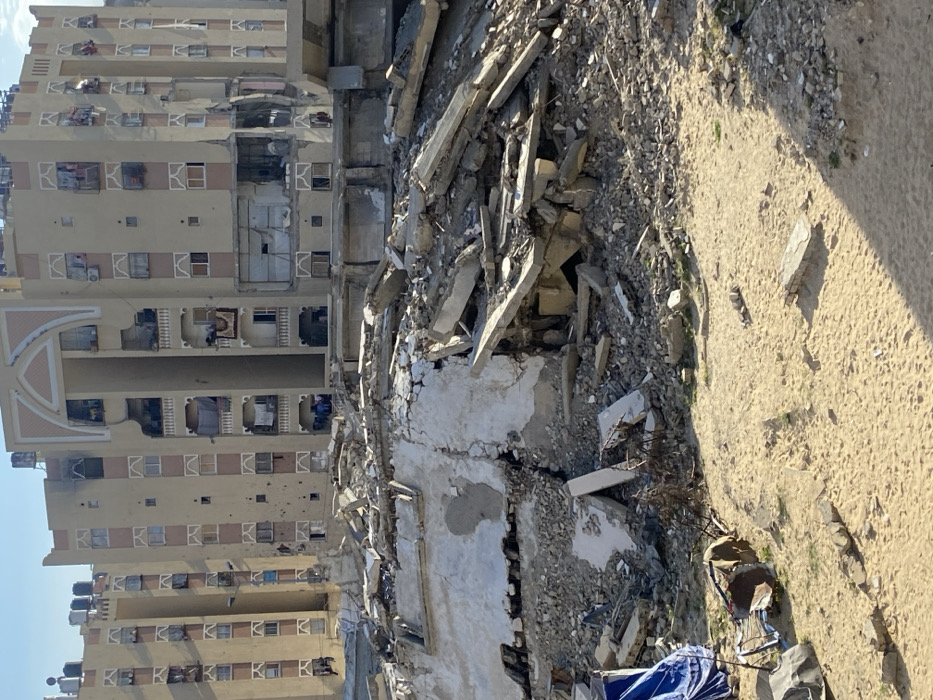
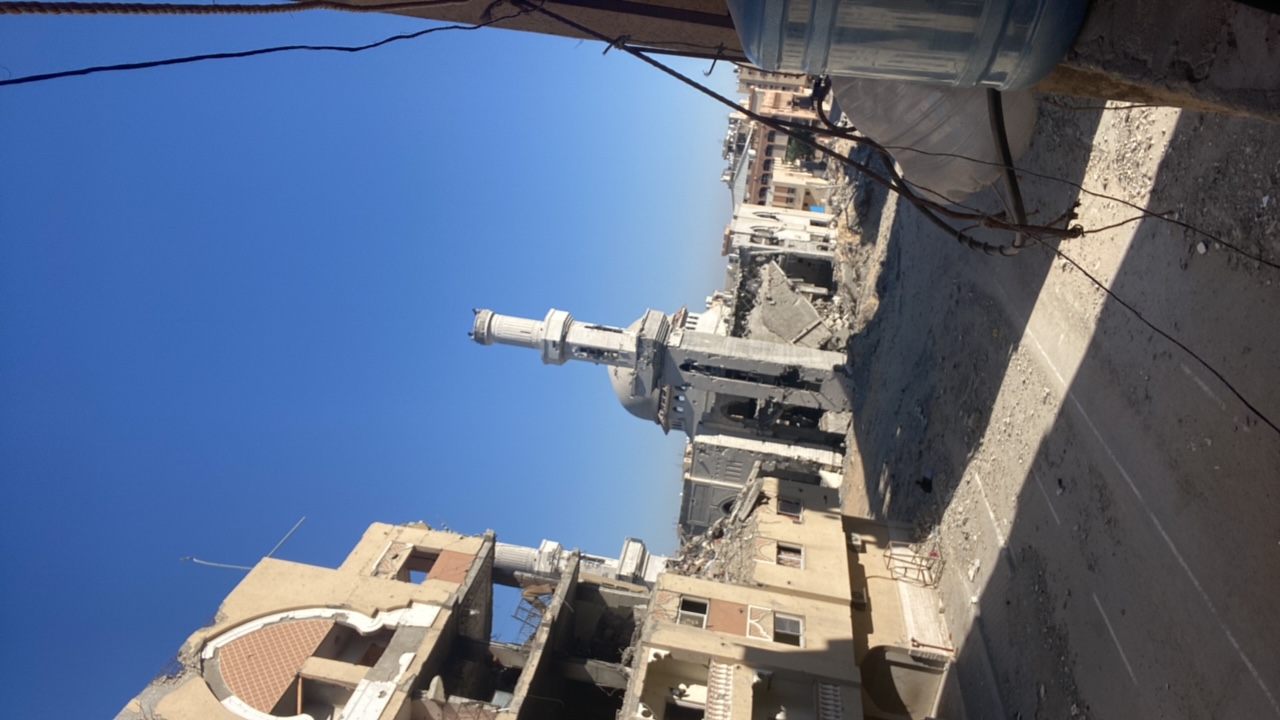
The image displays a scene of significant destruction, likely from conflict or a disaster, featuring a heavily damaged multi-story building next to a large pile of rubble. The overall impression is one of devastation.

To the left of the frame, a tall, multi-story building, appearing to be a residential or apartment complex, dominates the background. It is constructed from light-colored (beige or off-white) concrete or stucco. The building shows extensive damage; numerous windows are broken or appear boarded up, and many balconies are either damaged or have items, such as clothes or rugs, hanging from them, hinting at recent habitation or attempts at salvage. Several air conditioning units are mounted on the exterior walls, particularly on the lower floors. On the far left, black water tanks are visible on the roof of a lower section of the building. The building's facade exhibits multiple holes and impact marks, especially in the central section. A large section of one of the middle floors appears completely blown out, exposing the interior structure and giving the impression of a direct hit or collapse. An arched architectural detail is present on the lower part of the building on the far left.

In the foreground and extending towards the damaged building is a substantial pile of debris and rubble. This pile consists of broken concrete slabs, fragmented bricks, twisted rebar, and general construction waste. Some of the larger concrete pieces are light-colored, indicating structural components. Below the main mound of rubble, a fragmented and cracked section of what appears to be a foundation or a lower wall is visible. At the very bottom right of the rubble, a blue tarp or piece of fabric is partially visible, covering some of the smaller debris.

To the right of the rubble, the ground is sandy or dusty, with sparse patches of small green vegetation or weeds growing in it. Bright sunlight casts clear shadows across the sandy ground and the rubble, suggesting it is daytime with a clear sky. The destructive state of the buildings and the presence of such extensive rubble indicate a recent catastrophic event.
NERMEEN SALEH

Feb 23, 2026, 1:48 PM

Khan Yunis, Palestinian Territory

Stake attention in this memory

destruction
rubble
building
damage
aftermath

The image displays a scene of significant destruction, likely from conflict or a disaster, featuring a heavily damaged multi-story building next to a large pile of rubble. The overall impression is one of devastation. To the left of the frame, a tall, multi-story building, appearing to be a residential or apartment complex, dominates the background. It is constructed from light-colored (beige or off-white) concrete or stucco. The building shows extensive damage; numerous windows are broken or appear boarded up, and many balconies are either damaged or have items, such as clothes or rugs, hanging from them, hinting at recent habitation or attempts at salvage. Several air conditioning units are mounted on the exterior walls, particularly on the lower floors. On the far left, black water tanks are visible on the roof of a lower section of the building. The building's facade exhibits multiple holes and impact marks, especially in the central section. A large section of one of the middle floors appears completely blown out, exposing the interior structure and giving the impression of a direct hit or collapse. An arched architectural detail is present on the lower part of the building on the far left. In the foreground and extending towards the damaged building is a substantial pile of debris and rubble. This pile consists of broken concrete slabs, fragmented bricks, twisted rebar, and general construction waste. Some of the larger concrete pieces are light-colored, indicating structural components. Below the main mound of rubble, a fragmented and cracked section of what appears to be a foundation or a lower wall is visible. At the very bottom right of the rubble, a blue tarp or piece of fabric is partially visible, covering some of the smaller debris. To the right of the rubble, the ground is sandy or dusty, with sparse patches of small green vegetation or weeds growing in it. Bright sunlight casts clear shadows across the sandy ground and the rubble, suggesting it is daytime with a clear sky. The destructive state of the buildings and the presence of such extensive rubble indicate a recent catastrophic event.

Loading AttnAds…

transactions
revenues
stakers
Earliest
Latest
Highest stake

No transactions found

More from this user

More from Khan Yunis

NERMEEN SALEH

Feb 23, 2026, 1:48 PM

Khan Yunis, Palestinian Territory

Licensed under Creative Commons Attribution 4.0 International License. You are free to share and adapt this content with proper attribution.