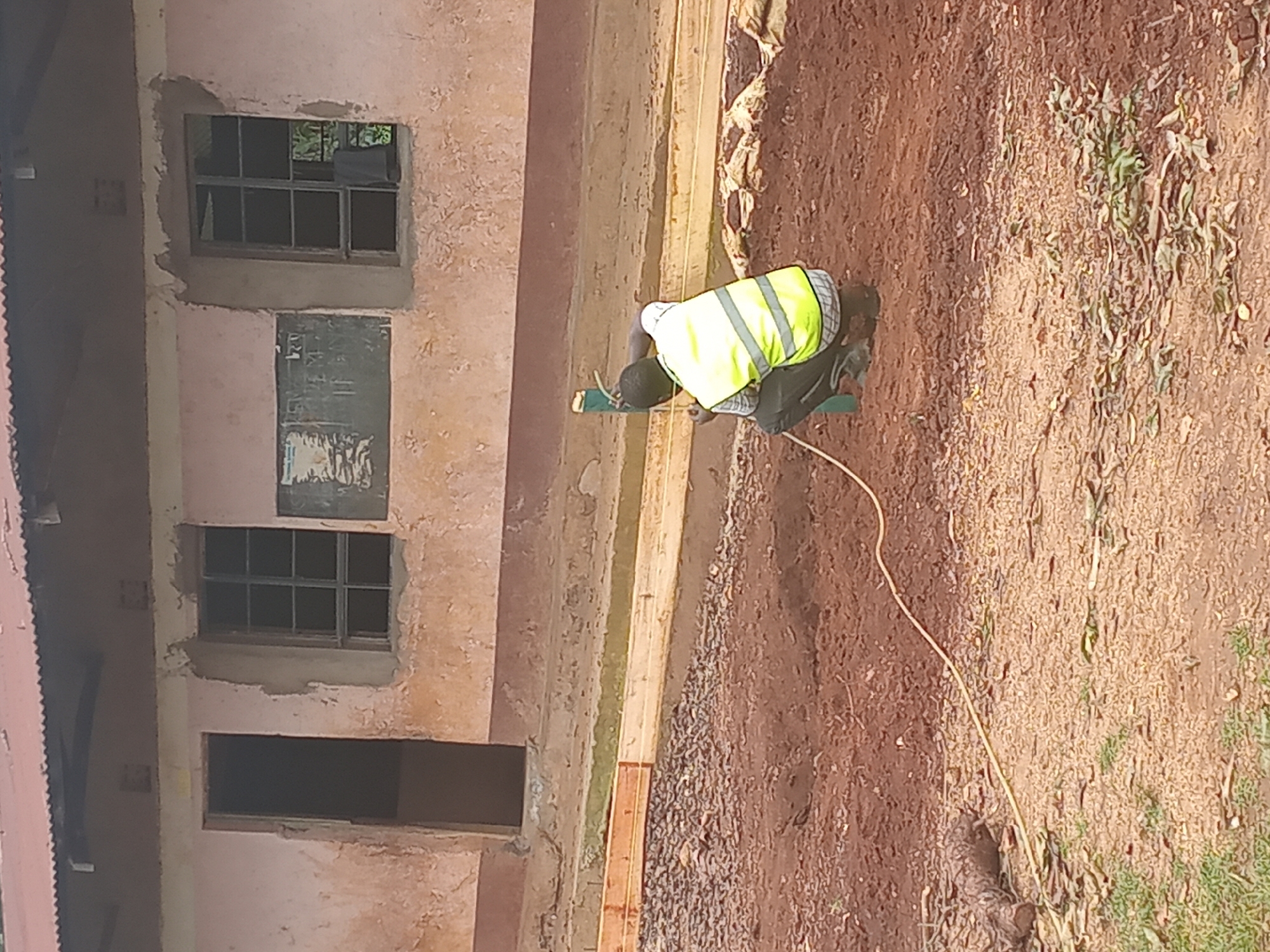
![The central subject is a person, appearing male, viewed from the back. They are wearing a bright yellow-green high-visibility vest over a dark long-sleeved shirt and dark trousers. A black beanie covers their head. The person holds a thin, light-colored stick in their right hand, extending backward from their body.
The scene is outdoors, likely on a dry, dusty dirt road or path. The background consists of green foliage and trees, suggesting a natural, possibly rural or semi-urban environment in Lubao, Kenya. The image is captured in bright daylight, indicating a clear, sunny day.
The person appears to be standing or walking along the path. The high-visibility vest suggests involvement in an organized community activity, public service, or an awareness campaign.
Notable text and logos on the vest provide context:
* On the wearer's right side (viewer's left), vertically aligned, the text reads "MAJOR LUKHULU 1224 Khetias". Below this are several smaller logos, including "Kabarak" and "ASPIRE".
* On the wearer's left side (viewer's right), also vertically aligned, the text reads "CHOTA KUCHOTA" and "MIMI NIMECHOTA, JE WEWE??". The latter phrase is Swahili and translates to "I have drawn [water], have you??", strongly indicating an initiative or campaign related to water access, conservation, or management. The vest also features prominent horizontal reflective strips.](https://firebasestorage.googleapis.com/v0/b/patr-3a75e.appspot.com/o/uploads%2Fimage_picker_4acb5491-609e-4602-8.jpg?alt=media)
Stake attention in this memory
The central subject is a person, appearing male, viewed from the back. They are wearing a bright yellow-green high-visibility vest over a dark long-sleeved shirt and dark trousers. A black beanie covers their head. The person holds a thin, light-colored stick in their right hand, extending backward from their body. The scene is outdoors, likely on a dry, dusty dirt road or path. The background consists of green foliage and trees, suggesting a natural, possibly rural or semi-urban environment in Lubao, Kenya. The image is captured in bright daylight, indicating a clear, sunny day. The person appears to be standing or walking along the path. The high-visibility vest suggests involvement in an organized community activity, public service, or an awareness campaign. Notable text and logos on the vest provide context: * On the wearer's right side (viewer's left), vertically aligned, the text reads "MAJOR LUKHULU 1224 Khetias". Below this are several smaller logos, including "Kabarak" and "ASPIRE". * On the wearer's left side (viewer's right), also vertically aligned, the text reads "CHOTA KUCHOTA" and "MIMI NIMECHOTA, JE WEWE??". The latter phrase is Swahili and translates to "I have drawn [water], have you??", strongly indicating an initiative or campaign related to water access, conservation, or management. The vest also features prominent horizontal reflective strips.
No transactions found