
Stake attention in this memory
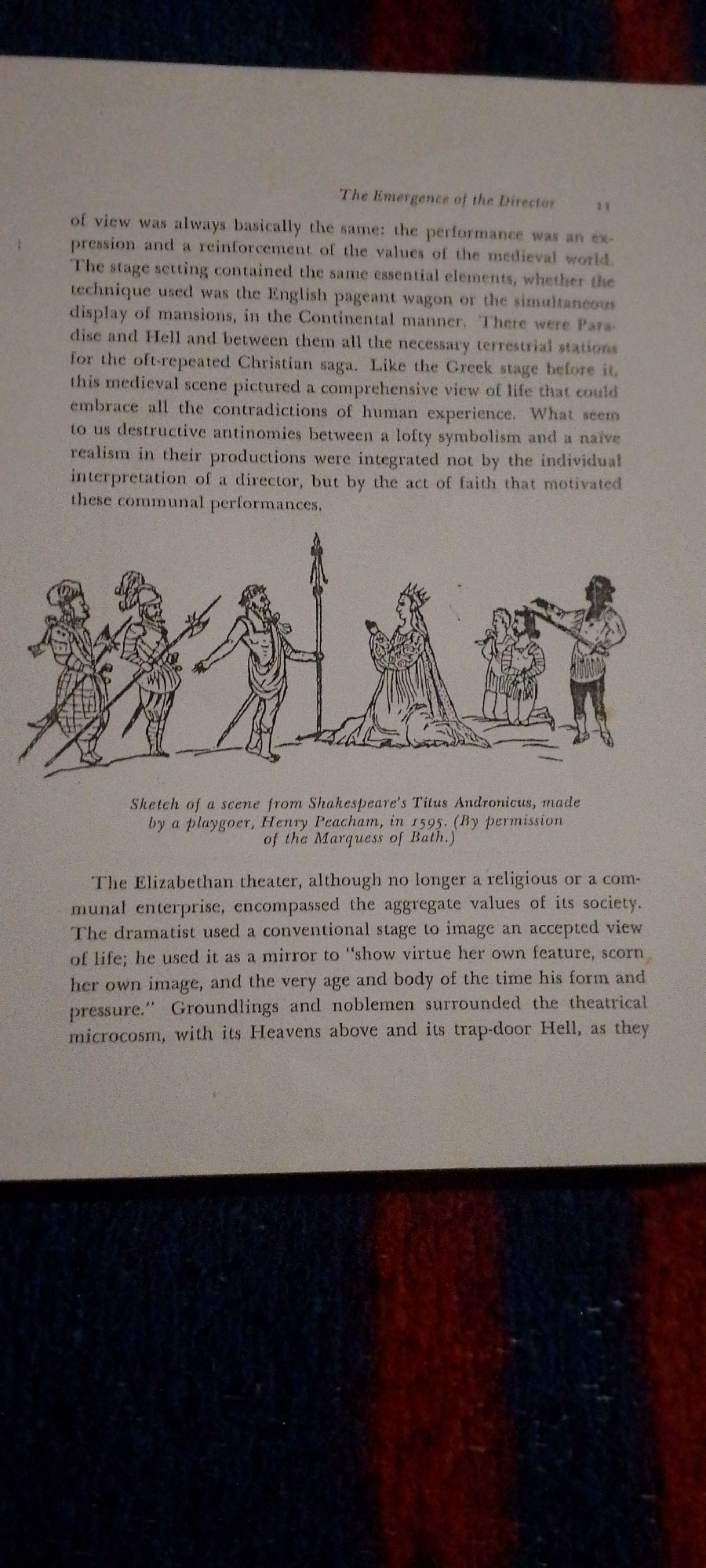
The image displays an illustration and accompanying text from a historical document. The illustration is a sketch of a scene from Shakespeare's "Titus Andronicus," created by Henry Peacham in 1595. It depicts several figures on a stage, suggesting a theatrical performance. The figures are rendered in a stylized, somewhat crude manner, with distinct costumes and poses. One figure, seemingly a king or ruler, stands prominently with his arms outstretched, addressing a group of people. To the left, three figures in elaborate attire hold weapons, possibly soldiers or guards. To the right, two figures are kneeling, and another stands, looking towards the central figure. The setting appears to be a simple stage with a backdrop that suggests a stylized representation of a heavenly realm above and a trapdoor below, hinting at the presence of Hell. The text above the illustration discusses the nature of Elizabethan theater, noting its transition from a religious to a more communal enterprise. It describes the stage as a conventional platform used to reflect societal values and present accepted views of life. The text specifically mentions the use of "Heavens above and its trap-door Hell" as elements of the theatrical microcosm. The caption below the sketch provides specific attribution for the artwork. The overall tone of the text is academic and descriptive, analyzing the historical context and characteristics of Elizabethan drama.
Loading AttnAds…
No transactions found