
Stake attention in this memory
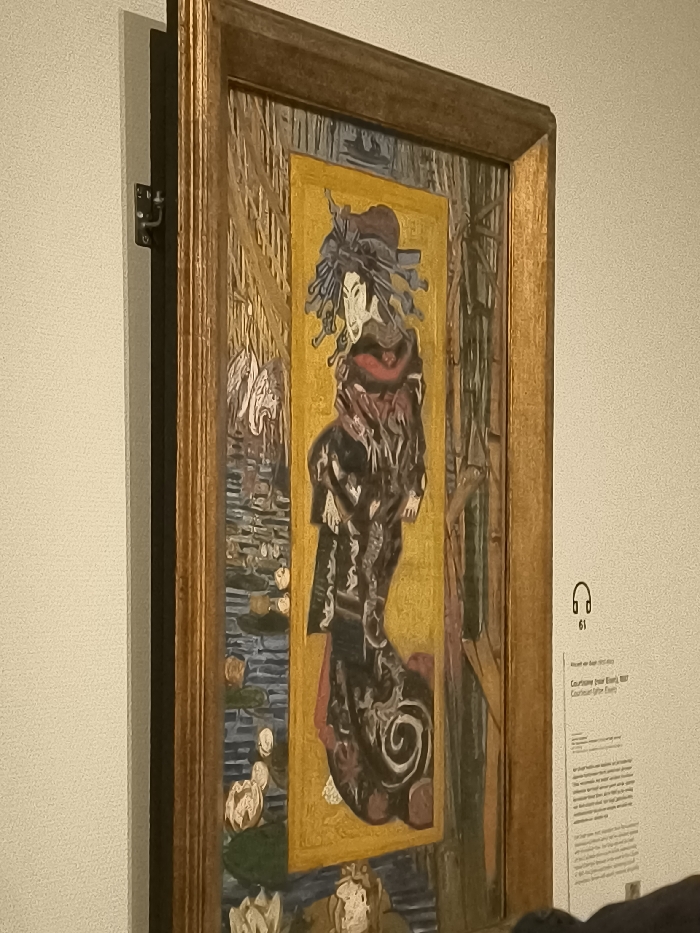
The media file showcases a framed painting by Vincent van Gogh, titled "Courtesan (after Eisen)," displayed on a light-colored wall in a museum or art gallery. The painting, dated 1887, depicts a full-length, stylized figure of a Japanese courtesan or geisha, rendered with visible, impasto brushstrokes and vibrant colors. The figure wears a dark, patterned kimono with red accents and intricate hair, standing against a bright yellow panel. To the left of the figure, a narrow strip of water with white water lilies or lotus flowers is visible, bordered by abstract shapes that suggest a bridge or landscape. On the right, vertical elements resembling bamboo stalks frame the central figure. The artwork is encased in a thick, golden-brown wooden frame. Adjacent to the painting on the right, a white information placard is mounted on the wall. The placard features a headphones icon with the number "61," indicating an audio guide stop. Clearly legible text identifies the artist as "Vincent van Gogh (1853-1890)" and the painting's title in both Dutch ("Courtesane (naar Eisen) 1887") and English ("Courtesan (after Eisen)"). Further descriptive text below this information is present but unreadable due to blurriness. A dark metal hook for hanging the painting is visible on the left side of the frame. The overall setting is brightly lit, typical of an indoor exhibition space, and the clean white wall emphasizes the artwork. A partial view of a person is visible in the bottom right corner, suggesting a visitor engaging with the exhibit. The painting itself is a notable example of Van Gogh's engagement with Japonisme.
No transactions found