Sign in
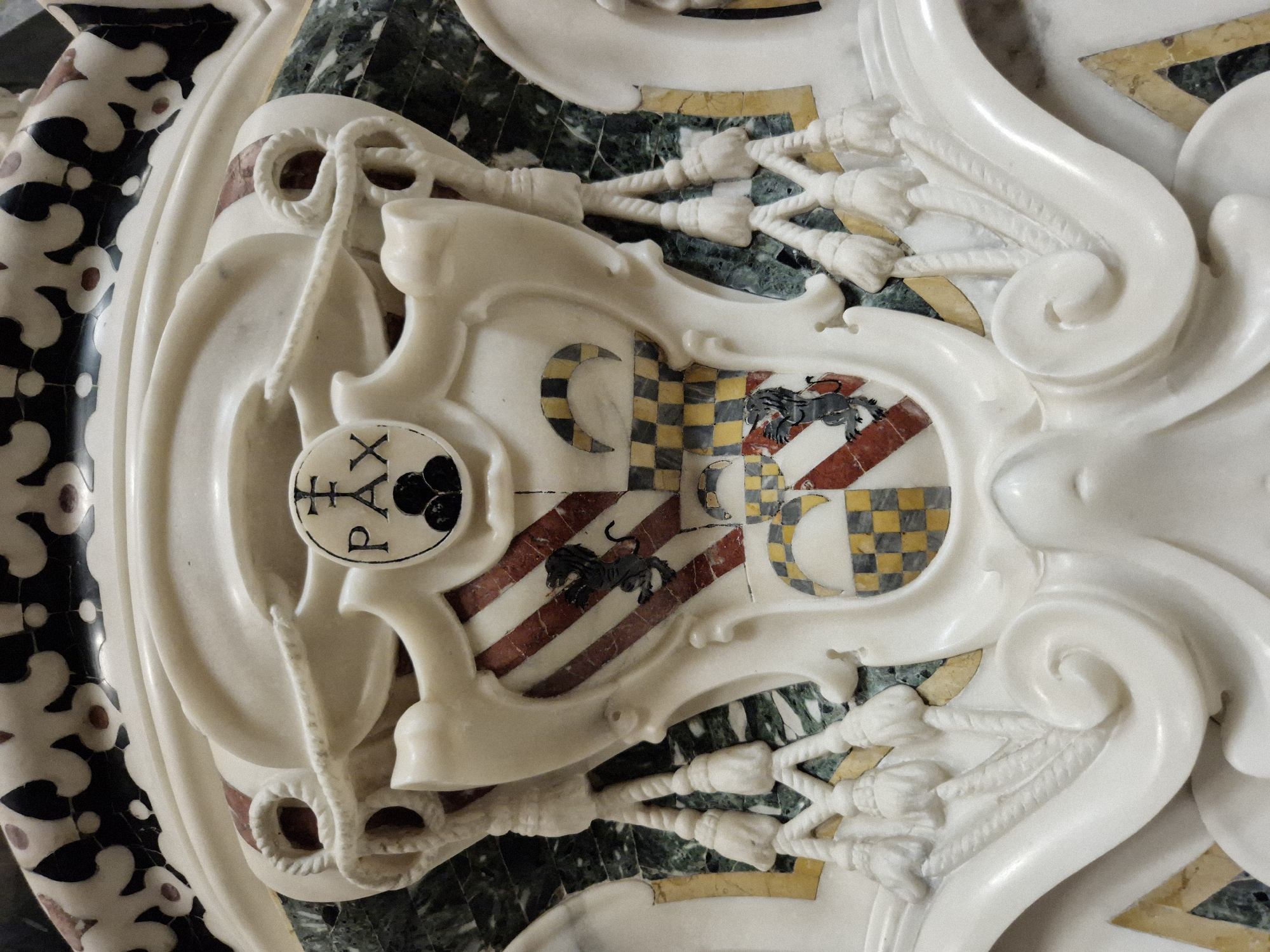
This is a close-up, eye-level shot of a detailed marble carving, likely an escutcheon or coat of arms. The carving features intricate details, including a central shield divided into sections with various colored inlays of red, white, yellow, and dark green marble. Within the shield, there are representations of animals, possibly lions, and geometric patterns such as checkerboards and diagonal stripes. Above the shield, a circular medallion is inset, containing a cross at the top, the letters "PAX" below it, and three black clover-like shapes at the bottom. The entire carving is surrounded by decorative elements, including ropes with tassels, elaborate scrollwork, and segmented borders made of contrasting marble patterns, some of which appear cracked. The style suggests it is part of a larger architectural element, possibly a tomb or a decorative facade. Given the historical and artistic context of Taranto, this carving is likely located within one of its numerous historical churches or noble palaces, such as the Duomo di San Cataldo or Palazzo Amati, where similar elaborate marble work is common.
Darkbutlight

Jul 9, 2026, 10:05 AM

Taranto, Italy

Stake attention in this memory

solemn
ornate
traditional
historical
religious

This is a close-up, eye-level shot of a detailed marble carving, likely an escutcheon or coat of arms. The carving features intricate details, including a central shield divided into sections with various colored inlays of red, white, yellow, and dark green marble. Within the shield, there are representations of animals, possibly lions, and geometric patterns such as checkerboards and diagonal stripes. Above the shield, a circular medallion is inset, containing a cross at the top, the letters "PAX" below it, and three black clover-like shapes at the bottom. The entire carving is surrounded by decorative elements, including ropes with tassels, elaborate scrollwork, and segmented borders made of contrasting marble patterns, some of which appear cracked. The style suggests it is part of a larger architectural element, possibly a tomb or a decorative facade. Given the historical and artistic context of Taranto, this carving is likely located within one of its numerous historical churches or noble palaces, such as the Duomo di San Cataldo or Palazzo Amati, where similar elaborate marble work is common.

Loading AttnAds…

transactions
revenues
stakers
Earliest
Latest
Highest stake

No transactions found

More from this user

More from Taranto

Darkbutlight

Jul 9, 2026, 10:05 AM

Taranto, Italy

Licensed under Creative Commons Attribution 4.0 International License. You are free to share and adapt this content with proper attribution.